Balcony Fireplace Safety Workflow for DACH Homeowners
TL;DR:
- A balcony fireplace safety workflow involves a series of steps that ensure compliance, safety, and enjoyment when using outdoor fire features on balconies. It emphasizes regulatory adherence, proper preparation, and ongoing safety checks to prevent incidents and liability in the strict fire codes of the DACH region.
A balcony fireplace safety workflow is a defined series of steps that keeps your outdoor fire feature legal, secure, and genuinely enjoyable on your balcony. For homeowners across Germany, Austria, and Switzerland, this workflow matters more than most realize. Balconies are confined spaces with strict fire codes, combustible furniture, and neighbors just meters away. Getting the sequence right, from checking regulations to selecting the right fire feature to running daily safety checks, is what separates a cozy evening outside from a costly incident. This guide walks you through every stage of that process.
What does the balcony fireplace safety workflow actually cover?
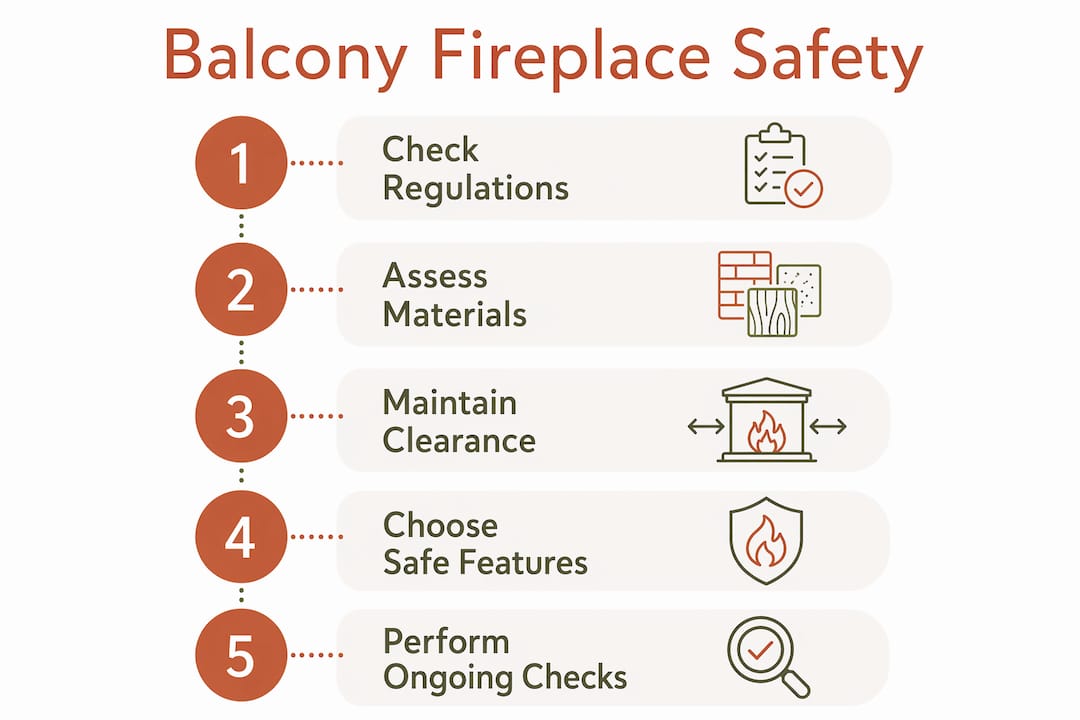
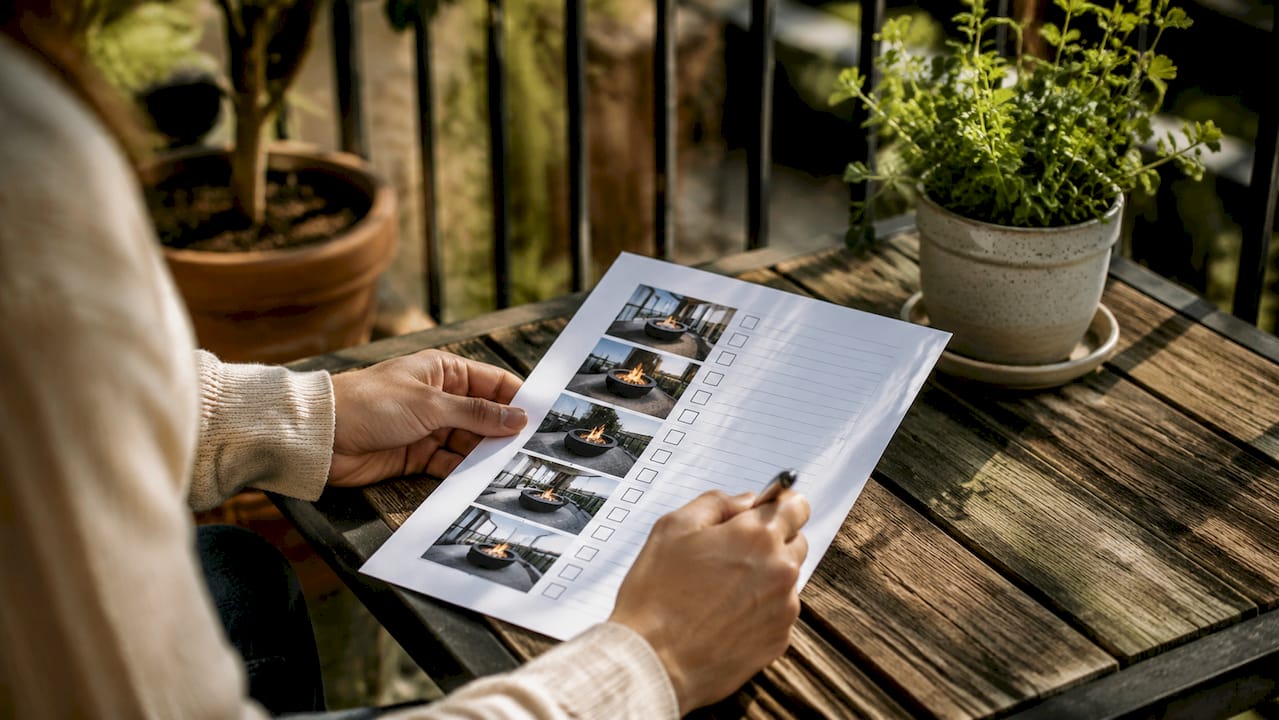
The balcony fireplace safety workflow is the industry term for a structured, repeatable process covering compliance checks, space preparation, fire feature selection, and operational oversight. Think of it as your personal outdoor fire safety checklist, applied before, during, and after every use.
The workflow matters most in the DACH region because building codes here are detailed and actively enforced. Multi-unit residential buildings in Germany, Austria, and Switzerland typically fall under strict fire protection ordinances (Brandschutzvorschriften) that govern what you can and cannot ignite on a shared balcony. Ignoring these rules does not just risk a fine. It can void your home insurance and expose you to liability if a fire spreads.
Safety planning on balconies is more rigorous than backyard fire safety because of confined spaces and proximity risks. That extra rigor is exactly why a workflow approach, rather than ad hoc decisions, produces consistently safe results.
What are the regulatory and material prerequisites for balcony fireplaces in the DACH region?
Before you light anything on your balcony, you need to understand what the law actually permits. The rules vary by building type, height, and municipality, but several requirements apply broadly across the DACH region.
Open-flame restrictions in multi-unit buildings
Open-flame devices such as wood-burning fire pits, propane burners, and charcoal grills are prohibited on balconies in most multi-unit buildings. This ban exists because the International Fire Code and equivalent European standards treat shared residential structures as high-risk environments. Your lease agreement may add further restrictions on top of municipal codes, so reading both documents before purchasing any fire feature is non-negotiable.
Material compliance for high-rise balconies
If your balcony sits above 11 to 18 meters, building safety regulations apply an additional layer of scrutiny. High-rise balconies must use non-combustible materials rated Class A1 or A2-s1, d0 under EN 13501-1. This standard covers decking, furniture, and any surface the fire feature contacts. Using materials that fail this classification can block approval for any fire installation and may require mandatory removal at your expense.
Pro Tip: Check your building’s fire safety certificate (Brandschutznachweis) before purchasing any fire feature. This document lists approved materials and restrictions specific to your building.
Clearance distances and local approvals
Clearance rules require at least 3 feet of open space around any fire feature, increasing to 7 feet when combustible materials like wooden furniture or fabric awnings are present. These distances are not suggestions. They are minimum safety thresholds based on flame spread modeling.
Here is a quick reference for the key prerequisites:
| Requirement | Standard |
|---|---|
| Minimum clearance around fire feature | 3 feet (up to 7 feet near combustibles) |
| Material rating for high-rise balconies | Class A1 or A2-s1, d0 under EN 13501-1 |
| Open-flame devices in multi-unit buildings | Prohibited in most cases |
| Lease and HOA approval | Required before installation |
| Municipal fire code check | Required before use |
Product substitution without approval is a common cause of compliance failure and may lead to mandatory removal. Always verify that any change to your fire setup has been validated by the relevant authority before proceeding.
Which fireplace types and fuels are safe and allowed on balconies?
Not all fire features carry the same risk profile, and the differences matter significantly for balcony use.
Comparing your options
| Fire feature type | Open flame | Smoke produced | Typically permitted on balconies | Approximate cost |
|---|---|---|---|---|
| Electric flame-effect (LED) | No | No | Yes, widely accepted | $40 to $200 |
| Bio ethanol tabletop | Yes (controlled) | Minimal | Often permitted with conditions | $80 to $400 |
| Propane fire pit | Yes | Some | Prohibited in most multi-unit buildings | $150 to $600 |
| Wood-burning fire pit | Yes | Heavy | Prohibited in most multi-unit buildings | $100 to $500 |
| Charcoal fire pit | Yes | Heavy | Prohibited in most multi-unit buildings | $50 to $300 |
Electric flame-effect fire pits use LED lighting with no combustion and are generally permitted on apartment balconies. They cost between $40 and $200, produce zero emissions, and carry no combustion risk. That makes them the most straightforward choice for renters and homeowners in strict buildings.
Bio ethanol tabletop fireplaces occupy a practical middle ground. They burn clean bio ethanol fuel, produce minimal smoke, and create a genuine flame without the hazards of wood or propane. Flaemme’s tabletop models are designed specifically for this use case, offering real warmth and visual charm without requiring installation, chimneys, or gas lines.
Pro Tip: Always look for fire features that carry CE certification and are explicitly rated for indoor or balcony use. A product sold as “decorative” may not meet the safety standards required for residential balcony use in the DACH region.
Electric flame-effect fire pits provide an excellent balance of ambiance and compliance, especially where open-flame devices are banned. If your building prohibits open flames entirely, an LED tabletop unit gives you the cozy atmosphere without any regulatory exposure.
How to prepare and set up your balcony safely for fireplace use?
Preparation is where most homeowners either get the workflow right or skip steps that later cause problems. Follow this sequence before every use.
- Clear the area. Remove all flammable items within the required clearance zone. This includes cushions, fabric furniture covers, potted plants with dry soil, and any paper or cardboard.
- Check your surface. Place the fire feature on a non-combustible mat or fireproof tray. Composite decking and wooden floors do not meet the EN 13501-1 standard without a protective layer underneath.
- Secure the unit. Securing the fireplace against tipping and having fire extinguishers and water nearby are baseline safety requirements. Use a weighted base or place the unit against a stable wall corner, away from railings.
- Check ventilation. Balconies with glass windscreens or enclosed pergola structures can trap combustion gases. Open at least one side fully before lighting any flame-based unit.
- Position safety equipment. Keep a 1-kg ABC dry powder fire extinguisher and a bucket of water within arm’s reach before you light anything. Do not rely on running inside to find them.
Beyond the setup steps, a few ongoing preparation habits make a real difference:
- Inspect the fire feature for cracks, fuel leaks, or damaged components before each use.
- Check the weather forecast. Wind speeds above 20 km/h make open-flame features unsafe on exposed balconies.
- Confirm that your balcony drain is clear. Spilled fuel or water from extinguishing should not pool near the building structure.
- Review your balcony fireplace placement relative to walls and overhead structures each season, since furniture arrangements change.
What ongoing safety checks should you follow when using a balcony fireplace?
A solid setup routine means nothing without consistent operational discipline. These are the checks that protect you during and after every session.
- Light carefully. Follow the manufacturer’s ignition instructions exactly. Never use accelerants to start a bio ethanol or wood-based unit.
- Stay present. Balcony fireplaces should never be left unsupervised. Wind conditions can shift flame direction unexpectedly, and an unattended fire on a confined balcony escalates quickly.
- Keep children and pets at a safe distance. Establish a clear boundary at least 1 meter from the fire feature and enforce it consistently.
- Monitor fuel levels. Never refuel a bio ethanol unit while it is burning or still hot. Wait at least 15 minutes after extinguishing before adding fuel.
- Extinguish completely. Use the snuffer tool provided with your unit. Confirm the flame is fully out before leaving the balcony.
Common mistakes that homeowners in the DACH region make include using bio ethanol containers not rated for the specific unit, placing fire features directly against glass balustrades, and assuming that a smokeless product requires no ventilation. Each of these errors carries real consequences.
Ignoring daily safety checks can lead to accidents, lease violations, or voided insurance claims. A five-minute pre-use check is the simplest form of risk management available to you.
Non-compliance with local fire codes in Germany, Austria, and Switzerland can result in fines, mandatory removal of the fire feature, and in serious cases, criminal liability if a fire causes damage to neighboring property. Your building’s property manager (Hausverwaltung) has the authority to issue immediate removal orders, and your insurer can deny claims if an unauthorized device was in use.
Key takeaways
A safe balcony fireplace experience in the DACH region requires combining regulatory compliance, correct fire feature selection, thorough space preparation, and consistent operational checks into one repeatable workflow.
| Point | Details |
|---|---|
| Regulatory compliance first | Check municipal fire codes, your lease, and EN 13501-1 material standards before purchasing any fire feature. |
| Clearance distances are mandatory | Maintain at least 3 feet around the unit, up to 7 feet near combustible furniture or materials. |
| Electric and bio ethanol units are safest | Open-flame devices like propane and wood-burning pits are prohibited in most DACH multi-unit buildings. |
| Preparation prevents incidents | Clear flammables, use fireproof surfaces, secure the unit, and position safety equipment before every use. |
| Never leave flames unsupervised | Wind, fuel spills, and structural proximity make unattended balcony fires a serious risk. |
Why the workflow mindset changes everything
Most balcony fire incidents I have seen discussed in the context of DACH homeowner communities come down to one thing: people treated fire feature use as casual rather than procedural. They bought a beautiful tabletop unit, set it on the decking, and lit it without checking clearances, fuel compatibility, or building rules. The result was not always dramatic, but it was often expensive.
What I find genuinely reassuring about the workflow approach is that it removes decision fatigue. When you have a checklist you run every time, you stop relying on memory or mood to keep you safe. The five-minute pre-use routine becomes as automatic as locking your front door.
The DACH region’s fire codes are strict for good reason. Balconies in dense urban buildings in cities like Munich, Vienna, and Zurich are close together, and fire spreads faster in confined vertical spaces than most people expect. Following the DACH fireplace safety standards is not bureaucratic box-ticking. It is the practical foundation for enjoying your balcony fire feature without anxiety.
My honest advice: if you are unsure whether your building permits any open-flame device, default to an electric LED or bio ethanol tabletop unit and get written confirmation from your Hausverwaltung before your first use. The ambiance is just as enchanting, and the peace of mind is worth far more than the convenience of skipping that step.
— V&M
Safe, stylish tabletop fire pits for your balcony
If you want the warmth and atmosphere of a balcony fire feature without the regulatory complexity of open-flame devices, Flaemme’s collection is worth exploring. Every model is designed to be portable, smokeless, and ready to use without installation or gas connections.
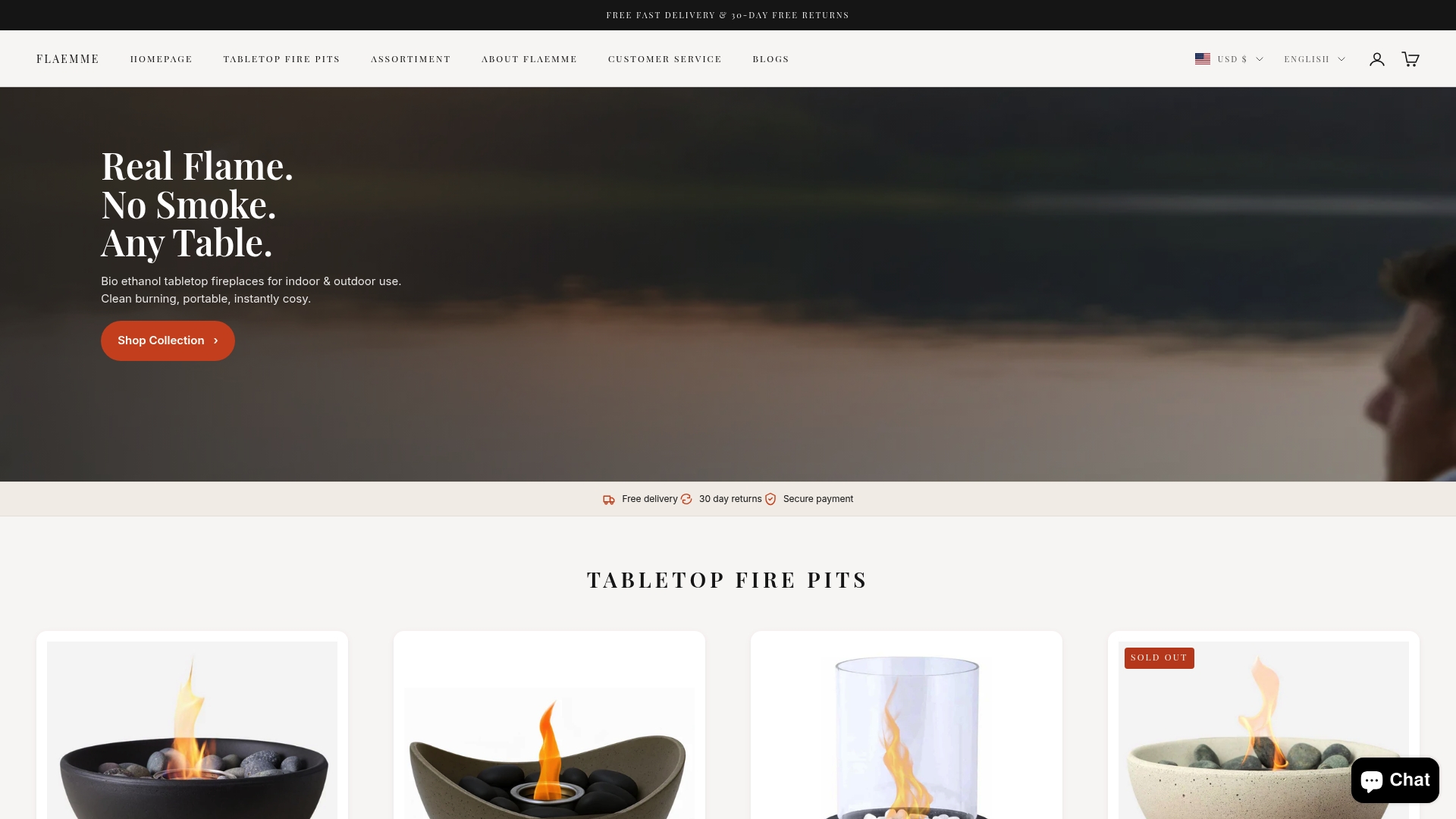
Flaemme’s outdoor tabletop fire pits are built for exactly the kind of balcony use this guide describes. They fit the clearance requirements, require no permanent installation, and ship across Europe with free delivery and 30-day returns. For homeowners in Germany, Austria, and Switzerland looking for a compliant and cozy balcony fire solution, these models offer a practical starting point. Browse the full range and find the right fit for your outdoor space. →
FAQ
What is a balcony fireplace safety workflow?
A balcony fireplace safety workflow is a structured process covering regulatory checks, space preparation, fire feature selection, and daily operational safety steps. It helps DACH homeowners use balcony fire features legally and safely.
Are open-flame fire pits allowed on balconies in Germany or Austria?
Open-flame devices including wood, propane, and charcoal fire pits are prohibited on balconies in most multi-unit residential buildings across the DACH region. Always verify your specific building’s rules and local fire code before purchasing.
What clearance distance is required around a balcony fireplace?
Safety standards require at least 3 feet of clearance around any balcony fire feature, increasing to 7 feet when combustible materials such as wooden furniture or fabric covers are nearby.
Which fire feature is safest for apartment balconies?
Electric flame-effect units using LED technology are the safest option because they produce no combustion, no smoke, and no open flame. Bio ethanol tabletop fireplaces are a close second when used with proper ventilation and manufacturer-approved fuel.
What happens if I use a prohibited fire feature on my balcony?
Using a prohibited fire feature can result in fines, mandatory removal orders from your building manager, lease violations, and voided home insurance claims if a fire causes damage.