How to use a smokeless tabletop fire pit outdoors
TL;DR:
- Smokeless tabletop fire pits reduce smoke and provide stylish ambiance without choking haze.
- Choice of fuel impacts experience: bioethanol offers completely smoke-free flames, while wood/pellets add crackle and longer burn time.
- Proper setup, ventilation, and safety precautions are essential for a clean, enjoyable outdoor fire experience.
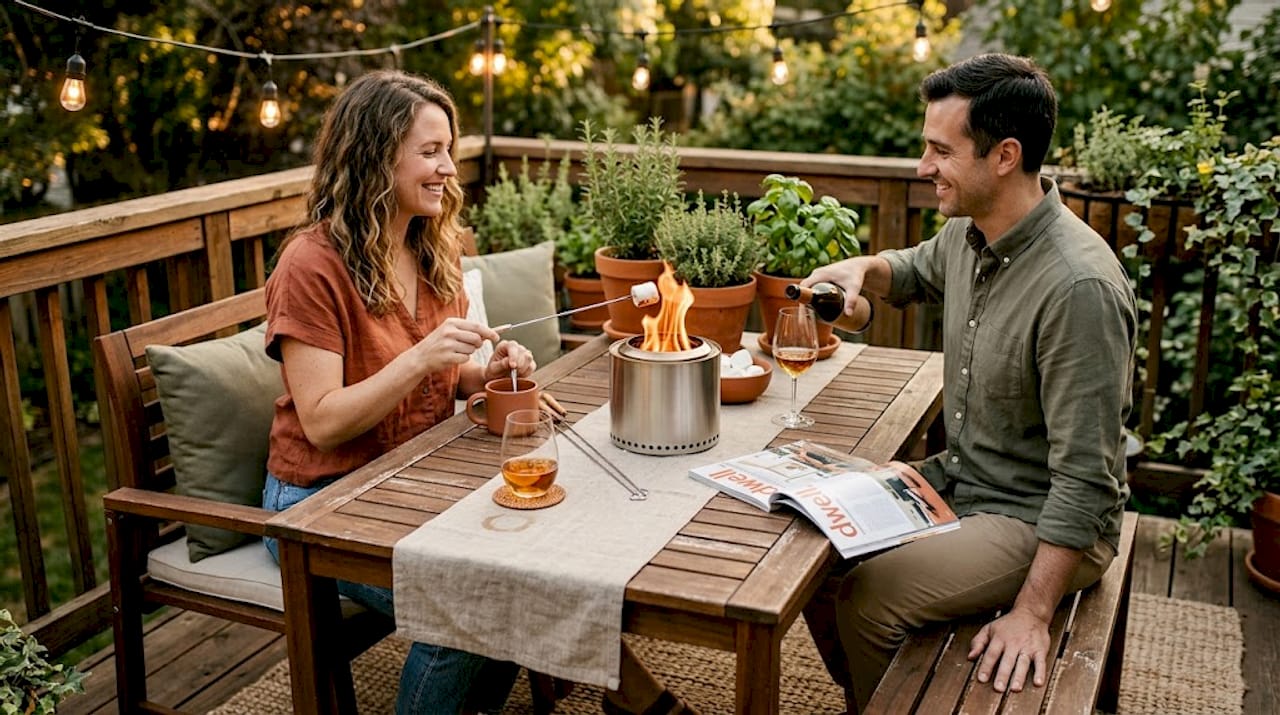
There you are, finally settled into a perfect outdoor evening with friends, candles flickering, good wine poured, and then the smoke arrives. It stings your eyes, drifts across the table, and suddenly everyone is waving their hands and shifting chairs. That frustration is exactly why so many design-conscious hosts across Germany, Austria, and Switzerland are switching to smokeless tabletop fire pits. These compact, stylish fire elements offer real flame and real warmth without the choking haze of a traditional campfire. In this guide, you’ll learn how to select, prepare, set up, and troubleshoot a smokeless tabletop fire pit so every outdoor gathering feels as elegant as you imagined.
Table of Contents
- What you need for a smoke-minimized tabletop fire pit setup
- Step-by-step workflow: Setting up your outdoor tabletop fire pit
- Troubleshooting and common mistakes to avoid
- What to expect: Results and ambiance from a tabletop fire pit
- Perspective: The truth about ‘smokeless’ — what marketing won’t tell you
- Bring smoke-free warmth and style to your next gathering
- Frequently asked questions
Key Takeaways
| Point | Details |
|---|---|
| Smoke reduction, not elimination | Expect up to 80 percent less smoke with advanced wood or pellet models, but only bioethanol burns fully smoke-free. |
| Setup essentials matter | Using a heat mat, quality fuel, and safe placement is crucial for both style and safety. |
| Stepwise workflow success | By following a clear setup and use process, you can quickly enjoy a beautiful and hassle-free fire pit experience. |
| Troubleshooting is easy | Smoke or uneven burning is usually fixable with fuel, airflow, or placement adjustments. |
| Ambiance for small gatherings | Tabletop fire pits create the perfect cozy vibe for two to four people outdoors. |
What you need for a smoke-minimized tabletop fire pit setup
Now that you see the need for a smokeless, design-forward fire element, let’s break down what you’ll need to get started.
Understanding the basics of how these pits work makes shopping and setup much easier. Most smokeless fire pits either use a dual airflow system (primary air feeding the flame, secondary air burning off smoke particles before they escape) or they burn bioethanol fuel (a clean-burning alcohol derived from plant material) that produces no soot or ash at all. Understanding smokeless fire technology gives you a real advantage when choosing between the two main options on the market.
Bioethanol vs. wood/pellet: the core comparison
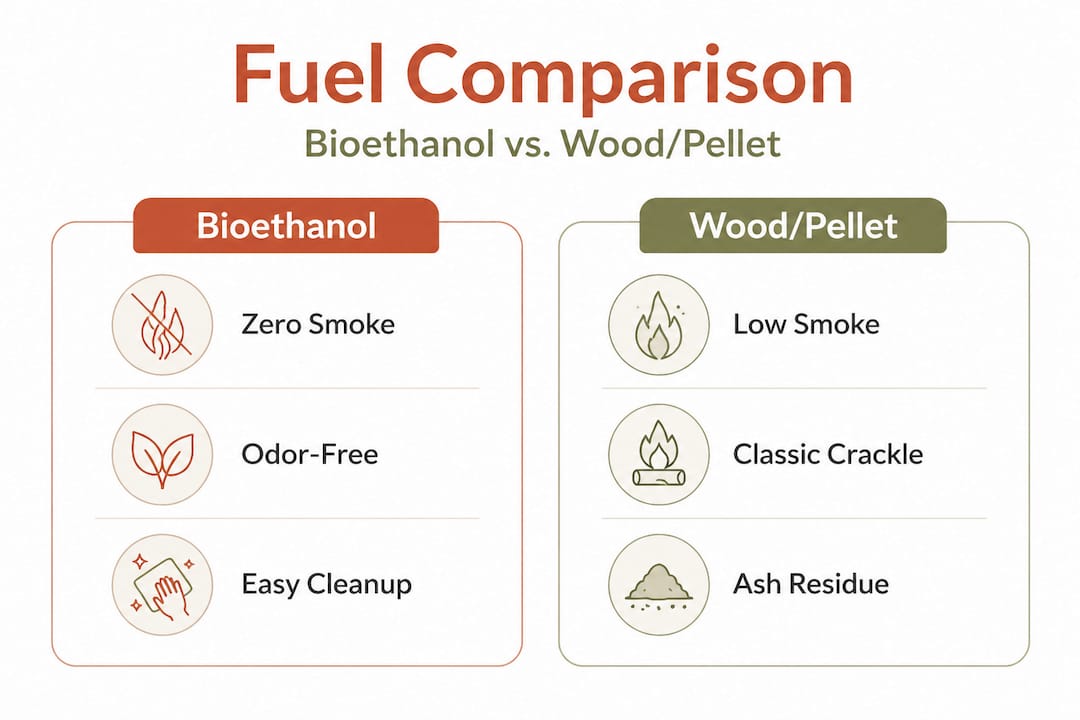
The choice between fuel types shapes your entire experience. Here is a straightforward comparison:
| Feature | Bioethanol | Wood/Pellet (e.g., herQs Mighty) |
|---|---|---|
| Smoke output | Zero | Reduced by up to 80% via dual airflow, not eliminated |
| Crackle sound | None | Yes, authentic |
| Ash and cleanup | None | Light ash residue |
| Burn time | 30 to 60 min per fill | Up to 2 hours |
| Table safety | Requires heat mat | Requires heat mat |
| Design options | Sleek, minimal, modern | Rustic to contemporary |
| Truly 100% smokeless | Yes | No |
Both options have genuine appeal depending on what you value most. If pure cleanliness and design minimalism are your priority, bioethanol wins. If you love the sensory atmosphere of crackling wood and can accept a small amount of residual smoke, a high-quality pellet pit is a worthy choice.
Your essential accessory checklist
Before your first outdoor session, gather these items:
- Heat-resistant fire mat or base: Protects any table surface from radiant heat, especially important for wood, composite, or lacquered outdoor tables.
- Long-reach lighter or matches: Keep your hands safely away from the ignition point.
- Fuel storage container: For bioethanol, a sealed, clearly labeled bottle. For pellets, a dry, lidded container.
- Small tongs or poker: For adjusting wood or pellets without disturbing the flame structure.
- A windscreen or glass surround: Many modern tabletop pits include one; if not, a simple glass panel improves flame stability significantly.
- Extinguisher lid or snuffer tool: Essential for safe shutoff, especially for bioethanol burners.
Pro Tip: Match your fire pit’s material and color to your existing outdoor furniture. A brushed stainless steel pit looks stunning on a teak table, while a matte black ceramic model pairs beautifully with concrete or stone surfaces. The fire itself is a centerpiece, and the pit should earn that spot visually even when it’s cold.
Step-by-step workflow: Setting up your outdoor tabletop fire pit
With your fire pit and tools ready, it’s time to walk through the entire setup, from positioning to lighting to cleanup.
1. Choose the right location
Position the fire pit at least 50 cm from the nearest guest, and never directly beneath a patio umbrella, shade sail, or any hanging fabric. Wind direction matters enormously. Even a smokeless pit with dual airflow can push a thin plume of residual smoke directly at a guest if placed poorly. Seat guests upwind when possible.
2. Prepare the surface
Lay your heat-resistant mat flat and centered on the table. Place the fire pit squarely on top. Check that the table itself is stable and level. An uneven surface is a fire hazard with any open flame, no matter how small.
3. Load your fuel
- For bioethanol: Fill the burner insert to the maximum fill line marked inside. Never overfill. Wipe away any spilled fuel with a dry cloth before igniting. Allow 30 seconds for the fuel to settle before lighting.
- For wood/pellets: Load pellets loosely into the fire chamber. Do not pack them tightly; airflow is essential for combustion. For wood chips, use dry hardwood pieces no larger than a finger for best results and lowest smoke output.
4. Light the fire safely
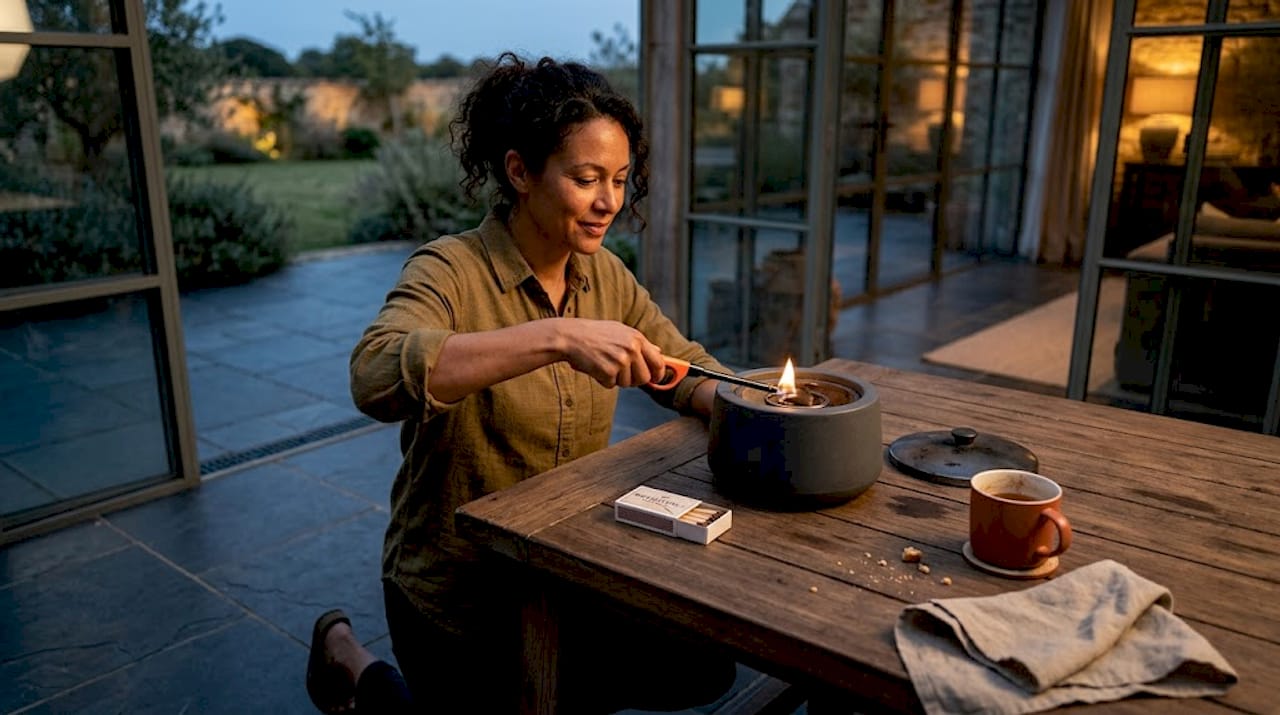
Use a long-reach lighter and ignite from the side or the top edge of the fuel load. With bioethanol, a blue flame appears almost immediately. With pellets or wood chips, you may see a short burst of smoke during ignition as the fuel catches. This is normal and should reduce within 60 to 90 seconds once the secondary airflow system heats up.
5. Monitor airflow and smoke
For wood/pellet models, the tips for a smoke-free burn all point to one thing: keep the air vents clean and unobstructed. Check them before every use. If smoke increases mid-burn, gently aerate the fuel bed with your tongs to open up air channels.
A warm reminder: Never add fuel to a burning bioethanol fire. Always extinguish fully, allow the burner to cool for at least 10 minutes, and then refill. This single rule prevents the most common accidents with tabletop bioethanol fireplaces.
6. Extinguish cleanly
Use the snuffer lid or extinguisher tool supplied with your pit. Smother the flame completely rather than blowing it out. Blowing spreads fuel vapor and hot embers. For pellet models, close the airflow vents to starve the fire before capping.
7. Clean up after the session
| Task | Bioethanol | Wood/Pellet |
|---|---|---|
| Let cool before touching | 10 minutes minimum | 15 minutes minimum |
| Remove ash | Not applicable | Brush into a metal ash container |
| Clean burner | Wipe with dry cloth | Rinse with water when fully cold |
| Store fuel | Sealed, away from heat | Dry, rodent-proof container |
| Inspect vents | Check seal integrity | Clear of debris |
Pro Tip: After each use, store your tabletop fire pit indoors or in a waterproof cover. Moisture degrades bioethanol burner seals over time and causes rust in pellet chambers, both of which create safety issues and reduce the visual appeal of your investment.
Troubleshooting and common mistakes to avoid
Even with the right setup, sometimes things go wrong. Here’s how to recover your cozy vibe fast.
The most common sources of unwanted smoke
- Wrong fuel quality: Low-grade pellets or damp wood chips produce far more smoke than quality alternatives. Always use kiln-dried hardwood pellets or chips with a moisture content below 15%.
- Blocked air vents: Ash buildup in the vent holes is the leading cause of smoke surges in pellet-style pits. Clean vents after every two sessions.
- Overfilled bioethanol burner: Excess fuel sloshes during use, creating uneven combustion and a faint odor. Fill only to the marked line.
- Wind interference: A crosswind disrupts the secondary combustion airflow. Even fire pit airflow troubleshooting guides consistently identify wind as the top culprit for unexpected smoke events outdoors.
- Improper placement near walls: Placing the pit against a wall or balcony railing traps smoke and radiated heat rather than allowing it to disperse naturally.
The honest truth: As fire pit testing in 2025 confirms, “smokeless” wood pits reduce smoke by around 80% through advanced airflow but do not eliminate it entirely. Bioethanol is 100% clean but produces no crackle and offers a shorter burn per fill. Knowing this in advance means you’ll never feel let down mid-evening.
Quick error-recovery tips
- If smoke spikes during a pellet burn, open any adjustable air vents fully and give the fire 60 seconds to reestablish clean combustion.
- If a bioethanol flame flickers and dies early, the burner is likely empty or the wind has overwhelmed the flame. Extinguish, refill, and add a glass windscreen if you don’t already have one.
- If the surface under your fire mat feels warm to the touch, stop the burn immediately. You need an additional layer of insulation between the pit and the table.
Being prepared for these small hiccups means you stay composed and your guests stay comfortable.
What to expect: Results and ambiance from a tabletop fire pit
Once you follow the right workflow, here’s the experience and ambiance you can look forward to.
Smoke reduction: With a quality wood/pellet pit, dual airflow reduces smoke by up to 80% compared to a conventional fire bowl. You may still notice a faint wisp on ignition or when adding fuel, but during a steady burn, the air around the table stays clear.
Truly clean air: With bioethanol, you get 100% smoke-free combustion with no particulates, no soot, and no lingering smell on your hair or clothing. The tradeoff is no crackle and a burn time of roughly 30 to 60 minutes per fill.
What the experience delivers:
- A warm, flickering glow at table height, more intimate than a floor-standing fire pit
- A natural focal point that encourages guests to lean in and linger longer
- Gentle radiant warmth for a 2 to 4 person group, enough to extend outdoor evenings by an hour or two in mild autumn temperatures
- A design element that photographs beautifully, which matters for anyone hosting or sharing moments on social media
- Versatility across tabletop materials including wood, stone, concrete, and metal (with the right mat)
A note on the “wow” factor: There is something genuinely enchanting about an open flame at table height. Guests who have never seen a tabletop fire pit before almost always comment on it within minutes. It shifts the energy of a gathering from casual to memorable without any effort on your part beyond setting it up.
Statistic to keep in mind: Modern smokeless fire pits with secondary combustion can reduce smoke emissions by up to 80% compared to open fire bowls, according to product testing of models like the herQs Mighty. That is a significant difference for anyone who has spent an evening shuffling away from a traditional campfire.
For more design and ambiance insights, including how to style your tablescape around a fire element, we have a range of guides to inspire you.
Perspective: The truth about ‘smokeless’ — what marketing won’t tell you
With realistic expectations set, here’s our candid view on “smokeless” fire pits drawn from expertise and community insights.
The word “smokeless” on a product box almost always means something different from what you might imagine when you read it. It does not necessarily mean zero smoke. It means significantly reduced smoke, achieved through clever engineering. That distinction matters, and not nearly enough brands explain it clearly.
Testing consistently shows that wood-burning smokeless pits reduce smoke by around 80%, which is impressive but leaves 20% unaccounted for. On a still summer evening, that 20% may be invisible and undetectable. On a cool, damp autumn night with guests seated close together, it can be noticeable. Your setting, weather, and fuel quality all play a role that no product spec sheet will mention.
We see two distinct types of buyers in our community. The first wants the complete sensory experience: the crackle, the glow, the smell of burning wood, and a long burn that carries the evening from dinner to dessert and beyond. For this person, a premium pellet-style smokeless pit is probably the right call, even if it means accepting a small compromise on air purity. The second wants zero compromise on cleanliness, zero smoke, zero odor, and a design object that looks as beautiful cold as it does lit. For this person, bioethanol is the clear answer, full stop.
What we genuinely believe, drawing on years of working with fire and flame products, is that neither option is universally better. The fire pit expert view we keep coming back to is this: choose based on your priorities, not the label. Decide whether aesthetics, warmth, crackle, or absolute cleanliness matters most to you, and let that drive your decision. The perfect fire for your balcony in Zurich may be completely different from the perfect fire for a terrasse in Vienna.
One more thing worth saying plainly: no tabletop fire pit, wood or bioethanol, replaces the warmth of a large outdoor heater for a cold evening. What these pits do brilliantly is create atmosphere, intimacy, and visual beauty. They are ambiance tools first, heat sources second.
Bring smoke-free warmth and style to your next gathering
You now have the knowledge to choose, set up, and enjoy a smokeless tabletop fire pit with confidence. The next step is finding a fire element that genuinely matches your aesthetic and outdoor lifestyle.
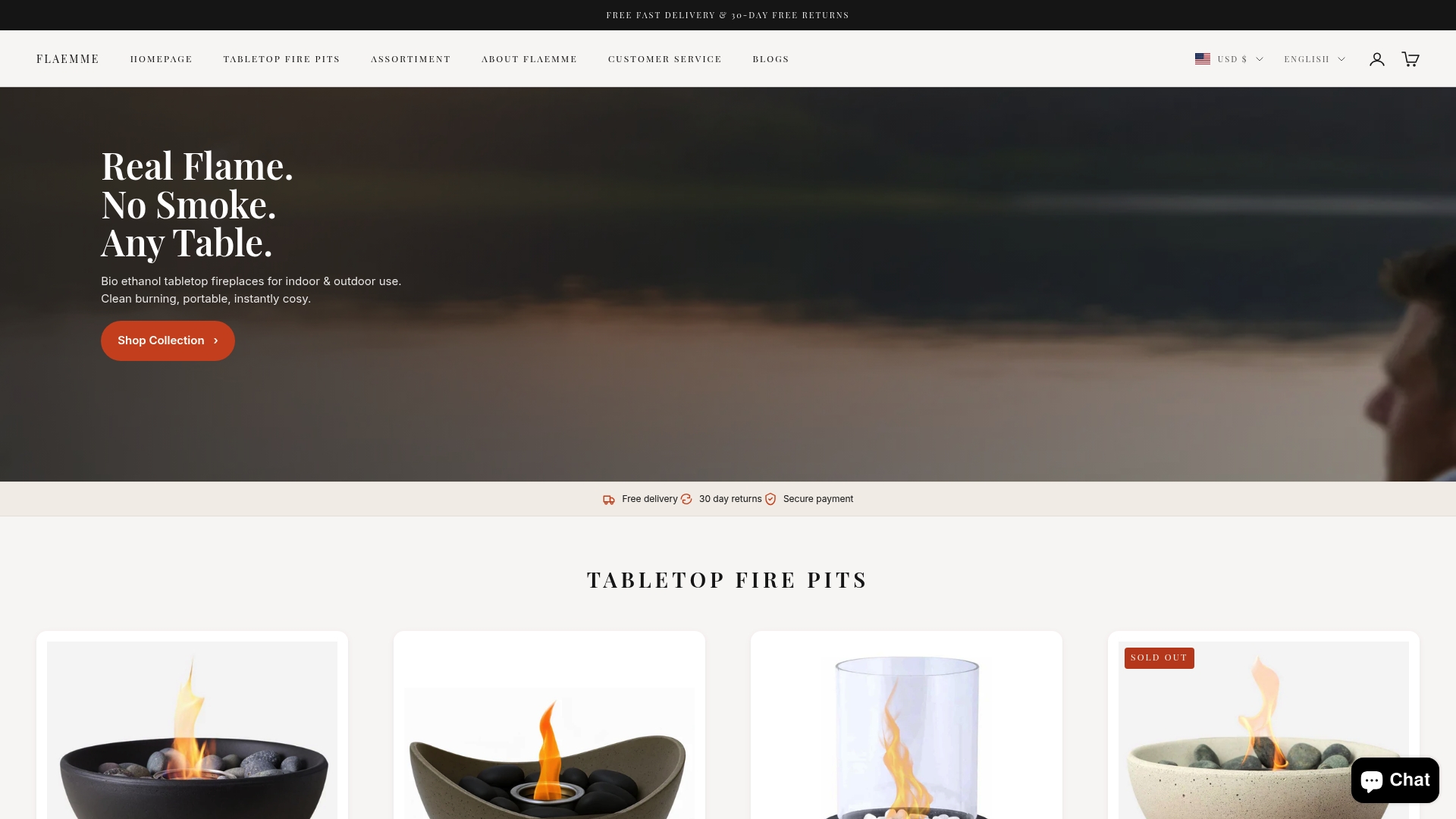
At Flaemme, we specialize in modern bio ethanol tabletop fireplaces designed for exactly this kind of gathering. Our models are smokeless, portable, and ready to use with no installation, no chimney, and no gas connection required. Whether you’re styling a rooftop terrace, a garden table for four, or a cozy balcony corner, our collection has options crafted for European design sensibilities. We offer free delivery across Europe and a 30-day return policy, so you can shop with complete peace of mind. Browse our full range and find the fire that fits your evening. →
Frequently asked questions
Are smokeless tabletop fire pits completely smoke-free?
No. Wood or pellet-based smokeless fire pits reduce smoke by around 80% but may still produce a small amount, while bioethanol models offer a fully smoke-free burn with no particulates, though without the crackle of wood.
What’s the safest surface for a tabletop fire pit?
Always place your fire pit on a heat-resistant mat or insulating base, and only use stable, non-flammable table surfaces such as stone, concrete, or metal. Never place it on plastic garden furniture or untreated softwood tables.
How long does a smokeless tabletop fire pit burn for?
Wood and pellet models typically burn for up to 2 hours per fill, while bioethanol models burn for roughly 30 to 60 minutes depending on burner size and flame height setting.
What type of fuel creates the coziest fire ambiance?
Wood and pellets deliver the classic crackle, glow, and sensory warmth that most people associate with a fire. Bioethanol burns cleanly and beautifully but without sound, making it ideal for design-first settings where clean air matters most.
What’s the ideal group size for a tabletop fire pit?
Most tabletop fire pits are sized for 2 to 4 people, making them perfect for intimate dinners, date nights, and small balcony or terrace gatherings where a full-sized fire pit would simply be too large.