Patio fireplace placement guide for stylish and safe spaces
Placing a bio ethanol tabletop fireplace transforms your indoor or outdoor space into a warm, inviting retreat, but achieving the perfect balance between style and safety requires careful consideration. Many homeowners struggle to position their patio fireplaces in ways that enhance ambiance without compromising safety or functionality. Bio ethanol tabletop fireplaces offer clean combustion, portability, and aesthetic appeal, making them ideal for design-conscious spaces. This guide walks you through practical placement strategies for both indoor and outdoor environments, covering spatial assessment, step-by-step positioning, common mistakes, and design tips to help you create a stunning, secure fireplace feature that elevates your home.
Table of Contents
- Key takeaways
- Understanding your space and fireplace
- Step-by-step guide to placing your patio fireplace
- Common mistakes to avoid and troubleshooting tips
- Enhancing ambiance with design and placement choices
- Explore stylish modern ethanol fireplaces
- Frequently asked questions
Key Takeaways
| Point | Details |
|---|---|
| Heat resistant surfaces | Choose a heat resistant base such as stone, concrete, metal, or ceramic tile and keep the unit away from wood or fabric. |
| Check local codes | Review building codes and HOA rules for open flame devices and required clearance distances. |
| Indoor ventilation required | Indoor installations require adequate ventilation and a non combustible surface to operate safely. |
| Three foot clearance | Maintain at least three feet of clearance around the fireplace from walls furniture and overhead structures. |
| Outdoor wind considerations | Assess wind patterns and position the unit perpendicular to prevailing breezes or add windbreaks to stabilize the flame. |
Understanding your space and fireplace
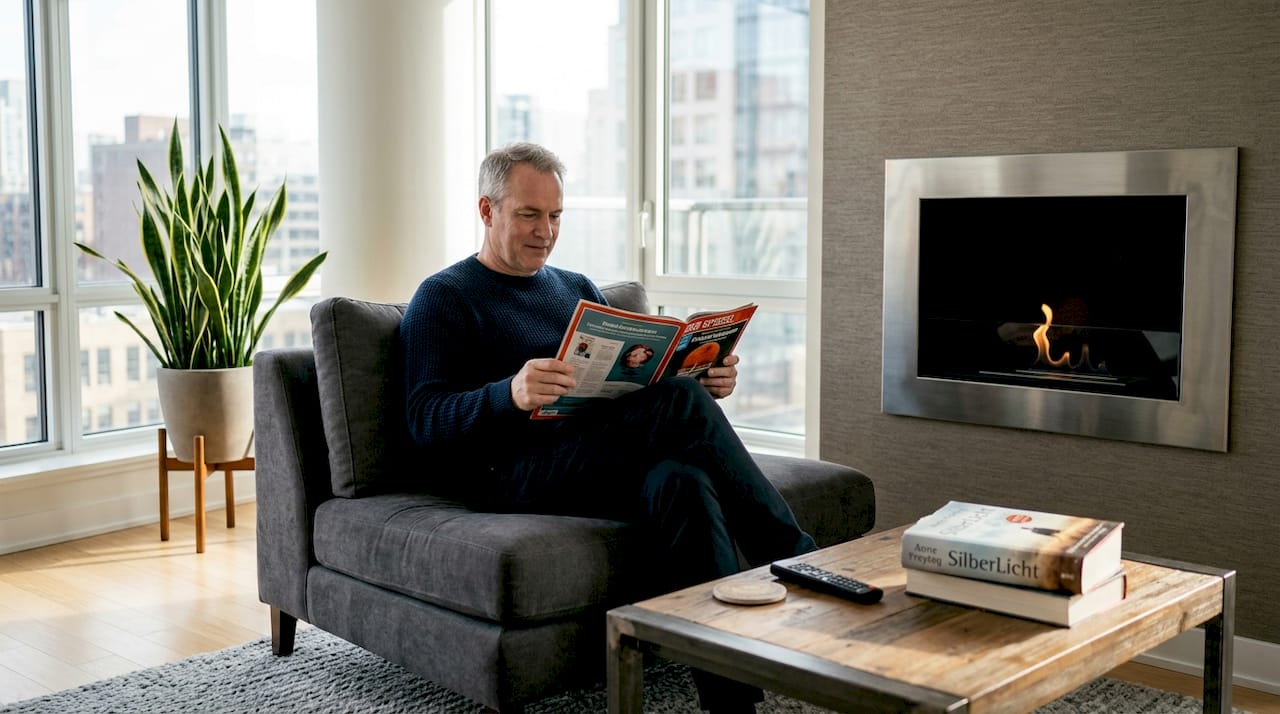
Assessing your indoor or outdoor environment lays the groundwork for safe and stylish fireplace placement. Indoor settings demand adequate ventilation because bio ethanol fireplaces require non-combustible surfaces to operate safely, even though they produce minimal emissions compared to wood-burning alternatives. Outdoor spaces introduce variables like wind exposure, weather conditions, and proximity to landscaping elements that influence flame stability and safety. Start by measuring your available space, noting furniture arrangements, traffic flow patterns, and existing design features that will interact with your fireplace.
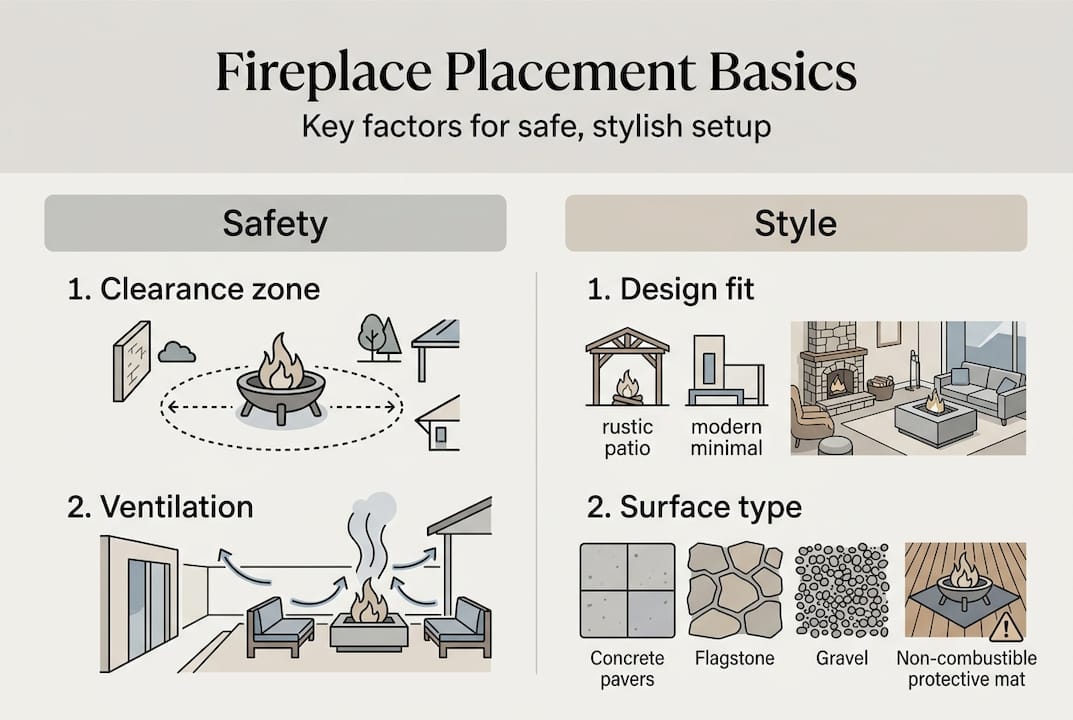
Identify fire-resistant surfaces suitable for supporting your bio ethanol tabletop fireplace. Stone patios, concrete slabs, metal tables, and ceramic tiles provide excellent heat resistance and stability. Avoid placing fireplaces directly on untreated wood, plastic furniture, or fabric surfaces that can ignite or warp under heat exposure. Check your local building codes and homeowner association regulations regarding open flame devices, as some jurisdictions impose restrictions on placement distances from property lines, structures, or combustible materials. Understanding these requirements prevents costly violations and ensures compliance.
Bio ethanol fireplaces emit heat in a radial pattern, requiring safe clearance zones around all sides. Most manufacturers recommend maintaining at least 3 feet of clearance from walls, furniture, curtains, plants, and overhead structures. This buffer zone prevents accidental contact with hot surfaces and reduces fire risk from nearby flammable items. Consider how heat distribution affects seating arrangements and foot traffic, ensuring guests can move comfortably without approaching the flame too closely.
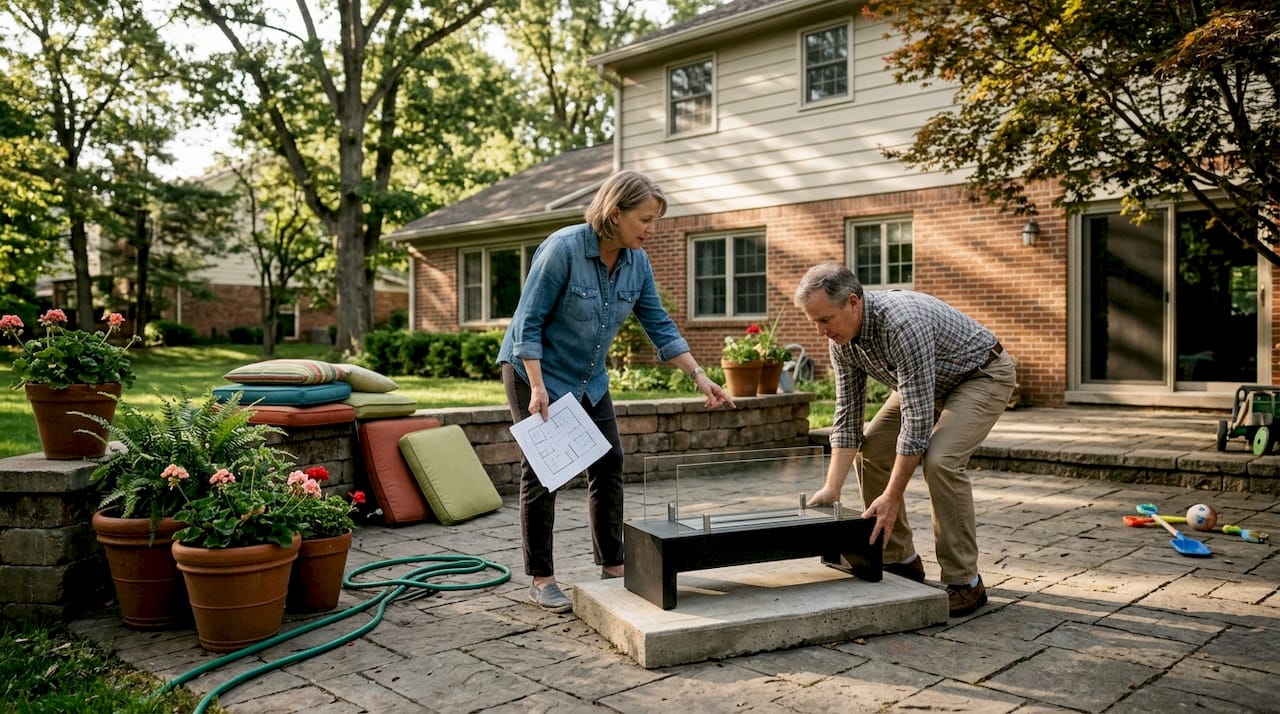
Pro Tip: Create a simple floor plan sketch marking your fireplace location, clearance zones, and furniture positions to visualize the layout before installation.
| Space Type | Ventilation Need | Surface Recommendation | Typical Clearance |
|---|---|---|---|
| Indoor living room | Moderate (open windows periodically) | Stone hearth, metal stand | 3 feet all sides |
| Covered patio | Low (natural airflow) | Concrete, ceramic tile | 3 feet from structures |
| Open deck | Minimal (abundant air circulation) | Metal table, stone slab | 3 feet from railings |
| Garden terrace | Minimal (outdoor exposure) | Paver stones, brick | 4 feet from plants |
Step-by-step guide to placing your patio fireplace
Follow these sequential steps to position your bio ethanol tabletop fireplace for optimal style, safety, and usability:
-
Select a stable, level surface away from flammable materials such as dry leaves, paper decorations, or fabric cushions. Use a carpenter’s level to verify the surface is perfectly flat, preventing fuel spillage or tipping hazards.
-
Establish clearance zones by measuring 3 feet minimum from all sides of the fireplace to furniture, walls, vegetation, and overhead structures. Mark these boundaries temporarily with chalk or tape to visualize the safe zone.
-
Position for viewing angles that allow comfortable enjoyment from primary seating areas without forcing guests to stare directly into flames. Angle the fireplace slightly to create ambient glow rather than harsh direct light.
-
Assess wind patterns in outdoor locations by observing prevailing breezes during different times of day. Position the fireplace perpendicular to dominant wind direction or use windbreaks like glass panels, stone walls, or strategically placed planters to shield flames.
-
Ensure refueling access by leaving at least 18 inches of clearance on one side for safely adding bio ethanol fuel. Choose a location where you can comfortably reach the burner without leaning over hot surfaces or navigating tight spaces.
-
Test the setup by placing the fireplace (unlit) in position and walking around the space to confirm sightlines, clearances, and accessibility meet your needs. Adjust positioning before the first use.
Pro Tip: For outdoor placements, position your fireplace where it complements existing landscape features like water elements or garden beds, creating a cohesive design narrative.
Proper ethanol fireplace placement enhances ambiance while reducing accident risk. Consider these additional factors:
- Furniture arrangement: Place seating in a semicircle or U-shape around the fireplace to encourage conversation while maintaining safe distances.
- Decorative integration: Use complementary materials like river rocks, metal accents, or ceramic vessels to blend the fireplace into your design theme.
- Seasonal flexibility: Choose locations that work year-round, allowing you to move the portable fireplace between outdoor summer gatherings and cozy indoor winter evenings.
- Lighting balance: Position away from harsh overhead lights or competing light sources that diminish the fireplace’s warm glow effect.
Common mistakes to avoid and troubleshooting tips
Avoiding frequent placement errors protects your home and extends your fireplace’s lifespan. Never position bio ethanol fireplaces near curtains, hanging plants, paper lanterns, or overhanging tree branches that can ignite from heat or stray sparks. Even though bio ethanol burns cleanly, the open flame reaches temperatures exceeding 800°F, posing serious fire risk to nearby combustibles. Ignoring safety clearances or unstable surfaces leads to hazards and property damage that could have been easily prevented.
Do not place fireplaces in excessively windy outdoor spots without adequate shielding. Strong gusts cause flame instability, excessive fuel consumption, and potential extinguishing that creates dangerous vapor buildup. If your preferred location experiences frequent wind, install glass wind guards, position behind low walls, or choose naturally sheltered areas like covered patios or building alcoves. Wind protection improves flame consistency and reduces fuel waste.
Ensure tables, stands, or platforms can securely bear your fireplace’s weight when filled with fuel. Lightweight plastic furniture, wobbly side tables, or uneven surfaces create tipping hazards that spill flaming fuel. Invest in purpose-built fireplace stands or use heavy, stable furniture pieces rated for heat exposure. Verify stability by gently pressing down on the surface before placing your fireplace.
Regularly inspect for fuel leaks around burner seals and connection points. Even small leaks create fire hazards and waste expensive bio ethanol fuel. Clean soot deposits promptly using manufacturer-recommended products to prevent buildup that affects flame quality and appearance. Keep a multi-purpose fire extinguisher rated for alcohol fires within easy reach, and never leave burning fireplaces unattended.
“The most common placement mistake is prioritizing aesthetics over safety clearances. A beautiful fireplace becomes a liability when positioned too close to flammable materials or in unstable locations.”
- Mistake: Placing on unlevel surfaces that cause fuel pooling
- Solution: Use shims or choose naturally level locations verified with a carpenter’s level
- Mistake: Positioning where children or pets have unsupervised access
- Solution: Create physical barriers or place in adult-only zones during use
- Mistake: Refueling while hot or with flame still burning
- Solution: Always extinguish completely and wait 15 minutes for cooling before adding fuel
Enhancing ambiance with design and placement choices
Thoughtful design integration transforms your bio ethanol fireplace from a functional heat source into a stunning focal point. Centralized placements encourage social interaction by drawing guests into a circular gathering pattern, ideal for conversation areas and entertaining spaces. Corner positions maximize space efficiency in smaller rooms while creating cozy nooks perfect for reading or intimate gatherings. Strategic fireplace placement transforms garden dynamics and creates inviting atmospheres that extend outdoor living seasons.
Complement your fireplace with layered lighting that enhances rather than competes with the flame’s natural glow. Use dimmer switches on overhead fixtures, add string lights at perimeter edges, or incorporate candles at varying heights to create depth and warmth. Position plants strategically to frame the fireplace without encroaching on safety clearances. Tall grasses, potted palms, or architectural shrubs add vertical interest while maintaining safe distances.
Select fireplace designs that reflect your aesthetic preferences and space scale. Minimalist glass and steel models suit contemporary interiors, while rustic stone or ceramic pieces complement traditional or farmhouse styles. Oversized fireplaces anchor large patios and great rooms, whereas compact tabletop versions work beautifully on balconies, dining tables, or bathroom vanities. Match finish materials to existing décor elements like cabinet hardware, light fixtures, or furniture accents for cohesive design flow.
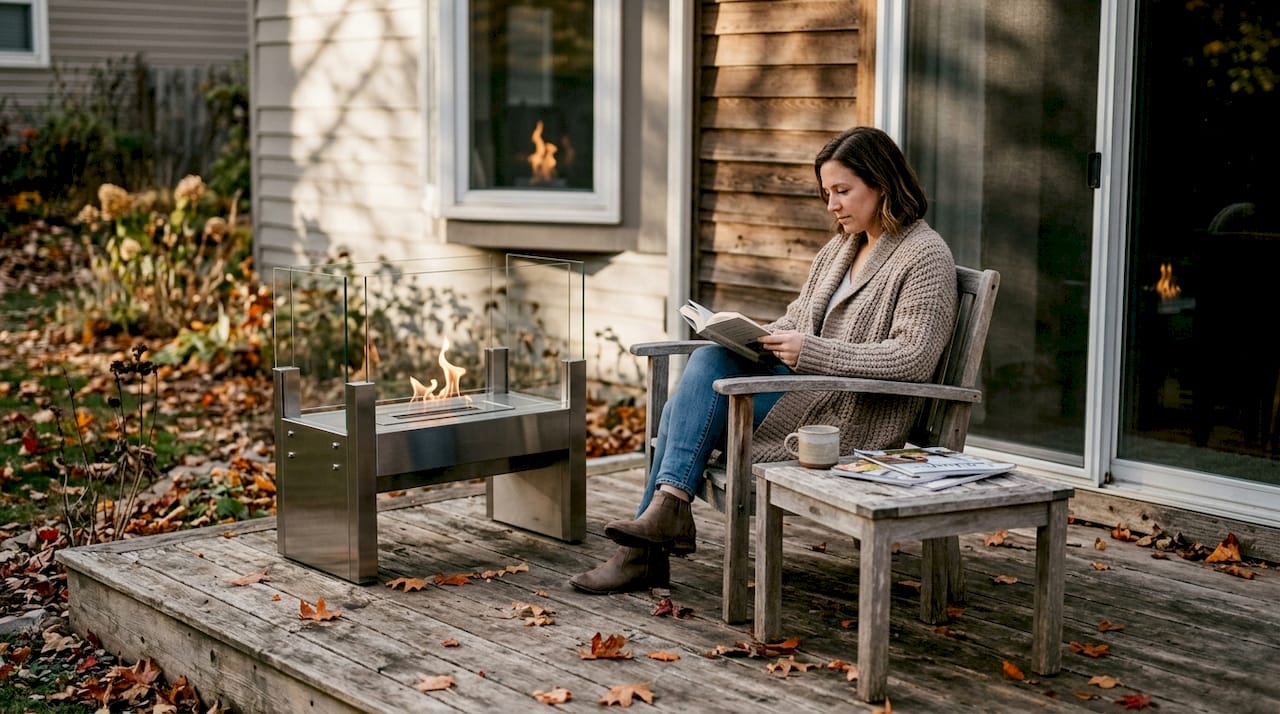
Pro Tip: Create seasonal variations by surrounding your fireplace with different decorative elements. Use seashells and driftwood in summer, pinecones and evergreen branches in winter, maintaining safe clearances with each arrangement.
| Placement Style | Best For | Design Impact | Flexibility |
|---|---|---|---|
| Centralized | Large patios, great rooms | High social interaction, becomes room focal point | Moderate (requires space) |
| Corner | Small balconies, compact rooms | Space-efficient, creates intimate zones | High (works in tight areas) |
| Dining table | Outdoor meals, dinner parties | Elegant centerpiece, functional lighting | Very high (portable) |
| Garden path | Landscape features, walkways | Dramatic accent, guides movement | Low (permanent installation) |
Incorporate safety features that double as design elements. Decorative fire screens with geometric patterns protect curious children while adding visual interest. Glass enclosures create modern, sculptural looks while containing flames and reducing wind interference. Metal lantern-style housings provide vintage charm with built-in safety barriers. These functional accessories enhance your fireplace’s appearance while improving operational safety.
Create flexible setups adaptable to seasonal needs and different occasions. Use wheeled stands or lightweight tabletop models that move easily between indoor and outdoor locations. In summer, position on patios for alfresco dining and evening gatherings. During colder months, bring indoors for cozy living room ambiance or bathroom spa experiences. This versatility maximizes your investment while keeping your spaces fresh and dynamic throughout the year. Explore warm garden fire pit ideas to discover creative seasonal arrangements.
Explore stylish modern ethanol fireplaces
Ready to transform your indoor or outdoor space with a stunning bio ethanol fireplace? Flaemme offers a curated collection of contemporary ethanol fireplaces designed for design-conscious homeowners who refuse to compromise on style or safety. Our products combine European craftsmanship with rigorous safety standards, delivering smokeless, portable fire features perfect for patios, terraces, living rooms, and dining areas across German-speaking countries.

Each Flaemme fireplace arrives ready to use without installation, chimneys, or gas connections. Simply position on your chosen surface, add bio ethanol fuel, and ignite instant warmth and ambiance. Our tabletop models suit diverse spaces from compact balconies to expansive garden terraces, with designs ranging from minimalist glass cylinders to sculptural metal centerpieces. Explore our modern ethanol fireplaces collection to find the perfect piece that elevates your space while meeting the placement principles outlined in this guide. We ship across Europe with free delivery and offer 30-day returns, ensuring your complete satisfaction.
Frequently asked questions
What is the safest surface for placing a bio ethanol tabletop fireplace?
The safest surfaces are non-combustible materials like natural stone, concrete, ceramic tile, or metal stands specifically designed for heat exposure. These materials resist heat damage and provide stable support without warping or igniting. Avoid placing fireplaces directly on untreated wood, plastic, or fabric surfaces that can catch fire or melt under sustained heat.
Can I use a bio ethanol fireplace indoors without a chimney?
Yes, bio ethanol fireplaces operate indoors without chimneys because they produce minimal emissions and burn cleanly. However, ensure adequate ventilation by opening windows periodically during use to maintain air quality. Position away from smoke detectors that might trigger from water vapor, and always follow manufacturer ventilation recommendations for your specific model and room size.
How much clearance should I keep around my patio fireplace?
Maintain minimum 3-foot clearance on all sides from furniture, walls, vegetation, curtains, and overhead structures. This buffer zone prevents accidental contact with hot surfaces and reduces fire risk from nearby flammable materials. Some manufacturers recommend 4 feet for larger models or higher heat output units, so always check your specific product guidelines.
What maintenance tips help ensure safe fireplace operation?
Regularly inspect burner seals for fuel leaks, clean soot deposits with manufacturer-approved products, and verify surface stability before each use. Store bio ethanol fuel in cool, dry locations away from direct sunlight and heat sources. Keep a fire extinguisher rated for alcohol fires nearby, never refuel while hot, and extinguish flames completely before adding fuel or moving the fireplace.
Are bio ethanol fireplaces suitable for windy outdoor areas?
Bio ethanol fireplaces work in outdoor areas but require wind protection for optimal performance. Strong gusts cause flame instability and excessive fuel consumption. Use glass wind guards, position behind low walls or planters, or choose naturally sheltered locations like covered patios. Avoid extremely windy spots unless you install permanent windbreaks that maintain safe clearances while shielding flames effectively.