
What Is a Cozy Home Atmosphere? Your Complete Guide
TL;DR:
- A cozy home environment is a physiological and emotional state triggered by specific sensory cues such as warm lighting, natural textures, and intentional spatial arrangement. Creating this atmosphere involves layered warm light, natural materials, thoughtful layout, and personal sensory signals, all achievable at low cost or with existing items. Designing for coziness requires intentional editing rather than accumulation, ensuring spaces promote relaxation, safety, and comfort through simple, effective choices.
A cozy home atmosphere is the feeling of warmth, safety, and relaxation created when environmental cues signal your nervous system to shift from alertness to rest. This is not a decor style or a price point. It is a physiological state triggered by sensory inputs including warm light, soft textures, familiar scents, and spatial enclosure. Environmental psychology research confirms that coziness arises from specific signals in your surroundings, not from how much you spend or how many objects you own. Understanding what creates that feeling gives you the power to build it intentionally, in any home, at any budget.
What is a cozy home atmosphere, really?
Most people mistake coziness for a style, filling rooms with blankets and candles without understanding why some spaces feel warm and others feel cold despite identical decor. The distinction matters. A cozy atmosphere is an emotional condition, not a visual one. Your brain reads environmental signals and decides whether to relax or stay alert, and the right combination of sensory cues tips that decision toward rest.
The concept connects directly to environmental psychology and the study of how built spaces affect human biology. Circadian lighting principles, biophilic design, and the prospect-refuge theory developed by geographer Jay Appleton all describe the same underlying truth: humans feel safest and most at ease in spaces that mimic the conditions our nervous systems evolved to find comforting. Warm, enclosed, softly lit, and personally meaningful.
Coziness is also not defined by any particular interior design style. A minimalist Scandinavian apartment and a maximalist English cottage can both feel deeply cozy if they deliver the right sensory signals. The goal is not to copy a look but to understand the mechanisms behind the feeling, and then apply them to your own space.
How does lighting shape the feeling of warmth?
Lighting is the single most powerful lever you have. Lighting accounts for nearly one-third of the effect in making a room feel cozy, which means swapping your bulbs creates a more dramatic shift than most furniture purchases.
The science is straightforward. Warm amber light at 2700K or below promotes relaxation by reducing melatonin suppression and mimicking the color of firelight and sunset. Cool white light at 5000K and above does the opposite. It signals daytime alertness, which is exactly what you do not want in a living room at 8 p.m.
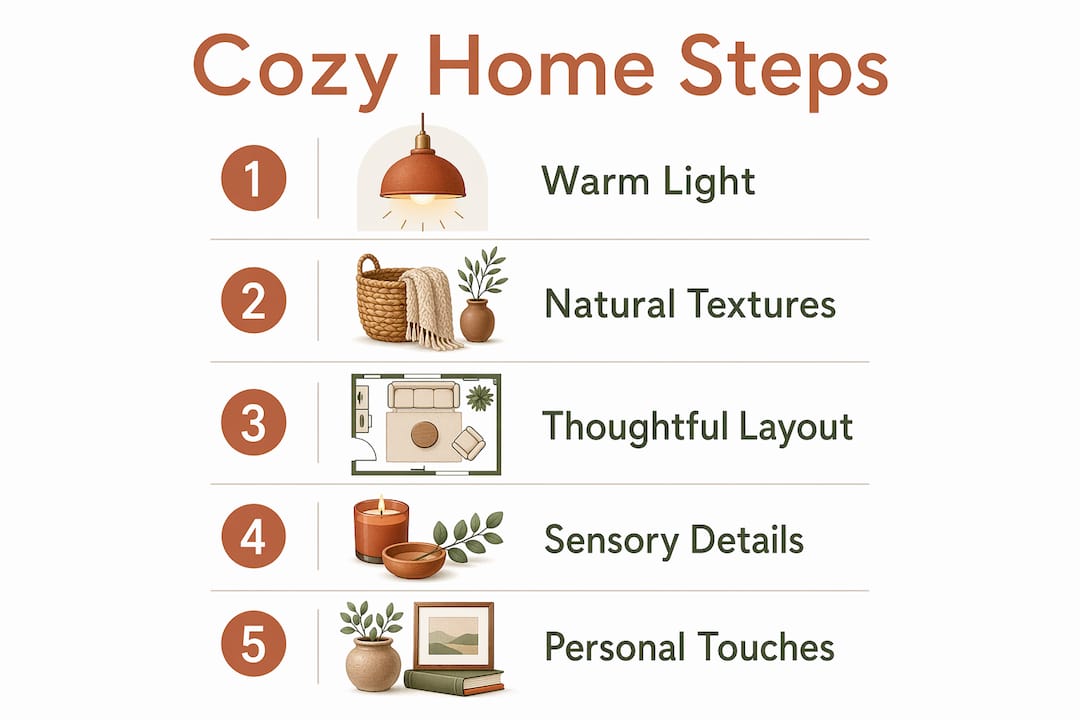
Equally important is light placement. A single overhead fixture floods the room with uniform brightness, which reads as functional and clinical rather than warm. Multiple low-level light sources, such as table lamps, floor lamps, and candles, create pools of light that define smaller zones within a room. This layered approach mimics the way firelight works, drawing the eye inward and creating a sense of enclosure.
Here is what to change first:
- Replace any bulb above 3000K in living areas and bedrooms with a warm white alternative at 2700K
- Turn off overhead lighting in the evening and rely on lamps placed at seated eye level
- Add at least one candle or flame source to your main living space for genuine warmth and movement
- Use dimmer switches where possible to reduce intensity as the evening progresses
Pro Tip: Switching off the overhead light and turning on two table lamps costs nothing and immediately changes the emotional temperature of a room. Try it tonight before investing in any new decor.
What role do textures and natural materials play?
Texture is the second pillar of a warm home ambiance, and it works on two levels. Visually, soft and irregular surfaces signal safety before you even touch them. Tactilely, contact with natural materials like wool, cotton, and wood triggers a measurable physiological response.
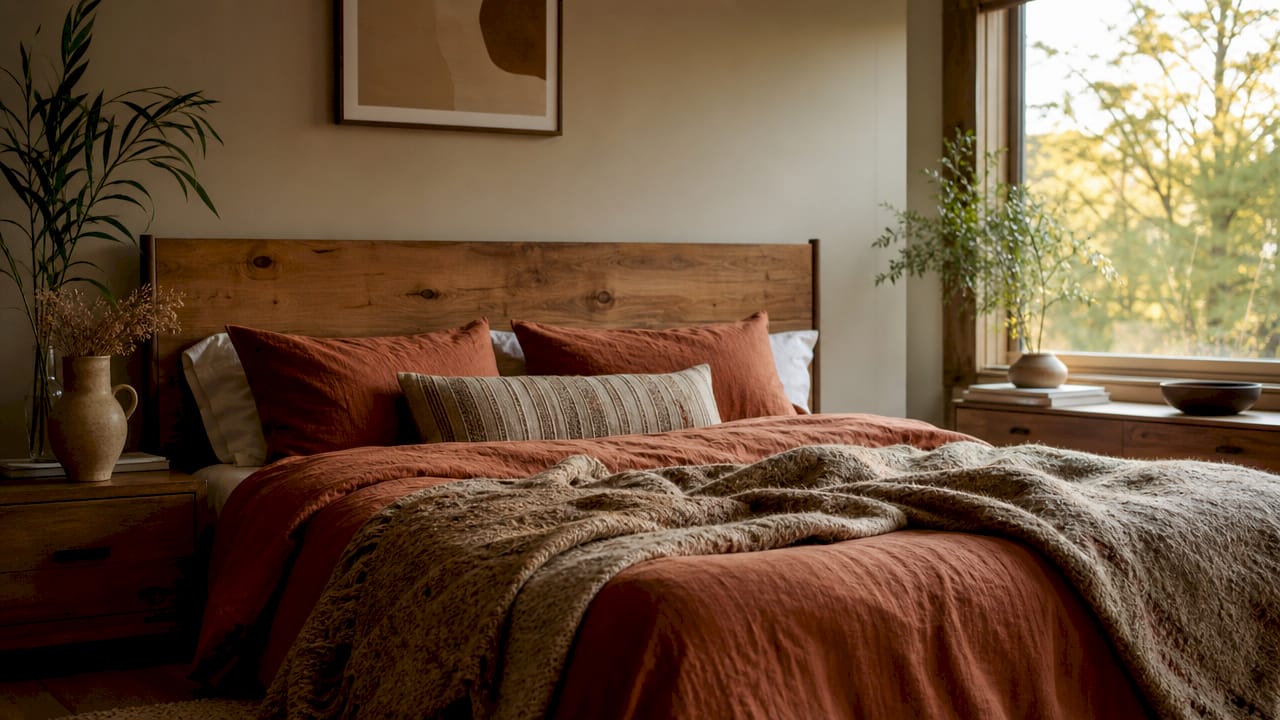
Incorporating wood, natural fibers, and live plants reduces stress markers such as cortisol and improves heart rate variability within 10 to 20 minutes. This is the biophilic response: the human nervous system recognizes natural materials as safe and familiar, and responds by downregulating its stress systems. Hard, smooth, cold surfaces like polished concrete, glass, and metal do the opposite. They read as alert-inducing environments.
The practical application is simple. You do not need to renovate. You need to layer:
- A wool or cotton throw draped over a sofa arm
- A jute or wool area rug underfoot in the main seating area
- Linen or bouclé cushion covers replacing synthetic ones
- At least one wooden object per room, whether a tray, a bowl, or a side table
- Live plants or dried botanicals to introduce organic form
Pro Tip: Add one natural wood item and one soft textile to any room that feels sterile. The combination of organic form and tactile softness is enough to shift the emotional register of the space.
How does room layout affect psychological comfort?
Spatial arrangement determines whether a room feels safe or exposed, and this matters more than most people realize. Jay Appleton’s prospect and refuge theory explains that humans instinctively seek positions that offer both shelter and a clear view of the surrounding space. A chair pushed against a wall with its back exposed feels uncomfortable. A chair positioned with its back to a solid surface and a view of the room entrance feels secure.
This principle shapes how you should arrange your furniture. Pull seating away from walls and group it around a central rug to create an anchored zone. The rug defines the boundary of the social space, which gives the brain a clear sense of enclosure without physical walls. Position the main seat so it faces the room entrance but has something solid behind it, whether a wall, a bookshelf, or a large plant.
Here is a quick comparison of layout approaches and their effect on perceived coziness:
| Layout approach | Effect on comfort |
|---|---|
| Furniture pushed against walls | Creates exposed, formal feeling with no enclosure |
| Furniture grouped around a central rug | Defines a zone, signals refuge and belonging |
| Single overhead light, no zones | Flat, clinical atmosphere with no focal warmth |
| Multiple light sources at varied heights | Creates depth, warmth, and visual anchoring |
| Open-plan with no defined areas | Feels large but unsettled and hard to relax in |
| Open-plan with rugs and curtains zoning space | Delivers coziness without construction |
Pro Tip: If your living room feels cold despite good decor, try pulling all seating 12 to 18 inches away from the walls and placing a rug underneath. The change in spatial psychology is immediate.
What makes the emotional layer of coziness so powerful?
A warm home ambiance is not only visual and tactile. Scent and sound complete the picture, and they work directly on the emotional centers of the brain in ways that sight and touch do not.
Familiar scents like vanilla, cedar, and cinnamon connect to the limbic system, the part of the brain responsible for memory and emotion, faster than any other sensory input. A quality soy or beeswax candle scented with warm notes does double duty: it provides soft light and delivers an olfactory signal of safety and comfort. Diffusers with cedarwood or sandalwood essential oils work equally well for those who prefer a subtler effect.
Sound is equally important. Cozy spaces manage sound by avoiding both complete silence and harsh noise. Sterile silence can feel unsettling, while sharp or unpredictable sounds trigger alertness. Low ambient sound, such as rain recordings, soft instrumental music, or the gentle crackle of a real flame, signals that the environment is calm and unthreatening. A Spotify playlist of lo-fi acoustic music or a YouTube rain ambiance track costs nothing and changes the emotional texture of a room within minutes.
Personal objects matter too. Photographs, books you have actually read, objects collected from meaningful places: these items tell your brain that this space belongs to you. That sense of belonging is a core component of comfort in any home environment.
Is cozy the same as cluttered?
No. This is the most common misconception in creating a comforting atmosphere, and it leads to spaces that feel heavy and stressful rather than warm. Clutter creates cognitive load and mental noise, which is the opposite of relaxation. A cozy space reduces visual noise so the mind can settle.
The distinction is intentionality. Every object in a cozy space earns its place either through beauty, function, or personal meaning. Objects that do neither of those things add visual complexity without emotional return. The brain has to process everything it sees, and a room full of unrelated items keeps the mind scanning rather than resting.
Practical steps to maintain warmth without overcrowding:
- Use trays and baskets to group daily-use items into anchored zones that reduce visual scatter
- Limit decorative objects on any surface to three or fewer, grouped by material or color
- Store items you use less than once a week out of sight
- Choose a few meaningful personal objects over many generic decorative ones
- Clear surfaces in the main sightline from your primary seating position
Pro Tip: Stand at the entrance to your living room and identify the first three things your eye lands on. If any of them create a sense of disorder or obligation, move or remove them. Cozy spaces give the eye somewhere pleasant to rest.
Key takeaways
A cozy home atmosphere is a physiological and emotional state created by layering warm light, natural textures, intentional spatial arrangement, and personal sensory cues, not by accumulating more objects.
| Point | Details |
|---|---|
| Lighting is the top priority | Switching to 2700K warm bulbs and using multiple low-level sources creates the biggest single shift. |
| Natural materials reduce stress | Wood, wool, cotton, and live plants measurably lower cortisol within 10 to 20 minutes. |
| Spatial layout signals safety | Group furniture around rugs and position seating to face the room entrance for psychological refuge. |
| Scent and sound complete the atmosphere | Warm scents and low ambient sound activate the emotional brain and signal that the environment is safe. |
| Cozy requires editing, not accumulating | Intentional simplicity lowers cognitive load and allows the mind to relax rather than scan. |
Why coziness is worth designing for, not just hoping for
Most homeowners wait for a room to feel cozy rather than building the conditions for it. That is the wrong approach. Coziness is not a mood that arrives on its own. It is the result of specific, learnable design decisions that you can apply today.
What I find most striking, after years of thinking about how spaces affect people, is how little it costs to get this right. The changes that matter most, warm lighting, a soft textile, a wooden object, a scented candle, a rearranged sofa, are all low-cost or free. The expensive renovations rarely move the needle on how a space feels. A freshly plastered open-plan kitchen with recessed LED lighting and polished concrete floors can feel profoundly uncomfortable, while a rented apartment with warm lamps, a wool rug, and a few personal objects can feel deeply welcoming.
The other thing worth saying directly: coziness is not a trend. Hygge became a cultural moment in Scandinavia and then globally, but the underlying need it describes, for spaces that help the nervous system rest, is permanent. You can read more about practical home warmth strategies that go beyond aesthetics and address the sensory foundations of comfort. The goal is not to create a space that photographs well. It is to create a space where you actually feel better.
— V&M
Bring real warmth into your space with Flaemme

One element that delivers both warm light and sensory comfort in a single object is a real flame. Flaemme’s smokeless tabletop fire pits burn bio ethanol fuel cleanly, with no chimney, no installation, and no smoke. They produce the amber glow that lighting science identifies as the most relaxing color temperature, along with the gentle movement and soft crackling that signals safety to the nervous system. Place one on a coffee table or dining surface and the room changes immediately. Flaemme ships across Europe with free delivery and a 30-day return policy, so you can try one in your own space without risk. Explore the full range of portable tabletop fire pits and find the right fit for your home. →
FAQ
What is a cozy home atmosphere?
A cozy home atmosphere is a physiological and emotional state of warmth, safety, and relaxation triggered by environmental cues including warm lighting, soft textures, familiar scents, and spatial enclosure. It is not a decor style but a nervous system response to specific sensory signals.
What makes a home feel cozy?
Warm light at 2700K or below, natural materials like wood and wool, furniture arranged to create enclosure, and personal objects that carry emotional meaning are the primary drivers. Lighting alone accounts for nearly one-third of the cozy effect in a room.
How do I create a cozy atmosphere without spending much?
Rearranging existing furniture, switching bulbs to warm white, turning off overhead lights in the evening, and adding a soft throw or rug are all zero or low-cost changes that create a measurable difference in how a space feels.
Does a cozy home have to be cluttered?
No. Clutter increases cognitive load and reduces relaxation. A cozy space uses intentional simplicity, grouping meaningful objects and reducing visual noise so the mind can settle rather than scan.
Can a large open-plan space feel cozy?
Yes. Defining smaller enclosed zones within a large space using area rugs, furniture groupings, and curtains satisfies the brain’s need for refuge without any structural changes.