
What Is Ambient Heating? A Homeowner's 2026 Guide
TL;DR:
- Ambient heating captures naturally occurring low-grade thermal energy to warm indoor spaces efficiently without combustion. It utilizes technologies like heat pumps, radiant infrared films, and district loop networks, offering lower distribution losses and environmental benefits compared to traditional systems. Proper control and integration with renewable sources maximize its efficiency, making it a sustainable choice for future home heating.
Ambient heating is defined as the process of capturing low-grade thermal energy already present in the surrounding environment and using it to warm indoor spaces efficiently. Unlike traditional furnaces or boilers that generate heat by burning fuel, ambient heating systems extract warmth that already exists in air, water, or the ground. Technologies like heat pumps, radiant infrared heating films, and fifth-generation ambient loop networks all fall under this category. The result is a heating approach that delivers genuine comfort at a fraction of the energy cost, making it one of the most relevant topics for homeowners focused on both warmth and sustainability in 2026.
What is ambient heating and how does it work?
Ambient heating works by moving or transferring thermal energy rather than creating it from scratch. A heat pump, for example, extracts low-grade warmth from outdoor air or ground water and concentrates it into usable heat for your home. This is fundamentally different from a gas boiler, which burns fuel to generate heat directly. The efficiency advantage is significant because moving energy always requires less input than generating it.
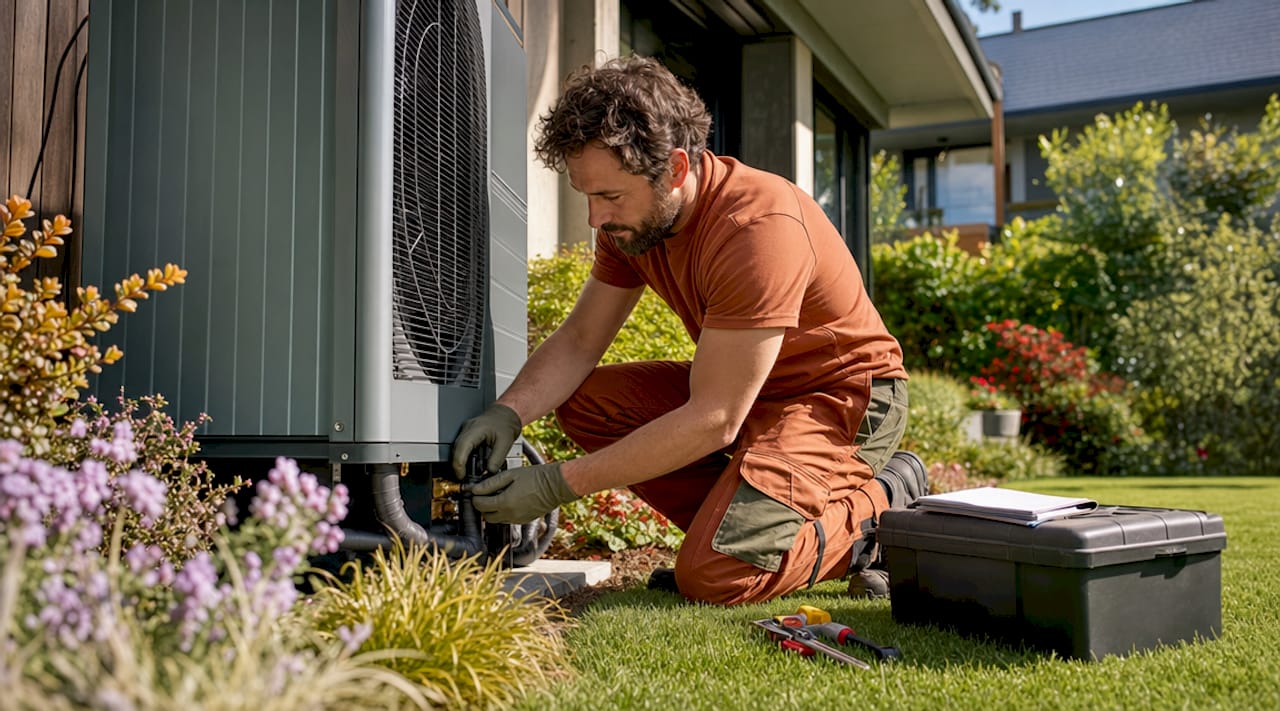
The core of most ambient heating systems is a low-temperature water circuit. Ambient loops circulate water at temperatures between 10°C and 30°C, acting as shared thermal reservoirs that buildings can draw from or contribute to. This means the loop itself does not heat your home directly. Instead, individual heat pumps connected to the loop extract warmth from the circulating water and deliver it to your radiators or underfloor heating at a usable temperature.
Radiant infrared heating films work on a different but equally efficient principle. These thin, carbon-based films are installed beneath floors or above ceilings and operate at a maximum surface temperature of 50°C, delivering 110 W per linear meter. They heat objects and people directly through infrared radiation rather than warming the air first. This is why a room with radiant heating feels warm even when the air temperature is relatively low.
Modern heat pumps have expanded the geographic reach of ambient heating considerably. Ambient-capable heat pumps operate effectively at outdoor temperatures as low as -13°F and can supply hot water up to 140°F. This performance range makes ambient heating viable in climates that would have ruled it out just a decade ago. Some systems also switch automatically between electric and LP fuel sources, adding reliability when energy conditions vary.
Pro Tip: When planning an ambient heating installation, ask your installer about sequencing controls. Systems that activate components in the wrong order waste energy and wear out equipment faster.
What are the benefits of ambient heating vs traditional heating?
The efficiency gap between ambient heating and conventional systems is measurable and significant. Fifth-generation ambient loop systems achieve heat distribution losses as low as 1 to 3%, compared to losses exceeding 8% in older district heating generations. That difference compounds over a full heating season into real savings on your energy bill.
The comfort difference is equally noticeable. Radiant systems like iHelios infrared films provide even warmth without air movement or dust circulation, which means you can keep your thermostat set lower while still feeling comfortable. Forced-air systems heat the air, which rises to the ceiling before it reaches you. Radiant systems heat you directly, which is a fundamentally more efficient path.
The environmental case for ambient heating is also growing stronger. Waste heat from industrial processes is increasingly treated as a 100% carbon-free input in ambient low-exergy heating systems. This means a well-designed ambient network can recover thermal energy that would otherwise be lost to the atmosphere and put it to work heating homes. For homeowners interested in eco-friendly heating solutions, this circular approach to energy is a compelling reason to consider the switch.
Here is a direct comparison of the two approaches:
| Feature | Ambient heating | Traditional heating |
|---|---|---|
| Heat source | Environmental thermal energy | Combustion of gas, oil, or wood |
| Distribution losses | 1 to 3% | Over 8% |
| Carbon output | Very low to zero | Moderate to high |
| Comfort delivery | Radiant or low-temp hydronic | Forced air or high-temp radiators |
| Renewable integration | High compatibility | Limited compatibility |
Key advantages of ambient heating for homeowners include:
- Lower running costs due to reduced energy input per unit of heat delivered
- Compatibility with solar panels and other renewable energy sources
- Reduced maintenance needs compared to combustion-based systems
- Better indoor air quality because radiant systems do not circulate dust
- Eligibility for government incentives in many European countries
What types of ambient heating technologies are available today?
The ambient heating category covers several distinct technologies, each suited to different home types and budgets.
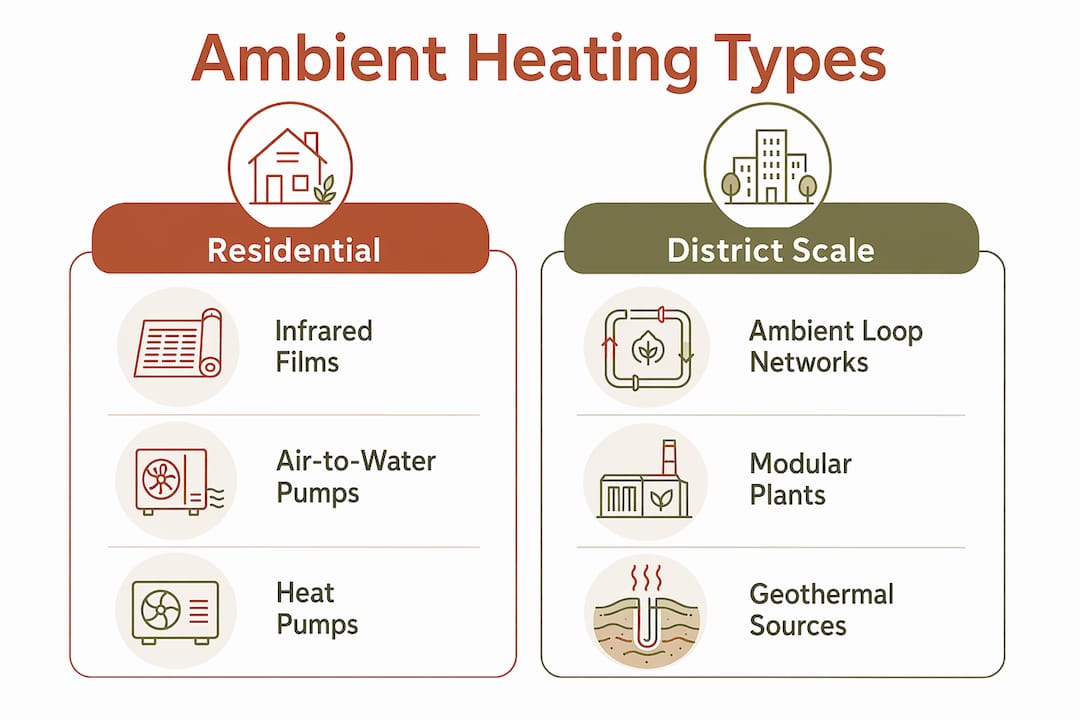
Radiant infrared heating films are one of the most accessible options for residential use. Products like iHelios films can be installed under existing floors or above ceilings without major construction work. They are particularly well suited to retrofit projects where tearing up floors for underfloor pipes is not practical.
Air-to-water heat pumps are the most widely adopted ambient heating technology for individual homes. They extract warmth from outdoor air and transfer it to a hydronic circuit that feeds radiators or underfloor heating. Their performance at low outdoor temperatures has improved dramatically, making them a realistic choice across most of Europe.
Fifth-generation ambient loop networks represent the most advanced application of this technology. These are district-scale systems where a shared water loop connects multiple buildings, allowing them to share thermal energy. A building generating excess heat, such as a data center or supermarket, can contribute that warmth to the loop for neighboring homes to use.
Modular heat pump plants draw from a wider range of ambient sources, including wastewater, geothermal energy, and river water. These are typically used in larger residential developments or mixed-use buildings where a single central plant serves many units.
Here is a quick reference for the main technology types:
| Technology | Best suited for | Key advantage |
|---|---|---|
| Radiant infrared films | Retrofit homes, apartments | Easy installation, no air movement |
| Air-to-water heat pumps | Individual homes | Wide temperature range, proven reliability |
| Ambient loop networks | Multi-building districts | Shared thermal resources, very low losses |
| Modular heat pump plants | Large developments | Flexible heat sources, scalable capacity |
Sustainability experts note that ambient heating’s ability to recover low-grade thermal surpluses near human activity is one of its defining strengths. Every source of waste heat, from a server room to a laundromat, becomes a potential input for the system. This is a fundamentally different way of thinking about energy in a neighborhood.
How can homeowners get the most from ambient heating?
Getting the most from an ambient heating system comes down to three things: control, integration, and realistic expectations about thermostat settings.
Control is the most overlooked factor. Unified control platforms prevent short-cycling and improve efficiency in ambient-linked radiant systems, reducing wear and energy use by up to 20%. Short-cycling happens when a heat pump or heating film switches on and off too rapidly because the control system is not coordinating the components properly. It wastes energy and shortens equipment life. Platforms like Loxone integrate room sensors, heat pump controls, and radiant zones into a single logic sequence that prevents this problem.
Integration with solar panels is a natural pairing for ambient heating. Heat pumps run on electricity, and solar panels generate electricity. Running your heat pump during peak solar generation hours, rather than drawing from the grid, reduces your effective heating cost to near zero for those hours. A smart energy management system can automate this scheduling without any manual input from you.
Thermostat expectations matter more than most homeowners realize. Radiant systems deliver comfort at lower air temperatures than forced-air systems. You may find that 18°C feels as warm as 21°C did with your old system. Setting your thermostat two or three degrees lower and letting the radiant warmth do its work is a straightforward way to cut energy use without sacrificing comfort.
Pro Tip: If you are considering an ambient heating retrofit, start with a heat loss assessment of your home. Poorly insulated walls and windows reduce the effectiveness of any low-temperature system. Insulation upgrades often deliver a better return than the heating system upgrade alone.
Common pitfalls to avoid:
- Installing multiple control systems that do not communicate with each other
- Oversizing the heat pump, which leads to short-cycling even with good controls
- Ignoring the building fabric and expecting the heating system to compensate for poor insulation
- Failing to account for simultaneous demand in multi-unit buildings, where a central storage buffer becomes necessary
Key takeaways
Ambient heating is the most energy-efficient approach to home warmth because it moves existing thermal energy rather than generating new heat from combustion.
| Point | Details |
|---|---|
| Definition | Ambient heating captures environmental thermal energy to warm homes at low energy cost. |
| Distribution efficiency | Fifth-generation ambient loops lose only 1 to 3% of heat in distribution, versus over 8% in older systems. |
| Technology options | Radiant films, air-to-water heat pumps, and ambient loop networks each suit different home types. |
| Control matters | Unified control platforms reduce energy use by up to 20% by preventing short-cycling. |
| Comfort advantage | Radiant delivery warms people directly, allowing lower thermostat settings without sacrificing comfort. |
Why ambient heating is the direction I’d bet on for the next decade
The shift toward low-exergy heating networks is not a trend driven by marketing. It is driven by physics and policy. Stricter emission standards across Europe are making combustion-based heating increasingly expensive to run and, in some jurisdictions, impossible to install in new builds. Ambient heating sidesteps that problem entirely because it does not burn anything.
What I find most interesting about ambient loops specifically is that they reframe the entire question of where heat comes from. The loop is not a heat source. It is a transport system. The actual heat comes from data centers, supermarkets, industrial processes, and the ground itself. Every building connected to the loop becomes both a consumer and a potential contributor. That is a genuinely different model from the one most of us grew up with.
The AI-enhanced control systems entering the market now are also worth watching. Systems that learn your occupancy patterns, predict outdoor temperature changes, and pre-condition your home before you arrive are moving from luxury to standard. When those controls are paired with an ambient heat source and a solar array, the result is a home that heats itself at minimal cost with minimal input from you.
For homeowners exploring emission-free heating options, ambient heating is not a distant future technology. The components are available, the installers exist, and the economics are favorable in most European markets right now. The main barrier is awareness, which is exactly why articles like this one matter.
— V&M
Add cozy warmth with Flaemme’s smokeless fire pits
Ambient heating handles the background warmth of your home beautifully. But there is something a real flame adds to a room that no heat pump can replicate: atmosphere, visual charm, and that immediate sense of coziness on a cold evening.

Flaemme’s smokeless tabletop fire pits run on bio ethanol fuel and produce no smoke, no soot, and no installation headaches. They work indoors and outdoors, require no chimney or gas connection, and are ready to use in minutes. As a complement to an ambient heating system, a Flaemme fire pit adds the enchanting warmth and visual appeal that makes a well-heated home feel truly inviting. Free delivery across Europe and a 30-day return policy make it easy to try one for yourself. →
FAQ
What is ambient heating in simple terms?
Ambient heating is a method of warming indoor spaces by capturing and using low-grade thermal energy already present in the environment, such as heat in outdoor air, ground water, or waste heat from nearby buildings. It moves existing heat rather than generating new heat through combustion.
How does ambient heating differ from traditional heating?
Traditional heating burns fuel to create heat, while ambient heating extracts and transfers heat that already exists in the environment. This makes ambient systems significantly more efficient, with distribution losses as low as 1 to 3% compared to over 8% in conventional district heating systems.
Is ambient heating efficient enough for cold climates?
Modern ambient-capable heat pumps operate at outdoor temperatures as low as -13°F, making them suitable for most climates across Europe and North America. Performance does decrease in extreme cold, which is why some systems include a backup fuel source for the coldest days.
What are the main types of ambient heating systems for homes?
The most common options for homeowners are air-to-water heat pumps, radiant infrared heating films, and connection to a fifth-generation ambient loop network where one is available. Each suits different budgets, home types, and installation constraints.
Can ambient heating work with solar panels?
Ambient heating systems, particularly heat pumps, pair naturally with solar panels because both run on electricity. Scheduling heat pump operation during peak solar generation hours reduces grid dependency and can bring effective heating costs close to zero during sunny periods.