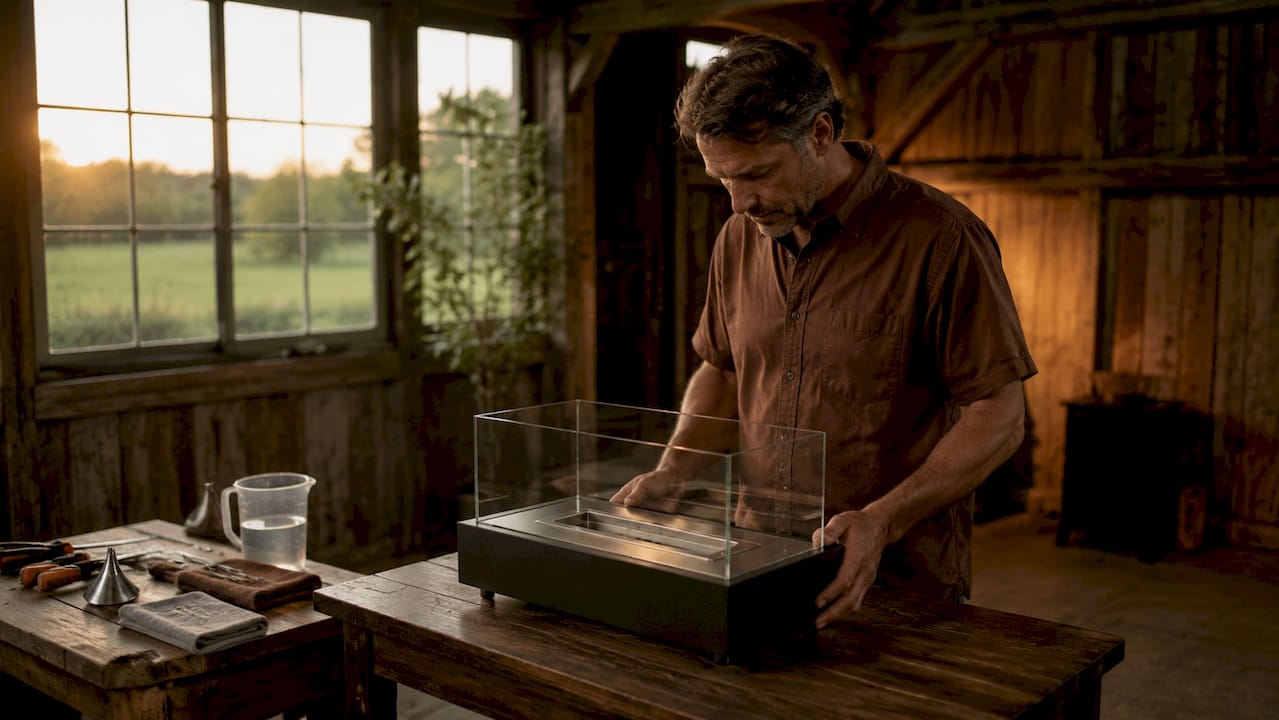
Tabletop Fire Maintenance: Safe and Lasting Care
In short:
- Maintaining a tabletop fire comes down to cooling, a visual check, cleaning and keeping a record, for safety and a long life. Regular checks and careful notes protect you against fire risks and help avoid disputes when renting. Structured care is essential for using an alcohol-fuelled tabletop fire safely.
Maintaining a tabletop fire is a set routine of cooling down, a visual check, cleaning and keeping a record, which helps you use your bioethanol tabletop fire safely for years. If you know this routine and apply it regularly, you reduce fire risks and keep your fire working as it should. European safety standards set requirements for alcohol-fuelled tabletop fires. Here Flaemme explains step by step how to look after your tabletop fire properly, avoid common mistakes and stay safe.
How does tabletop fire maintenance work?
Tabletop fire maintenance follows a fixed sequence: cooling down, visual check, function check, cleaning, repairs and record keeping. That structure is no accident. Structured maintenance routines prevent the mistakes that come from incomplete checklists and keep the quality of care consistent. Once you know the routine, each round of maintenance takes only a few minutes.
Bioethanol is a practical, clean fuel, but it calls for consistent care. Even at room temperature, ethanol gives off vapour that forms easily ignitable and even explosive mixtures with air. That means every maintenance round must begin with the burner cooling down completely before you touch it or refill it.
Why record keeping is part of the routine
Combining a visual check, a function check and written notes is the basis for reliable, repeatable maintenance. That applies to small household fires too. If you note the date, the points you checked and anything unusual, you can show that you looked after the device properly if something goes wrong. In rented homes in particular, this protects you from unnecessary disputes.
What do you need to maintain your tabletop fire?
Before each maintenance round, lay out everything you need. It saves time and stops you having to search for things halfway through.
What you need:
- A soft, lint-free cloth for stainless steel or glass surfaces
- A small brush or cotton buds for the burner opening
- Mild washing-up liquid or isopropyl alcohol for stubborn residue
- A fire extinguisher suitable for alcohol fires within reach (class B)
- A clean container for leftover fuel when emptying
- Nitrile gloves to protect your hands
Safety checks before you start:
- Burner completely cool (at least 30 minutes after last use)
- Room well ventilated, with a window or door open
- No open flame or source of ignition nearby
- Fuel container closed and stored safely
Store bioethanol only in tightly closed, originally labelled containers, well away from sources of heat. Always respect the maximum fill level (150 ml for the Ardente) and never keep fuel near the fire itself.
Pro tip: Keep all your maintenance supplies together in a small box. That way everything is to hand and you will not forget anything.
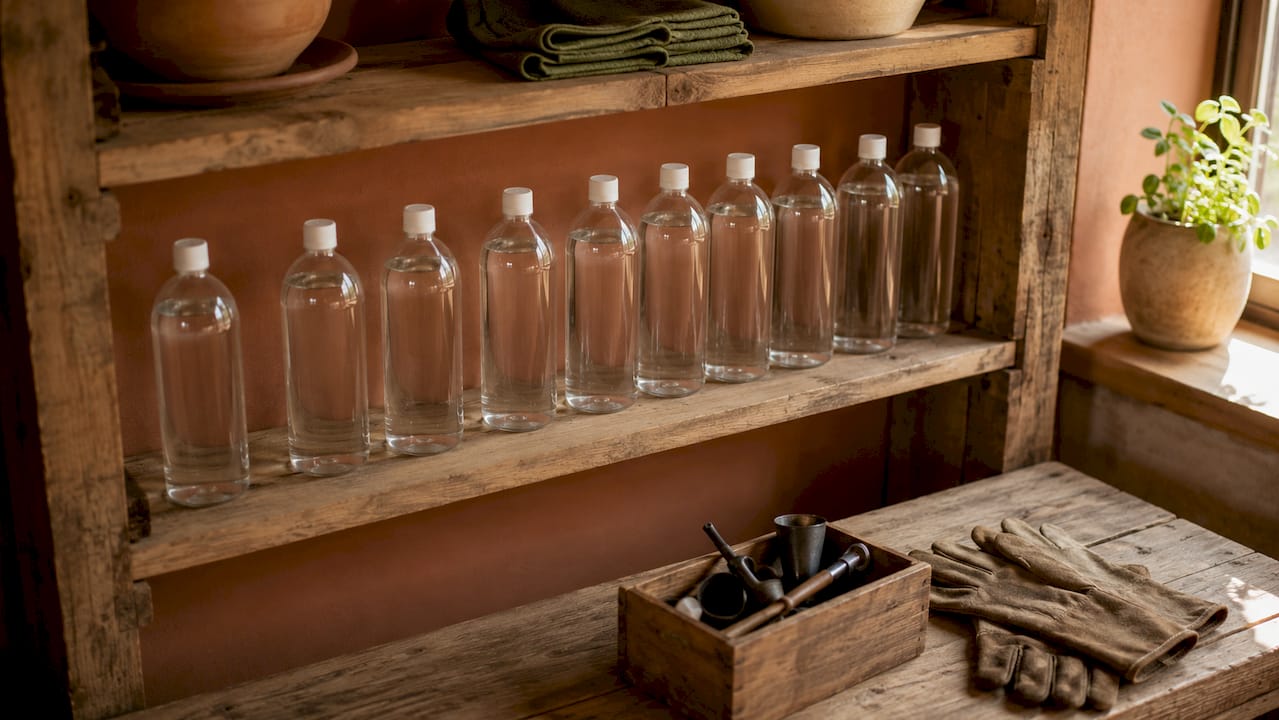
Step by step: how to maintain your tabletop fire properly
The following routine applies to all common bioethanol tabletop fires, including Flaemme models. Carry out each step in this order.
-
Make sure it has cooled down. Wait at least 30 minutes after last use. Only touch the burner once it feels cold. Residual heat and vapour are present even without a visible flame and are the most common cause of accidents.
-
Carry out a visual check. Look over the whole device: surface, burner frame, seals and burner opening. Watch for discolouration, cracks, deposits or warping. Note anything unusual.
-
Check the burner opening. Make sure the opening is clear and unobstructed. Blockages lead to uneven combustion and increase the risk of flare-ups. A small brush or cotton bud is enough to clean it.
-
Inspect seals and closures. Check all seals for cracks or hardening. Faulty seals let fuel escape and must be replaced before the next use.
-
Clean it. Only clean once it has cooled down completely, using a soft cloth and a mild cleaning agent. Harsh chemicals damage surfaces and leave residue that burns off the next time you light it. Clean stainless steel with a damp cloth along the grain.
-
Finish with a function check. After cleaning, fill the burner with a small amount of bioethanol and check that the flame burns evenly. An irregular flame or an unusual smell is a sign that maintenance is needed.
-
Record the maintenance. Write down the date, the points you checked and any action taken. A simple notebook or a spreadsheet on your phone is enough.
Pro tip: Photograph anything unusual during the visual check. That gives you a visual comparison for the next round and lets you spot changes straight away.
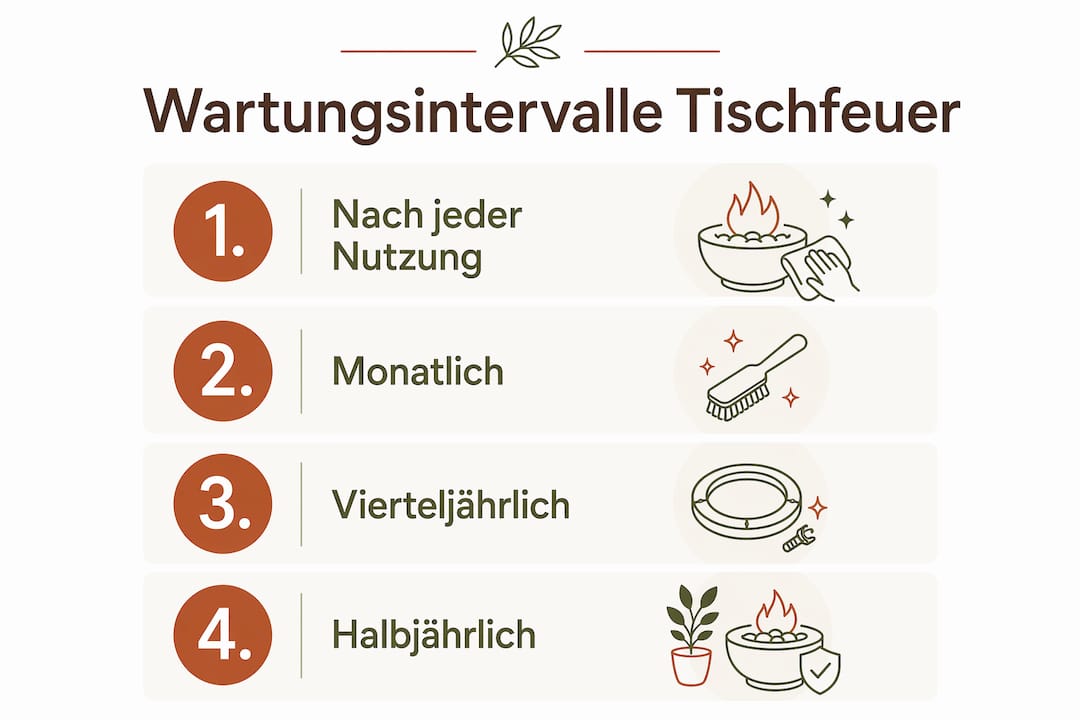
Maintenance intervals at a glance
| Maintenance step | Recommended interval |
|---|---|
| Visual check | After every use |
| Cleaning the surface | Weekly with regular use |
| Checking the burner opening | Monthly |
| Inspecting the seals | Every 3 months |
| Full maintenance record | At least once a year |
Which common maintenance mistakes should you avoid?
Many accidents with bioethanol tabletop fires are caused not by faulty devices but by avoidable mistakes in their care. Knowing the most common pitfalls protects you and your home.
- Refilling while the burner is hot or still burning. This is the most dangerous mistake of all. Never refill a bioethanol tabletop fire while a flame is still burning or the burner is hot. Ethanol vapour can ignite easily even at room temperature.
- Not allowing enough time to cool. Many users do not wait long enough. The outside may feel cool while heat and vapour remain inside. Always allow at least 30 minutes.
- Using unsuitable cleaning products. Scouring agents, acetone or solvent-based sprays damage surfaces and seals. Use only mild products or plain water.
- Neglecting the burner opening. Blocked openings lead to uneven combustion. Check them regularly, even if the device looks clean on the outside.
- Working with outdated or missing checklists. Unclear or outdated checklists are a common source of maintenance errors. Update your checklist at least once a year.
- Storing fuel incorrectly. Ethanol in open or wrongly labelled containers is a serious hazard. Always store fuel closed, cool and well away from the tabletop fire.
Only a documented routine that makes sure the burner has cooled down completely reliably prevents the most common refilling mistake.
In rented homes especially, record every maintenance step. That protects you from claims that you did not look after the device properly when you move out.
How to keep your tabletop fire working in the long term
Regular care is not a one-off task but a routine. If you stick to fixed intervals and build maintenance into everyday life, you will enjoy your tabletop fire for a long time.
-
Plan fixed maintenance intervals. Choose a set day each month to check your tabletop fire. A reminder in your calendar is all it takes.
-
Keep a simple maintenance log. A short log that records the date and the points checked improves safety and makes your care dependable. It is not a legal requirement, but it helps a great deal when you leave a rented home or if something goes wrong.
-
Follow current safety standards. European standards set safety requirements for alcohol-fuelled tabletop fires. If in doubt about your device, ask the manufacturer.
-
Get expert advice for repairs. If your visual check reveals cracks, faulty seals or unusual discolouration, contact the manufacturer. Never repair safety components yourself if you are unsure.
-
Make maintenance part of running your home. Treat your tabletop fire like any other household appliance: with fixed care intervals, a record and a clear routine.
Maintenance log: an everyday template
| Date | Point checked | Result | Action |
|---|---|---|---|
| 15/01/2026 | Visual check of surface | Nothing unusual | None |
| 15/01/2026 | Burner opening | Slight deposit | Cleaned with brush |
| 15/01/2026 | Seals | In good order | None |
| 15/04/2026 | Full check | Seal slightly hardened | Seal replaced |
You can print this simple table or keep it digitally. You do not need any special software.
Key takeaways
Maintaining a tabletop fire calls for complete cooling, a structured visual and function check, and written records, so that it stays safe and works properly for the long term.
| Point | Details |
|---|---|
| Cooling down is a must | Wait at least 30 minutes after use before touching or refilling the burner. |
| A structured routine | A visual check, function check and cleaning in a fixed order prevent mistakes and accidents. |
| Records protect you | A simple log with date and result protects you as a tenant and if something goes wrong. |
| Know the mistakes and avoid them | Refilling while warm, the wrong cleaning products and outdated checklists are common sources of danger. |
| Follow the standards | European safety standards set requirements for safe bioethanol tabletop fires. |
What really matters in the long run
Many people buy a tabletop fire with great enthusiasm and then become careless about looking after it. A typical line: "I waited a moment, it was already cold." That is exactly the problem. Residual heat and ethanol vapour are invisible. You notice nothing until it is too late.
What is striking is that accidents often happen not the first time but after months of trouble-free use. The fire works well, the routine slips, and at some point a step gets skipped. That is when something happens.
My honest advice: write yourself a checklist and hang it near the fire. Not because you are forgetful, but because a visible reminder makes the difference. A laminated card with five points works well. It may sound excessive, but it is not.
Another lesson: record keeping is not bureaucracy. It is a tool. If you write down when you checked what, you start to see patterns. A seal that gives way every three months points to a structural problem, not chance. Without notes, you would never notice.
If you really love your tabletop fire, you look after it. And if you look after it, you will enjoy it for years.
— V&M
Flaemme helps you care for your tabletop fire safely
Flaemme tabletop fires are designed for simple, safe use. A clear design and quality materials make maintenance straightforward. Even so, the best device still needs regular care.

On the Flaemme website you will find detailed guidance on refilling bioethanol safely as well as up-to-date safety advice for 2026. If you are looking for a new fire, the Smokeless Fire Pit collection offers smoke-free, low-maintenance models for indoor use and sheltered outdoor spots. The Ardente burns for 60 to 90 minutes per filling of up to 150 ml. Every order comes with 30 days free returns and a 2-year warranty. Start with a fire that is designed with safety in mind from the outset.
FAQ
What is the first step in maintaining a tabletop fire?
The first step is letting the burner cool down completely. Wait at least 30 minutes after last use before you touch, clean or refill your tabletop fire.
How often should I maintain my tabletop fire?
A visual check is recommended after every use. Check the burner opening monthly and the seals every three months, and complete a full maintenance record at least once a year.
Which cleaning products are suitable for tabletop fires?
Use only mild products such as washing-up liquid, plain water or isopropyl alcohol. Harsh chemicals, scouring agents and solvents damage surfaces and seals.
Do I have to keep a record of maintenance?
There is no legal obligation, but a simple log with the date and the points checked protects you as a tenant and if something goes wrong. It also helps you spot patterns in recurring problems.
Are there safety standards for bioethanol tabletop fires?
Yes. European safety standards set safety and testing requirements for alcohol-fuelled tabletop fires, covering points such as permitted burner output, installation guidance and safety-related components. If in doubt, ask the manufacturer.