Ecological Fireplace Guide for DACH Homeowners
TL;DR:
- Ecological fireplaces use renewable fuels or electricity, providing comfortable warmth with minimal emissions. Portable bioethanol and electric models suit renters and small spaces, while pellet fireplaces offer higher heat output for larger homes. Proper ventilation and fuel quality are essential to ensure indoor air safety and maximize environmental benefits.
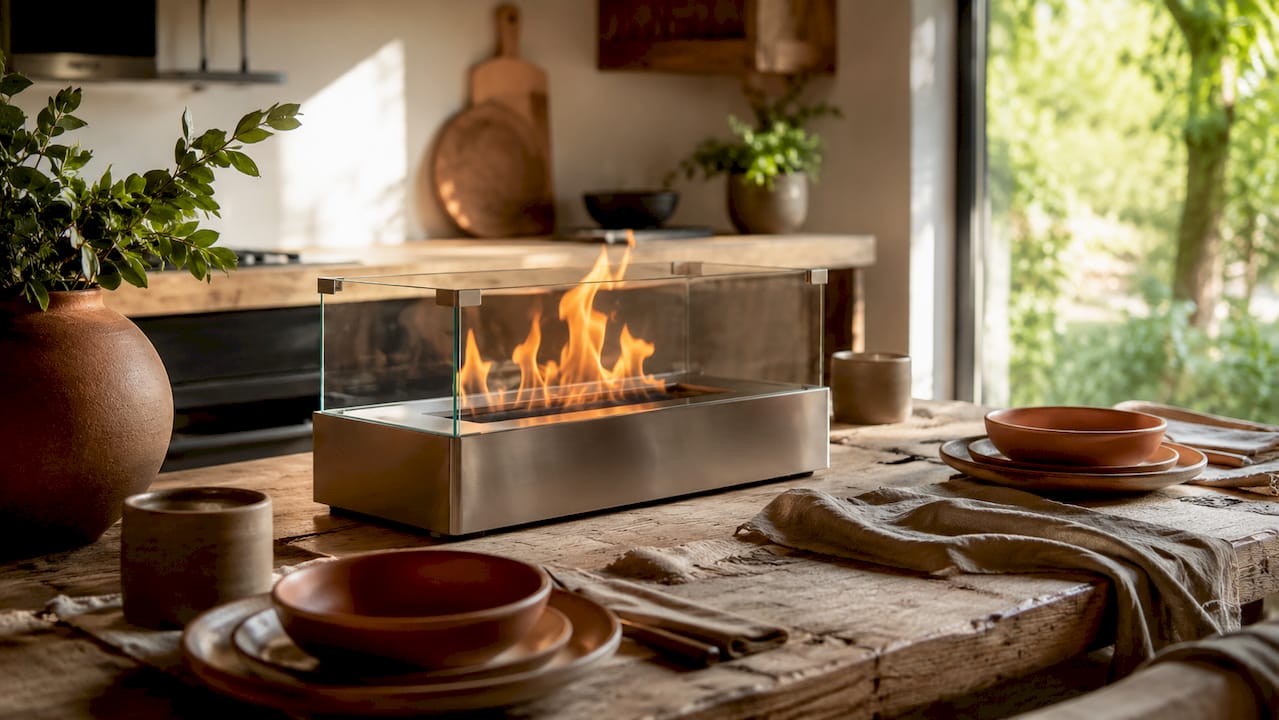
An ecological fireplace is a heating appliance designed to minimize environmental impact while delivering warmth and ambiance, typically using renewable fuels like bioethanol or biomass, or running entirely on electricity. For homeowners and renters in Germany, Austria, and Switzerland, these fireplaces solve a real problem: how to enjoy the comfort of a real flame without a traditional chimney, without heavy installation costs, and without the emissions of a wood-burning stove. The three main types are bioethanol, pellet, and electric fireplaces. Each brings a different balance of heat output, visual charm, and ecological footprint.
1. What types of ecological fireplaces are available?
Bioethanol, pellet, and electric fireplaces are the three dominant categories in the eco-friendly fireplace market. Each works differently and suits different living situations.
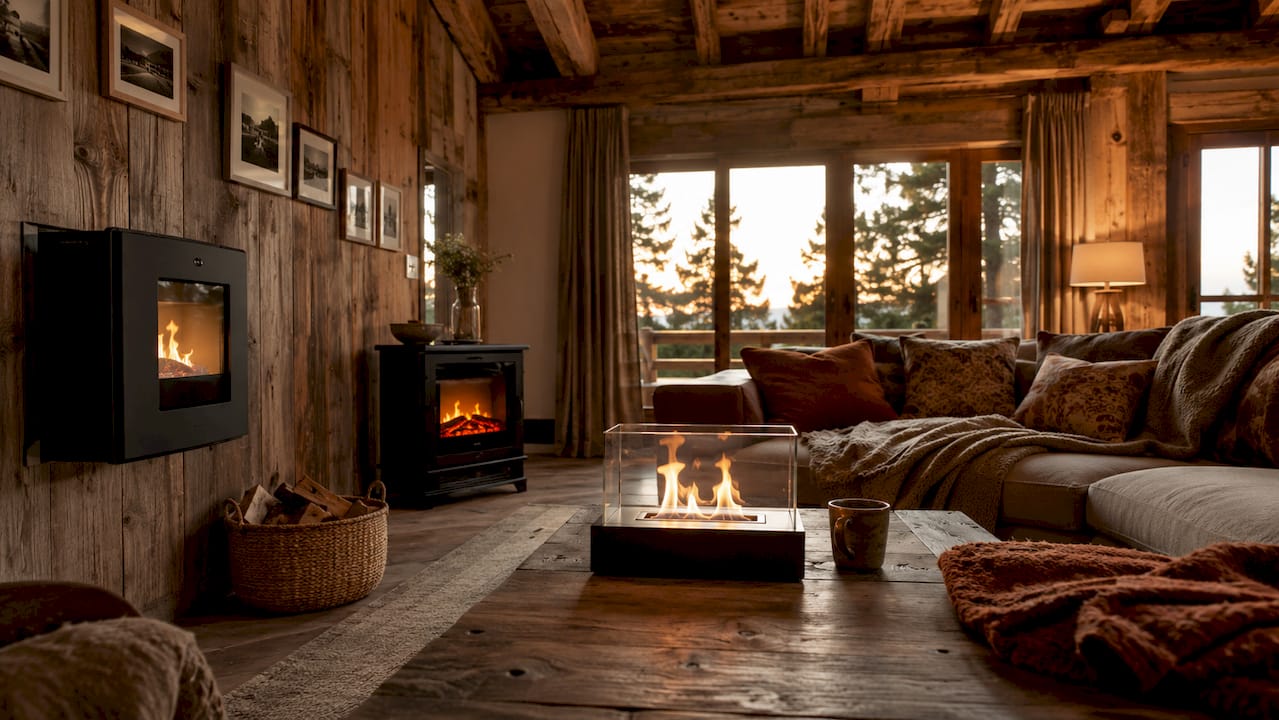
Bioethanol fireplaces burn liquid bioethanol fuel, a plant-derived alcohol, to produce a real, visible flame. They require no flue or chimney, making them ideal for apartments and historic buildings across the DACH region. The combustion produces carbon dioxide and water vapor as primary byproducts, with no smoke or soot.
Pellet fireplaces burn compressed wood or biomass pellets. They deliver higher heat output than most bioethanol models and qualify as biomass fireplace options under European renewable energy definitions. Most pellet stoves require a flue connection, which limits their use in apartments.
Electric fireplaces produce zero toxic fumes, require no fuel, and can convert 100% of electricity into heat. That makes them the cleanest option at the point of use, though their overall environmental impact depends on the electricity source. In Germany and Austria, where renewable energy shares are growing, electric fireplaces become increasingly sustainable over time.
| Type | Heat Output | Emissions | Installation | Best For |
|---|---|---|---|---|
| Bioethanol | 1.8–4.4 kW | CO₂ + water vapor | No flue needed | Apartments, renters |
| Pellet | 4–15 kW | Low particulates | Flue required | Houses, owners |
| Electric | 1–2 kW | Zero at point of use | Plug-in | Any space |
- Bioethanol: real flame, portable, vent-free
- Pellet: high heat, biomass fuel, needs installation
- Electric: zero emissions, low maintenance, plug-and-play
Pro Tip: Always choose bioethanol fuel with a purity of 96% or higher to reduce formaldehyde and other trace pollutant emissions during combustion.
2. How ecological fireplaces affect indoor air quality
Bioethanol combustion produces measurable byproducts that affect the air inside your home. Bioethanol burners at 2–3 kW emit roughly 250–350 grams of CO₂ per hour. Without proper ventilation, indoor CO₂ levels rise quickly in a sealed room.
Water vapor is the second major byproduct. Bioethanol combustion releases 200–300 ml of water vapor per hour of burning. In a poorly ventilated room, that moisture accumulates and raises humidity, which can encourage mold growth over time.
Trace pollutants like carbon monoxide and formaldehyde appear when combustion is incomplete. Low-purity fuel and restricted airflow are the two main causes. Using high-purity fuel and keeping the burner clean reduces these risks significantly.
Practical steps to protect indoor air quality:
- Open a window or use mechanical ventilation when running a bioethanol fireplace
- Follow the guideline of at least 2 m² of openable window area per liter of fuel capacity
- Install a CO₂ monitor and a carbon monoxide detector in the same room
- Never run a bioethanol fireplace in a fully sealed room or a very small space
Pro Tip: In typical DACH apartments with 2.5-meter ceilings and rooms under 25 m², crack two windows slightly rather than one fully open. This creates cross-ventilation and keeps CO₂ from pooling in corners.
3. Design and installation options for homes without flues
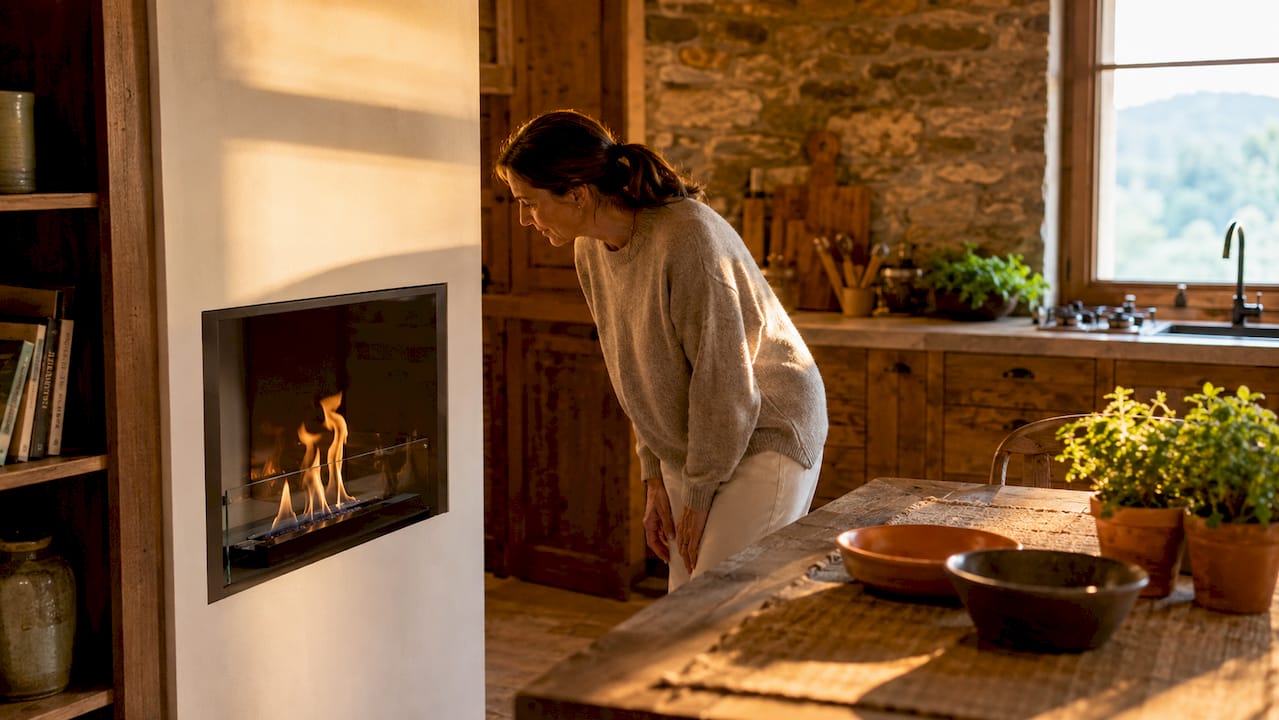
The absence of a chimney is the single biggest barrier to fireplace ownership in urban DACH apartments. Vent-free ecological fireplaces remove that barrier entirely. Bioethanol models, in particular, need no flue, no gas line, and no structural modification.
The Biobob suspended bioethanol fireplace from Firemaker is one of the most cited examples of this category. It requires no flue and offers heat output ranging from 1.8 kW to 4.4 kW depending on the model size. Its 360° rotation feature lets you direct the flame view toward any seating area in the room.
The Biobob’s design also allows it to be freestanding or wall-mounted, giving renters and homeowners genuine flexibility. A suspended model hangs from the ceiling and becomes a visual focal point. A wall-mounted version suits smaller rooms where floor space is limited.
Key installation options for flue-free homes:
- Suspended bioethanol fireplaces: hang from the ceiling, 360° rotation, strong visual impact
- Built-in ethanol burners: recessed into a wall or furniture unit, clean and minimal look
- Freestanding tabletop models: portable, no installation required, ideal for renters
- Wall-mounted panels: fixed to the wall, space-saving, suit modern interiors
For renters in Berlin, Vienna, or Zurich, tabletop and freestanding bioethanol models are the most practical choice. They require no landlord approval, no tools, and no permanent changes to the property.
4. How to choose the right eco fireplace for your home
Choosing the right eco-friendly fireplace comes down to five practical factors. Work through each one before you buy.
-
Room size and heat output. Match the fireplace’s kW rating to your room volume. A 1.8 kW bioethanol burner warms a small living room of around 20 m². A pellet stove at 6–8 kW suits a larger open-plan space. Oversizing wastes fuel; undersizing leaves you cold.
-
Ventilation capacity. Bioethanol fireplaces need openable windows nearby. If your apartment has sealed double-glazing and no mechanical ventilation, an electric fireplace is the safer choice. Electric models produce no combustion byproducts at all.
-
Ambiance versus heat priority. Bioethanol delivers a real flame with enchanting warmth and visual charm. Electric models often use LED flame effects, which look convincing but feel different. If the real-flame experience matters to you, bioethanol wins on atmosphere.
-
Budget and fuel availability. Bioethanol fuel is widely available in Germany, Austria, and Switzerland through hardware stores and online retailers. Pellet fuel requires bulk storage and a local supplier. Electric fireplaces have no fuel cost beyond electricity, which makes budgeting straightforward.
-
Renter versus homeowner situation. Renters should prioritize portable, no-installation models. Homeowners with more flexibility can consider built-in bioethanol burners or pellet stoves. For energy-efficient home heating, using an ecological fireplace to offset central heating during shoulder seasons like october and march delivers the best return.
Key takeaways
The most effective ecological fireplace for DACH homeowners combines real-flame ambiance, vent-free installation, and high-purity bioethanol fuel to minimize emissions and maximize comfort.
| Point | Details |
|---|---|
| Match type to living situation | Renters benefit most from portable bioethanol or electric models requiring no installation. |
| Ventilate every time | Run bioethanol fireplaces with at least 2 m² of openable window area per liter of fuel capacity. |
| Fuel purity matters | Use bioethanol at 96% purity or higher to reduce formaldehyde and CO emissions. |
| Electric is cleanest at point of use | Electric fireplaces convert 100% of electricity to heat with zero on-site emissions. |
| Offset heating for real savings | Using an eco fireplace to replace central heating in shoulder seasons maximizes net energy savings. |
Why ecological fireplaces are worth it, but only if you use them right
The sustainability case for an ecological fireplace is real, but it depends on one condition: the fireplace has to displace conventional heating, not add to it. If you run a bioethanol fireplace purely for atmosphere while your central heating stays at full power, the net environmental benefit is close to zero. The efficiency gain comes when you lower your thermostat and let the fireplace carry the load in the room you are actually using.
I’ve seen this pattern repeatedly. Homeowners invest in a beautiful suspended bioethanol model, place it in the living room, and never adjust their heating schedule. The fireplace becomes decor. That’s not a bad outcome for ambiance, but it misses the sustainability point entirely.
The design trend in DACH homes is moving toward ecological fireplaces as focal points, not afterthoughts. Suspended and built-in bioethanol models are appearing in architect-designed apartments in Munich, Vienna, and Basel. That visibility is good. It pushes manufacturers to improve fuel efficiency and build quality. The best models now use durable, low-impact materials and ship with precise burner controls that reduce fuel waste.
My honest recommendation: buy the fireplace that genuinely excites you visually, then build a habit of using it to replace one hour of central heating per evening. That small behavioral shift is where the real environmental benefit lives.
— V&M
Flaemme’s smokeless fire pits for indoor and outdoor ambiance
Flaemme specializes in portable, smoke-free bioethanol tabletop fireplaces designed for both indoor and outdoor use. No installation, no chimney, and no gas line required. You place them on a table, fill the burner with bioethanol fuel, and have a real flame in minutes.
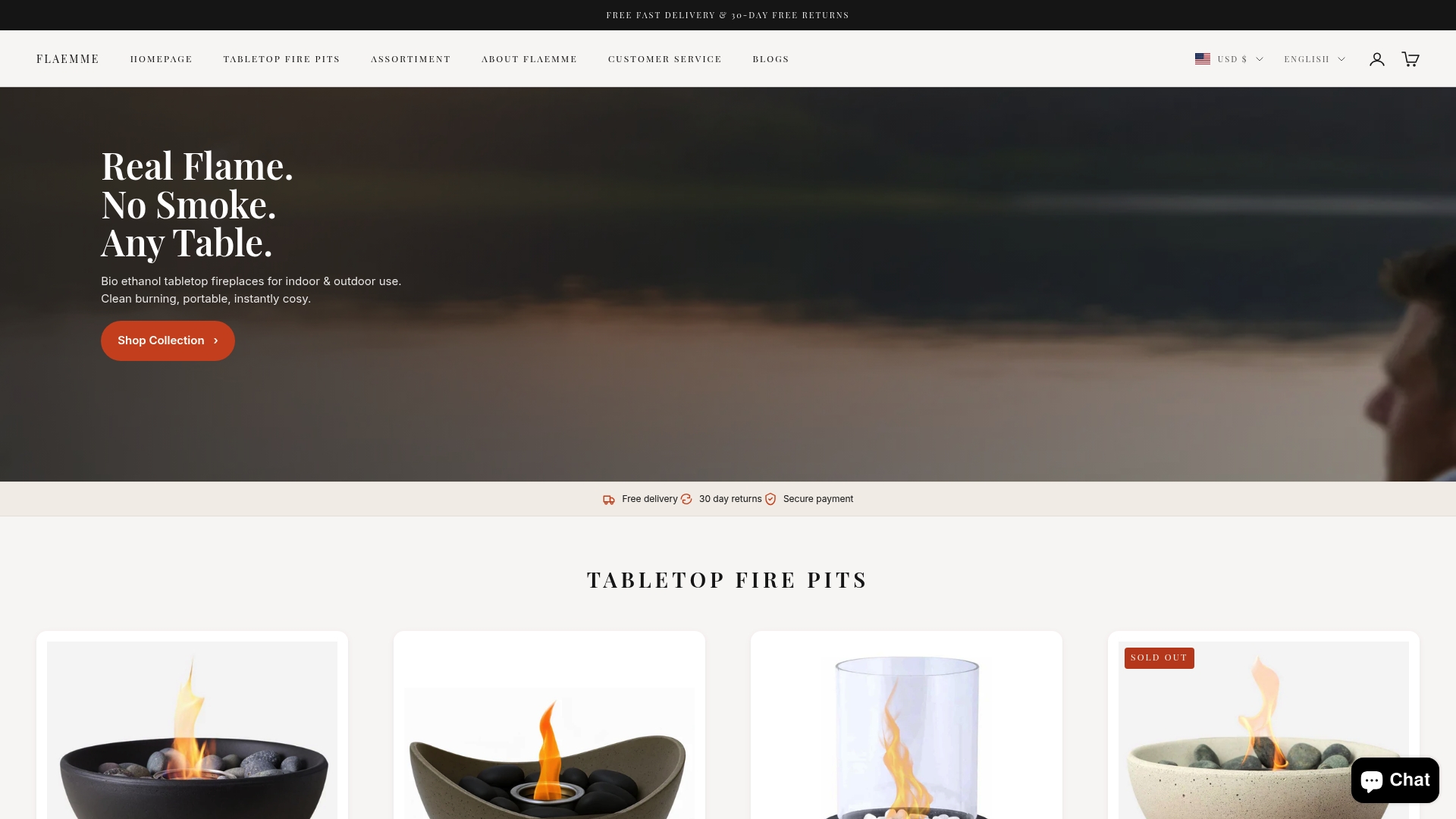
Flaemme’s outdoor tabletop fire pits bring the same clean-burning experience to terraces, balconies, and garden tables. For indoor use, the smokeless fire pit collection offers designs that suit modern DACH interiors without any permanent changes to your space. Free delivery across Europe and a 30-day return policy make it easy to try one at home. →
FAQ
What is an ecological fireplace?
An ecological fireplace is a heating appliance that uses renewable fuel or electricity to produce warmth and ambiance with minimal emissions. Common types include bioethanol, pellet, and electric fireplaces.
Are bioethanol fireplaces safe for apartment use?
Yes, bioethanol fireplaces are safe in apartments when used with proper ventilation. Follow the guideline of at least 2 m² of openable window area per liter of fuel capacity and use fuel with 96% purity or higher.
Do ecological fireplaces actually heat a room?
Bioethanol models in the 1.8–4.4 kW range heat small to medium rooms effectively. Electric models typically deliver 1–2 kW, which suits supplemental heating. Pellet stoves offer the highest output but require a flue.
Can renters install an ecological fireplace?
Renters can use portable bioethanol tabletop models and freestanding electric fireplaces without landlord approval. These require no structural changes, no flue, and no permanent fixtures.
How does a bio fireplace compare to a wood-burning stove?
A bio fireplace produces no smoke, no soot, and no particulate emissions at the point of use. A wood-burning stove delivers higher heat output but requires a chimney and produces particulate matter that affects both indoor and outdoor air quality.