Glass tabletop fireplaces: stylish, smokeless ambiance explained
TL;DR:
- Glass tabletop fireplaces are portable, clean-burning, and visually striking home decor pieces.
- They use bioethanol or gel fuel, producing minimal emissions but requiring ventilation.
- Proper safety, maintenance, and placement are essential for safe and enjoyable use.
Glass tabletop fireplaces have a reputation for being completely safe, emission-free, and suitable for any room. That reputation is mostly deserved, but not entirely. The reality involves a little more nuance, and understanding it will help you get the most warmth and style from these beautifully designed pieces. This guide walks you through what glass tabletop fireplaces actually are, how they work, what to watch out for, and how to use them confidently in your home or on your terrace.
Table of Contents
- What is a glass tabletop fireplace?
- Types of glass tabletop fireplaces: fuel and design variations
- Are glass tabletop fireplaces really smokeless and safe?
- How to choose and use a glass tabletop fireplace at home
- A fresh perspective: What most guides miss about glass tabletop fireplaces
- Enhance your home with expert-approved glass tabletop fireplaces
- Frequently asked questions
Key Takeaways
| Point | Details |
|---|---|
| Modern style upgrade | Glass tabletop fireplaces add instant ambiance while blending with contemporary decor. |
| Eco-friendly fuels | Most models use bioethanol or gel, creating fewer emissions than traditional options. |
| Safety first | Even smokeless models require proper ventilation and attentive use to stay safe. |
| Versatile placement | Portable designs let you enjoy a fireplace effect indoors or outdoors. |
| Easy setup and care | Simple assembly and cleaning make these fireplaces a hassle-free decor upgrade. |
What is a glass tabletop fireplace?
Now that you have a sense of why these fireplaces spark so much interest, let’s break down what they actually are.
A glass tabletop fireplace is a freestanding, portable fire unit designed to sit on a surface like a dining table, coffee table, or outdoor deck. Unlike traditional fireplaces, these units require no chimney, no gas line, and no permanent installation. The core structure consists of three main parts: a base or frame (often metal, stone, or ceramic), a burner that holds liquid fuel, and glass panels or a glass surround that enclose the flame for visibility and protection.
The glass shield is what makes these units so visually striking. It lets you watch the live flame up close while reducing the risk of accidental contact. Most models burn bioethanol fuel, a plant-derived alcohol that combusts cleanly, or gel fuel, a thickened alcohol product. Both options produce a real flame without the wood smoke, ash, or soot associated with traditional fireplaces.
Because they burn alcohol-based fuels, ventless fireplace designs are often praised for producing far fewer air pollutants than wood-burning alternatives. That said, combustion still occurs, which means some byproducts are always present. More on that in a later section.
Here is a quick overview of the main components:
| Component | Description |
|---|---|
| Glass surround | Encloses flame; provides visibility and a safety barrier |
| Burner/fuel reservoir | Holds bioethanol or gel fuel; controls flame size |
| Base/frame | Provides stability; made from metal, stone, or ceramic |
| Lid or snuffer | Extinguishes flame safely without water or blowing |
The key features that set glass tabletop fireplaces apart:
- Portable: No installation needed. Move them indoors or outdoors with ease.
- Compact: Designed to fit on tables, shelves, or small patios.
- Clean-burning: No wood, no ash, no soot on surfaces.
- Decorative appeal: The glass surround and live flame create an enchanting visual centerpiece.
- Fuel-flexible: Compatible with bioethanol or gel fuel depending on the model.
Types of glass tabletop fireplaces: fuel and design variations
With a working definition in mind, it’s helpful to know how these units vary in form and function.
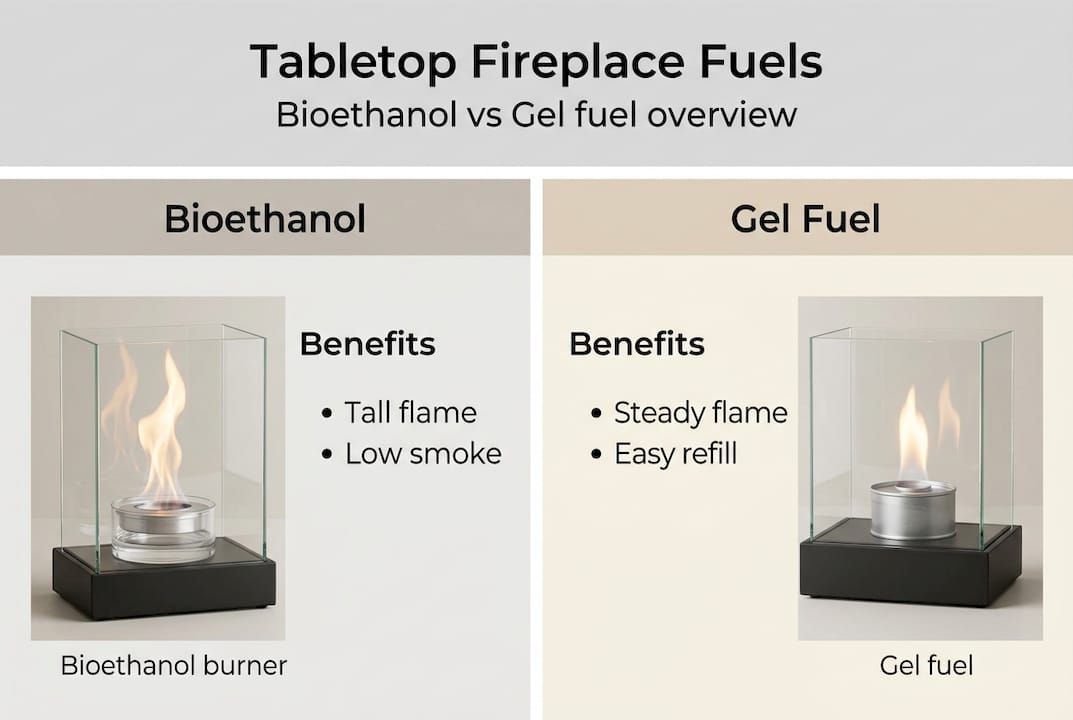
The two most common fuel types for glass tabletop fireplaces are bioethanol and gel fuel. Bioethanol is a liquid alcohol typically sold in one-liter bottles, and it burns with a tall, dancing flame that many homeowners love. Gel fuel comes in cans and produces a slightly shorter, quieter flame. Both are odorless when burning correctly, though bioethanol is generally considered the more efficient and popular clean fuel choice for indoor use, provided you keep the space ventilated.
| Feature | Bioethanol | Gel fuel |
|---|---|---|
| Flame appearance | Tall, lively | Shorter, steady |
| Indoor suitability | Good with ventilation | Good with ventilation |
| Outdoor suitability | Excellent | Excellent |
| Efficiency | Higher | Moderate |
| Ease of use | Pour and ignite | Open can and ignite |
| Cleanup | Minimal | Minimal |
On the design side, glass tabletop fireplaces come in several shapes and styles. Round models work beautifully as centerpieces for dining tables. Rectangular designs suit longer surfaces like console tables or outdoor benches. Minimalist frameless units offer a modern, floating-flame look, while more structured frames in black steel or brushed brass add a classic decorative touch. Exploring modern bioethanol fireplace styles can help you find the silhouette that fits your interior.
Here is a simple process for choosing the right type:
- Identify your primary setting. Is this for indoor dining, a living room, or an outdoor terrace?
- Check room size. Larger rooms can accommodate bigger burners and longer burn times.
- Pick your fuel type. Bioethanol for maximum flame effect; gel for a compact, quieter burn.
- Choose a shape that complements your existing furniture and table dimensions.
- Check glass quality. Tempered or borosilicate glass handles heat better and lasts longer.
Pro Tip: If your space leans toward natural materials like wood and stone, a brushed steel or copper-framed model will blend in beautifully. For minimalist or Scandinavian interiors, a frameless glass unit creates a striking focal point without visual clutter.
Are glass tabletop fireplaces really smokeless and safe?
Understanding the range of designs and fuels also means understanding what is and isn’t truly safe about these products.
The term “smokeless” is accurate but needs a little context. These fireplaces do not produce wood smoke, which means no irritating particles, no chimney required, and no soot on your walls. However, burning any fuel releases byproducts. Bioethanol combustion primarily produces water vapor and a small amount of CO2, which is why ventilation remains essential even with these cleaner models. Cracking a window or ensuring air circulation in the room is always a good idea.
“A smokeless fireplace is not an emission-free fireplace. It simply produces far less harmful output than wood or gas. Treat it with the same respect as any open flame.”
The glass surround reduces, but does not eliminate, burn risk. Glass surfaces can become very hot during use, which is especially important to keep in mind if you have young children or pets nearby. Manufacturer guidelines consistently recommend:
- Never leaving the unit unattended while the flame is active
- Keeping flammable materials at least 50 cm away from the unit
- Using only the recommended fuel type and quantity
- Extinguishing the flame with the included snuffer or lid, never by blowing
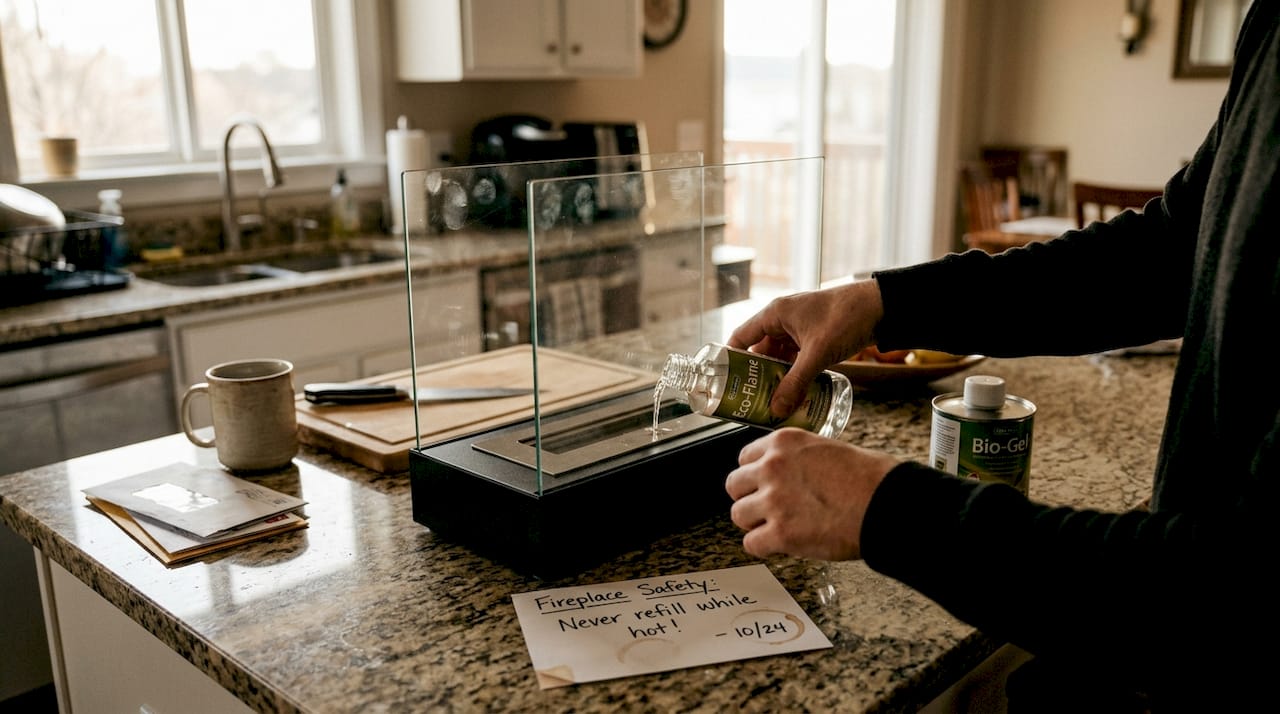
- Allowing the unit to cool fully before refilling or moving it
- Placing the fireplace on a stable, heat-resistant surface
Pro Tip: Always keep a snuffer or the manufacturer’s extinguishing tool within reach. Blowing out the flame can scatter hot fuel droplets, which is both dangerous and messy. A proper lid or snuffer extinguishes the fire safely in under a second.
For a full breakdown of best practices, the tabletop fireplace safety tips at Flaemme cover every scenario in detail.
How to choose and use a glass tabletop fireplace at home
Now that safety is clear, here’s how you can make the most of a glass tabletop fireplace in your home, safely and stylishly.
Start by thinking about your specific situation before purchasing. Key decision factors include:
- Space size: Smaller rooms need smaller burners to keep CO2 levels comfortable.
- Indoor vs. outdoor: Outdoor use allows more freedom with larger burners and longer sessions.
- Who’s in the room: Households with young children or pets should prioritize models with taller, fully enclosed glass shields.
- Fuel access: Check that bioethanol or gel fuel is readily available in your area before committing to a specific model.
Here is a step-by-step guide to getting started:
- Measure your table or surface. Make sure the fireplace base fits with at least 30 cm of clearance on all sides.
- Read the manufacturer’s fill guide. Overfilling the burner is one of the most common causes of accidents. Follow the recommended operation steps precisely.
- Set up your space. Remove tablecloths, paper napkins, or any flammable decor from the immediate area.
- Light it correctly. Use a long-nozzle lighter or the igniter tool recommended by the manufacturer. Never use matches or short lighters directly over the burner.
- Enjoy and monitor. Stay in the room, ventilate the space, and enjoy the warm ambiance.
For decor inspiration, glass tabletop fireplaces work beautifully in several settings:
- As a dining table centerpiece during dinner parties
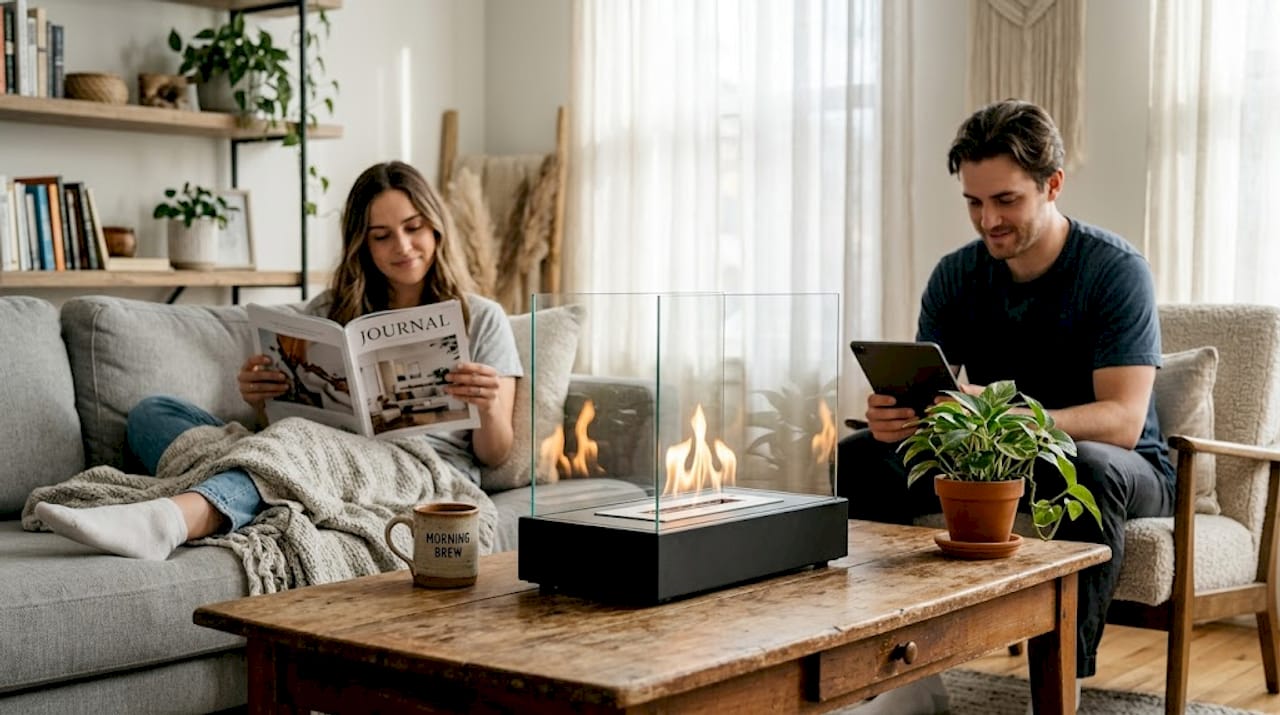
- As a living room accent placed on a coffee table or media console
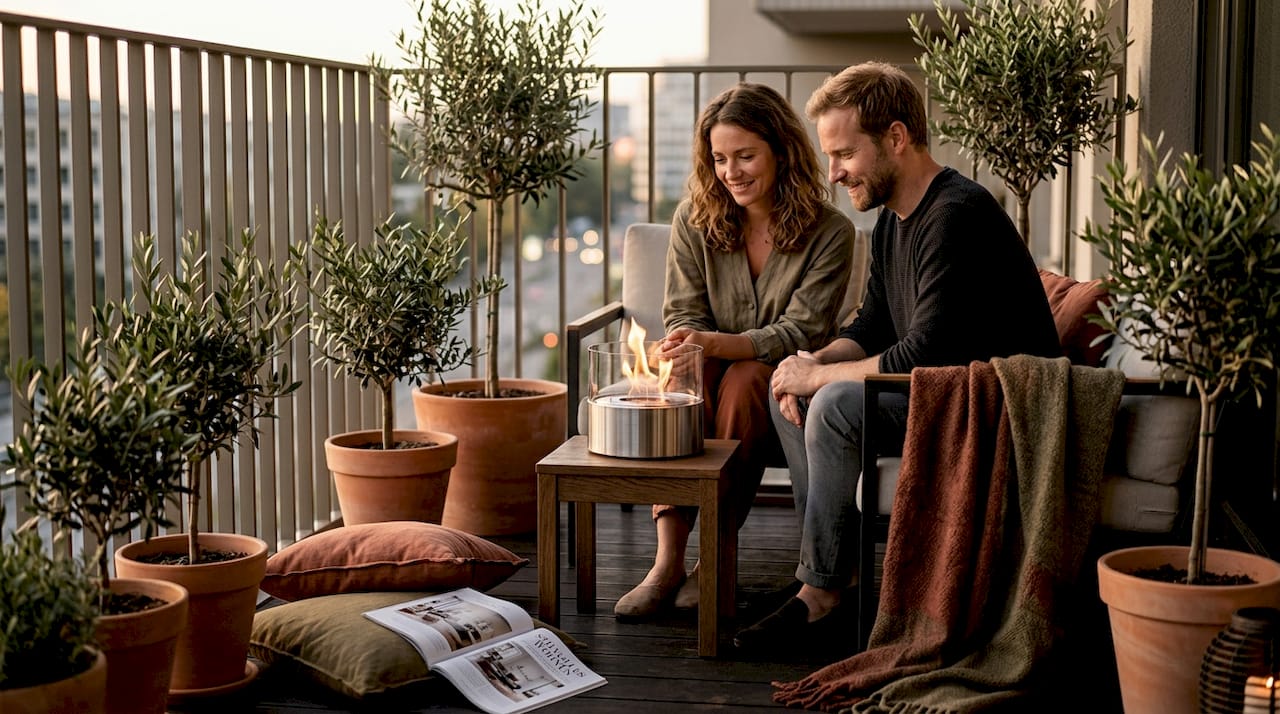
- As a terrace focal point during warm evenings outdoors
- Grouped with candles and plants for a layered, natural aesthetic
Expanding your space with how to style bioethanol fireplaces gives you even more creative ideas for integrating these pieces into any room.
A fresh perspective: What most guides miss about glass tabletop fireplaces
Most articles about glass tabletop fireplaces treat them as an obvious, no-brainer upgrade. Buy one, place it anywhere, enjoy the ambiance. But that framing skips something important: context matters more than the product itself.
A glass tabletop fireplace in a well-ventilated, spacious open-plan living area is a genuinely wonderful addition. That same unit in a small, poorly ventilated apartment bedroom used for hours at a time is a different story entirely. Room size, airflow, and how long you plan to burn the fuel each session should shape your buying decision as much as aesthetics do.
We also think homeowners underestimate long-term maintenance. Cleaning the glass, checking the burner seal, and storing fuel correctly are not complicated tasks, but they do require consistency. A fireplace that isn’t maintained loses both its safety margin and its visual charm quickly.
Our view, informed by experience with expert views on modern fireplaces, is this: style is only an upgrade when it comes with responsible use. The most beautiful fireplace in the world adds nothing to your home if you’re not using it correctly. Buy thoughtfully, place carefully, and enjoy it fully.
Enhance your home with expert-approved glass tabletop fireplaces
If you’re inspired to add a glass tabletop fireplace to your home, consider these next steps.
At Flaemme, we’ve built our collection around exactly the balance this guide describes: genuine style, clean-burning performance, and safety you can feel confident about. Every unit in our range is designed for real homes, real tables, and real life.
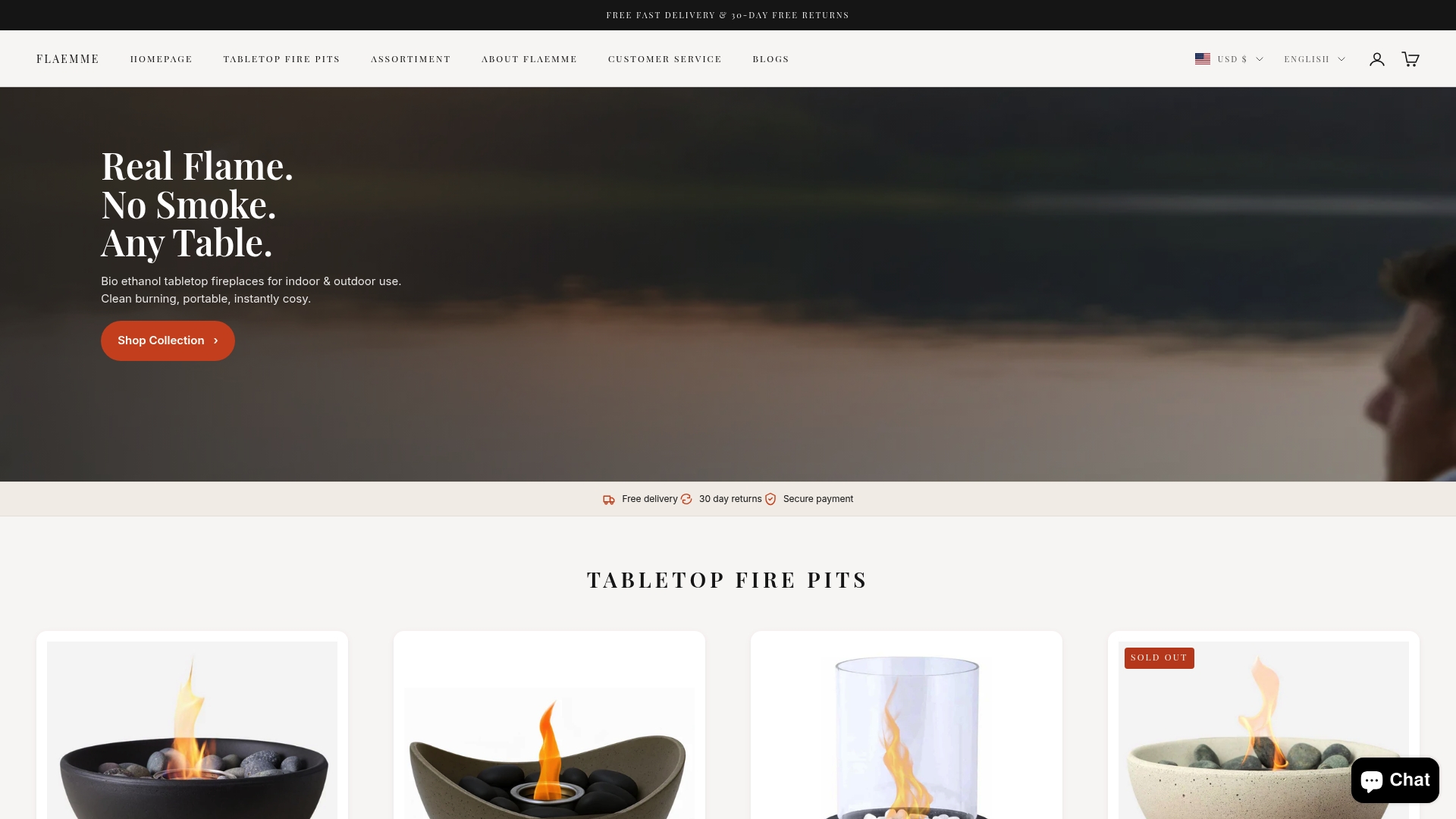
Browse our full selection to find the glass tabletop fireplace that fits your space and style. Before you buy, explore our guide to modern fireplace trends for design ideas, and bookmark our fireplace safety guidelines so you’re set up for success from day one. Free delivery and 30-day returns make it easy to try one risk-free. →
Frequently asked questions
Are glass tabletop fireplaces safe for apartments?
Yes, when used with proper ventilation and by following manufacturer safety guidelines, they are a suitable choice for apartments. Always crack a window and never leave the flame unattended.
Do glass tabletop fireplaces require electricity?
No. Most models run on liquid bioethanol or gel fuel and need no electrical connection whatsoever, making them truly plug-free and portable.
Can these fireplaces be used outdoors?
Yes, many models are well-suited for outdoor use. Just make sure to protect them from strong wind and rain, and place them on a stable, heat-resistant surface.
What type of fuel is best for smokeless operation?
Bioethanol fuel is the most widely recommended option for clean, mostly smokeless burning in glass tabletop fireplaces. It produces mainly water vapor and a small amount of CO2.
How do I clean and maintain a glass tabletop fireplace?
Let the unit cool completely before touching it, then wipe the glass with a soft, non-abrasive cleaner. Check fuel reservoirs for residue regularly, and inspect the burner seal before each refill.