Safe bio ethanol fuel handling steps for home fireplaces
TL;DR:
- Handling bio ethanol fuel safely requires thorough preparation, proper tools, and strict adherence to the filling and lighting procedures. Building consistent, safe habits like waiting for residual heat to dissipate and using correct extinguishing methods reduces the risk of accidents during routine use. Flaemme’s fireplaces prioritize safety with clear guidelines, innovative design, and ongoing user education for eco-conscious, confident enjoyment.
Bio ethanol fuel (a plant-based, renewable alcohol fuel) burns cleanly and produces no smoke, making it a natural fit for eco-conscious homes across the DACH region. Tabletop fireplaces that run on it have surged in popularity, bringing real flame ambiance into living rooms without a chimney or gas line. But that same fuel requires careful, step-by-step handling. Skip one part of the process and a relaxing evening around the fire can turn into a stressful, or even dangerous, situation. This guide walks you through everything: the right gear, the correct filling and lighting sequence, emergency response, and proper storage.
Table of Contents
- What you need: Tools and safety gear checklist
- Step-by-step: Filling and lighting your tabletop bio ethanol fireplace
- Emergency handling: What to do if a spill or flame goes wrong
- Verification: Ensuring safety after use and proper storage
- Why going beyond the basics makes all the difference
- Explore safer bio ethanol fireplace solutions with Flaemme
- Frequently asked questions
Key Takeaways
| Point | Details |
|---|---|
| Prepare with the right gear | Having proper tools and safety equipment is the first step to safe bio ethanol fuel handling. |
| Follow step-by-step filling | Carefully fill and light your fireplace by following established steps to avoid accidents. |
| React safely to emergencies | Know exactly what to do—and what NOT to do—if a spill or small fire happens. |
| Store fuel responsibly | Safe storage practices prevent future hazards and extend the life of your fuel supply. |
| Build safe routines | Consistent habits and regular verification are the best protection for your home and family. |
What you need: Tools and safety gear checklist
Now that you know the importance of safety, let’s make sure you have everything in place before handling bio ethanol fuel. Arriving at your fireplace unprepared is one of the most common reasons small accidents happen. A few minutes of preparation saves a lot of worry later.
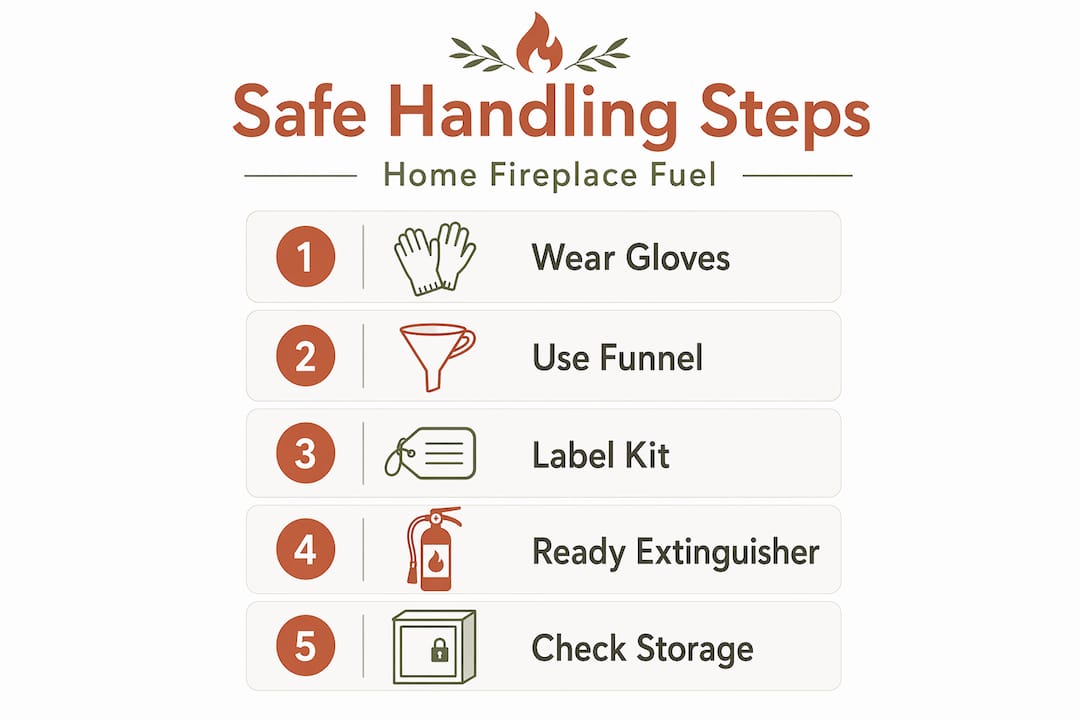
Essential tools and materials
| Item | Purpose | Notes |
|---|---|---|
| Narrow-neck funnel | Controls fuel flow during filling | Use only for fuel; label it clearly |
| Fireproof gloves | Protects hands from heat and splashes | Choose gloves rated for liquid fuel use |
| Flame snuffer | Extinguishes the flame without blowing | Never blow out an ethanol flame |
| Safety goggles | Shields eyes from vapor or splash | Wrap-around fit is best |
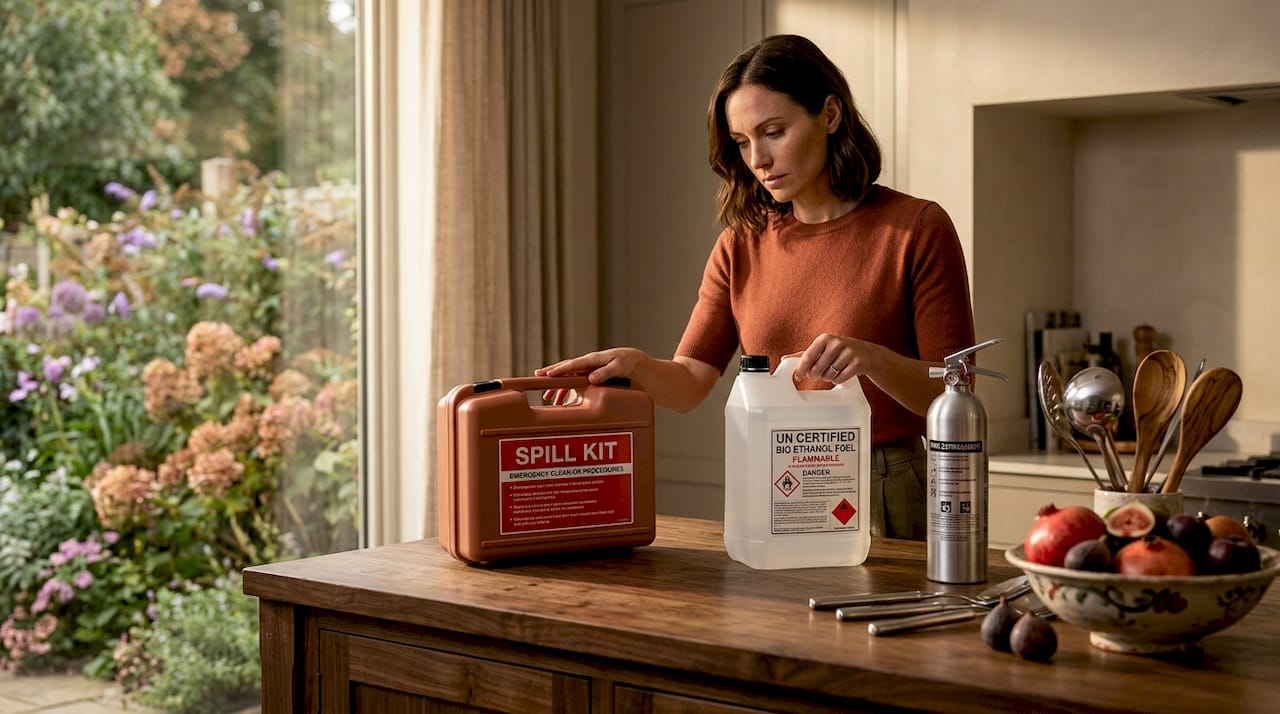
| Spill kit | Contains absorbent pads and a sealable bag | Keep one within arm’s reach |
| Dry chemical or foam extinguisher | For any uncontrolled fire | Check charge monthly |
Proper preparation and safety equipment reduce fuel spill risks significantly, and having these tools visible and accessible is the first step toward confident, safe use.
Containers and storage basics
Not all fuel containers are equal. You need containers specifically rated for flammable liquids. Look for containers with:
- A spill-proof, child-resistant cap
- A UN-certified or EN-certified safety marking
- Opaque walls that block light and reduce vapor buildup
- A small pouring spout to minimize fuel exposure during transfer
Our bio ethanol storage guide covers container selection and room-by-room storage options in detail. For most households, keeping no more than 1 liter at arm’s reach during use and storing the rest in a cool, ventilated utility space is the practical standard.
Pro Tip: Keep a small, clearly labeled dry chemical or CO2 extinguisher within five steps of your fireplace at all times. Never rely on water for a fuel-based fire. Water spreads ethanol rather than containing it, making the situation worse almost immediately.
Step-by-step: Filling and lighting your tabletop bio ethanol fireplace
Once you’re prepared, it’s time to follow these steps for safe, effective operation. The sequence below is not optional. Each step exists to prevent the one accident that most frequently occurs: pouring fuel onto a surface that is still warm.
The filling and lighting sequence
-
Extinguish fully and wait. Use your flame snuffer to put out the flame. Then wait a minimum of 15 to 20 minutes. The burner cup holds residual heat far longer than the visible flame suggests. Running your hand near (not on) the burner will tell you if warmth is still radiating.
-
Move the fireplace to a stable, flat surface. Tabletop fireplaces should sit on a surface that is level and heat resistant. Even a gentle tilt changes how fuel sits in the burner and increases overflow risk.
-
Open the fuel container away from the fireplace. Open your bio ethanol container at least half a meter away from the burner. Even without an active flame, vapors from the fuel and residual warmth can create a brief flare when you bring the container close.
-
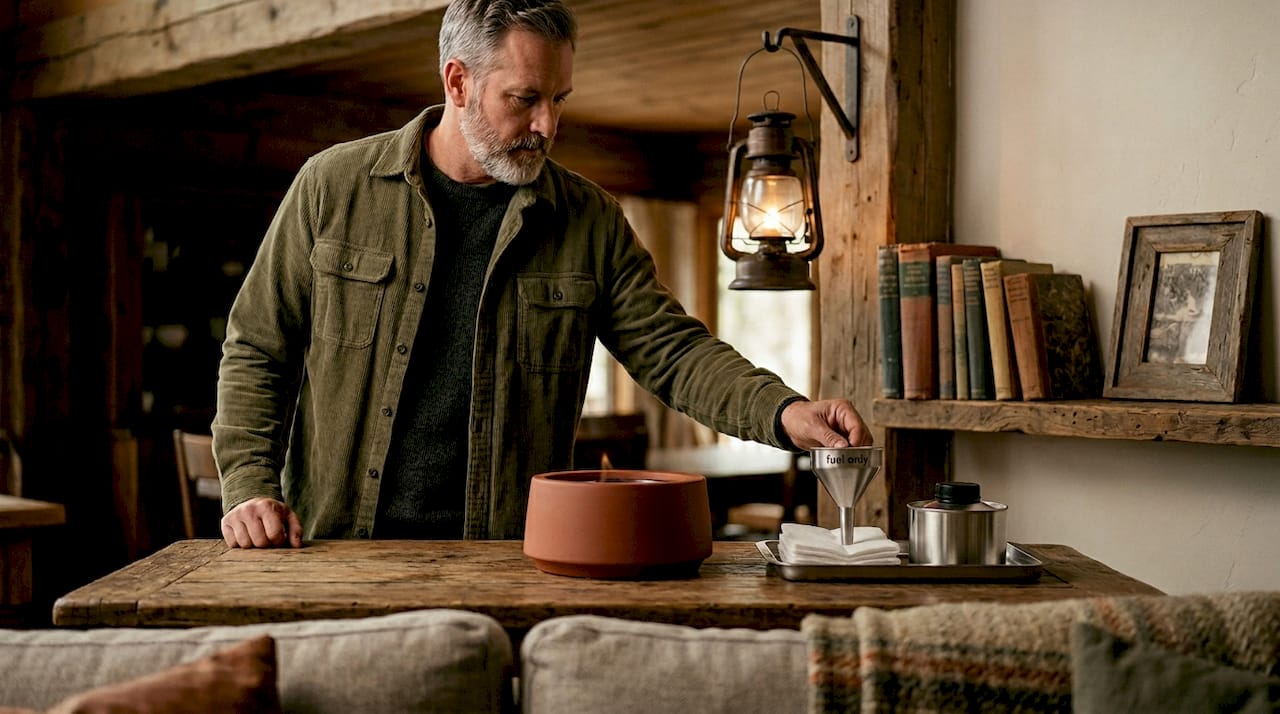
Attach the funnel and pour slowly. Insert the funnel into the burner opening. Pour slowly, stop at the maximum fill line (never above it), and keep your face away from the opening to avoid inhaling vapors. Familiarize yourself with bio ethanol safety guidelines to understand fill-line standards for different burner types.
-
Recap the container and move it away. Seal the container completely and place it at least one meter away from the fireplace before doing anything else. This step is easy to skip and frequently is.
-
Wait 60 seconds before igniting. This pause lets any vapor from the pouring process dissipate. Use a long-reach lighter or an extended match. Never lean over the burner when lighting.
-
Ignite from the side, not above. Hold the flame source at burner level, at the edge of the opening, and let the flame travel inward. Standing directly over the burner puts your face above the initial burn zone.
If you want to understand bioethanol terminology like “flash point” and “vapor pressure” that explain why these steps matter chemically, our terminology guide is a useful read without being overly technical.
Safe vs. unsafe filling methods
| Filling method | Safe or unsafe? | Why |
|---|---|---|
| Wait 15 to 20 min after extinguishing | Safe | Prevents flash ignition from residual heat |
| Use a funnel with a narrow spout | Safe | Controls flow, reduces spills |
| Pour directly from a wide-mouth container | Unsafe | High spill risk, uncontrolled flow |
| Refuel immediately after extinguishing | Unsafe | Residual heat causes flare-ups |
| Keep container near burner while lighting | Unsafe | Vapor ignition risk |
| Move container away before igniting | Safe | Eliminates ignition source proximity |
Safety warning: Never use water on a bio ethanol spill or fire. Water disperses the fuel and can spread a flame rapidly across a surface. Use a dry chemical extinguisher, a foam extinguisher, or smother small burner flames only with a proper flame snuffer.
Pro Tip: Label your funnel, spill kit, and fuel container as a set and store them together. When everything lives in one place, you are far less likely to improvise with an unsuitable substitute during refueling.
Emergency handling: What to do if a spill or flame goes wrong
Even with the best preparation, mishaps can happen. Here’s how to react quickly and safely. The key principle in any fuel-related emergency is: contain, don’t panic, and reach for the right tools.
If a spill occurs
- Step away from the fireplace first. If the fireplace is still lit and a spill occurs near it, use the flame snuffer immediately before addressing the spill.
- Do not wipe with paper towels alone. Use the absorbent pads from your spill kit. These are designed to capture and hold liquid fuel without spreading it further.
- Ventilate the room right away. Open windows and doors to clear vapor buildup. Bio ethanol vapor is invisible and can accumulate quickly in a closed room.
- Place used absorbents in the sealable bag from your spill kit. Seal it and take it outside immediately. Saturated absorbents are still flammable until they fully dry.
- Check the surface beneath the spill. If fuel reached a porous or unsealed wooden surface, it may need extended air time before the fireplace is used again in that space.
For guidance on safe containment between uses, revisit our bio ethanol storage safety resource.
If a flame ignites unexpectedly
For flammable liquid fires, containment and proper extinguishing are critical steps, and water should never be used under any circumstances.
- Use a dry chemical or foam extinguisher for any fire beyond the burner.
- For a flame that remains within the burner but is too large, use the flame snuffer only if you can do so safely without leaning over the flame.
- If the situation escalates beyond a contained burner fire, evacuate and call emergency services.
Important: Never use a damp cloth, cup of water, or spray bottle on a bio ethanol flame. The fuel floats on water, meaning any water poured onto a burning surface creates a wider, moving fire.
Pro Tip: Before each evening session with your tabletop fireplace, spend 30 seconds reviewing your emergency kit. Check that the extinguisher is charged, the spill kit is stocked, and the flame snuffer is within reach. It takes less than a minute and builds a habit that genuinely reduces risk over time.
Verification: Ensuring safety after use and proper storage
Safe handling doesn’t end when the flame goes out. Verification secures your home and makes your next use just as smooth and comfortable as this one.
Post-use verification process
-
Use the flame snuffer to extinguish. Confirm visually that no ember or residual glow remains in the burner cup before leaving the room.
-
Wait before touching the fireplace. Give the burner and housing at least 20 to 30 minutes before you move the fireplace or handle the burner area directly. The outer body may feel cool before the burner insert actually is.
-
Inspect the burner opening. Look for any fuel residue around the rim of the burner. Wipe the exterior only after the fireplace has cooled, using a dry cloth. Avoid getting moisture into the burner cavity.
-
Check the surrounding surface and air. If you detect any unusual smell after the flame is out, ventilate further. A faint odor of ethanol shortly after extinguishing is normal and clears quickly in a ventilated room. A lingering, stronger odor suggests a small spill may have occurred unnoticed.
-
Store remaining fuel correctly. Seal the container fully, return it to its storage location away from heat sources, and confirm the cap is airtight. Proper post-use checks and storage are vital to long-term safety, especially in households with children or pets.
-
Log the fill level. A quick note on how much fuel remains helps you avoid overfilling on the next use. This is especially useful if multiple people in your household use the fireplace.
Our dedicated bio ethanol safe storage page covers seasonal storage considerations if you use your fireplace less frequently in warmer months.
Pro Tip: Create a simple checklist on a small card and keep it with your fuel kit. After each use, run through it. “Snuffer used, burner cooled, container sealed, area checked.” Four steps take under two minutes and establish the kind of routine that makes safe handling second nature.
Why going beyond the basics makes all the difference
Here is something we have observed again and again: people who experience problems with their tabletop fireplace rarely skipped the whole safety process. They skipped one step. Maybe they poured fuel two minutes too early because the burner looked cool. Maybe they left the container on the table while lighting. Maybe they forgot to check the extinguisher for months.
The uncomfortable reality is that most incidents involving bio ethanol fuel happen during routine use, not during a first-time setup. The first time, people are careful. The tenth time, things start to feel automatic. Automation is good when the habit is correct. It is a problem when the habit includes a shortcut.
This is why we believe that building a culture of safe habits at home matters more than any single piece of equipment. An extinguisher you never check provides less protection than a simple habit of inspecting it monthly. A high-quality funnel that lives in a drawer instead of with the fuel kit is less useful than a basic funnel that is always in the right spot.
Our in-depth safety guides are built around this thinking. Small, consistent actions, repeated confidently and correctly, create a home environment where the enchanting warmth of a real flame fireplace feels as natural as it should. Safe handling is not about fear. It is about building confidence through knowledge and routine.
Explore safer bio ethanol fireplace solutions with Flaemme
At Flaemme, we design our tabletop fireplaces with safety and eco-conscious living at the center of everything we do. Our fireplaces are smokeless, portable, and require no installation, so you can enjoy real flame warmth anywhere in your home, indoors or outdoors, with confidence.
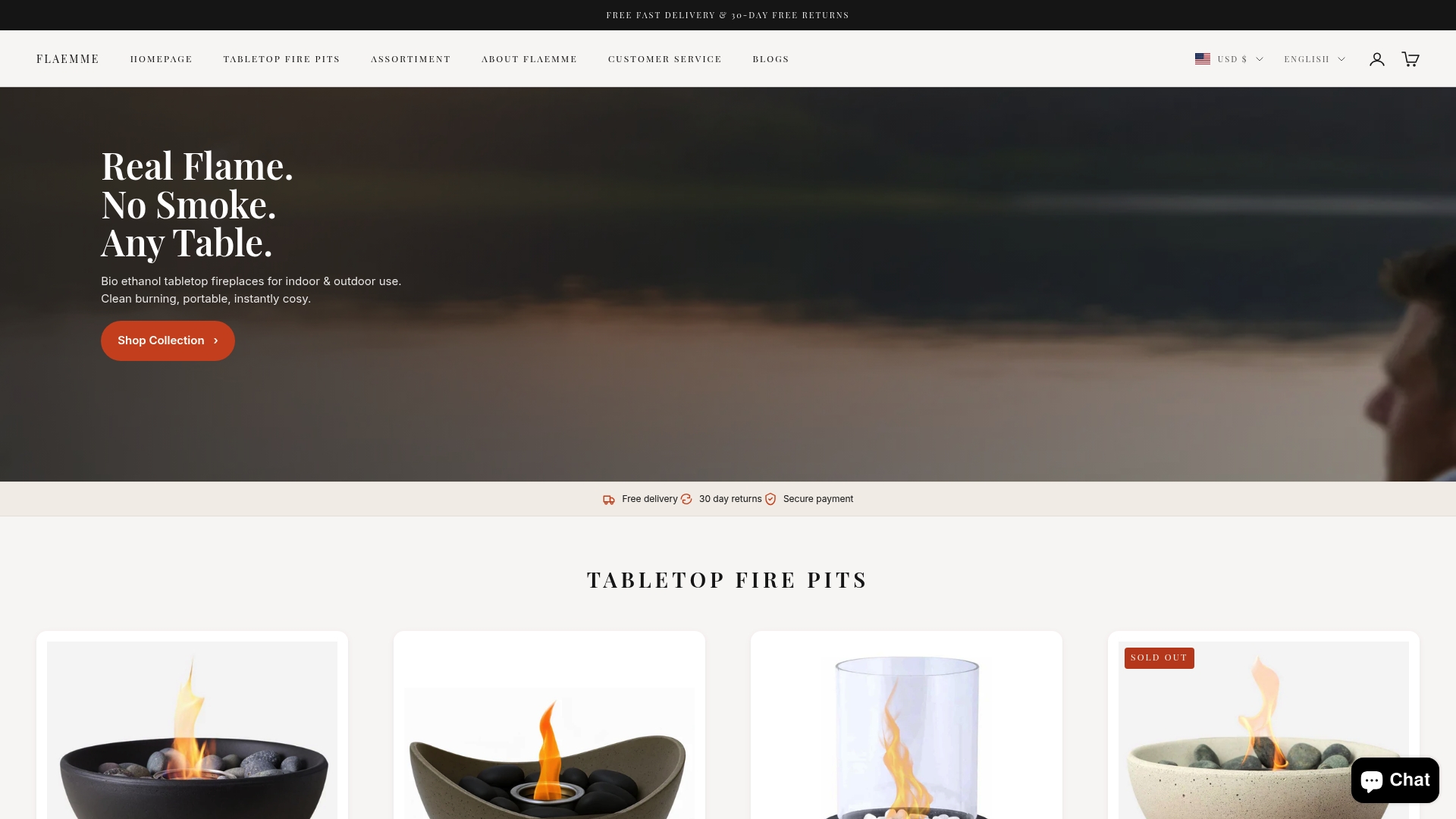
Every Flaemme fireplace comes with clear fill-line markings, compatible burner openings designed to reduce spill risk during refueling, and detailed safety documentation. We also offer expert guidance through our blog and customer support team to make sure your experience is as safe as it is cozy. Browse our full range at flaemme.com and discover fireplaces designed to fit your lifestyle, with free delivery across Europe and a 30-day return policy. → Explore Flaemme tabletop fireplaces and find your perfect flame.
Frequently asked questions
Can I refill my tabletop fireplace while it is still hot?
No, always allow your fireplace to cool completely before refueling. Adding fuel to a hot burner increases fire risk considerably, as residual heat can ignite incoming fuel vapor before you finish pouring.
What should I do if some bio ethanol fuel spills on the table?
Contain the spill using absorbent pads from a spill kit, ventilate the area immediately, and never use water. Containment and proper disposal are the correct first steps, followed by sealing and removing saturated absorbents outdoors.
Is it safe to store bio ethanol fuel indoors?
Bio ethanol fuel can be stored indoors in a cool, ventilated location using spill-proof, UN-certified containers, as long as the storage area is away from any heat source or open flame.
What type of fire extinguisher works best for a bio ethanol fire?
A dry chemical or foam extinguisher is the correct choice. Only dry chemical or foam agents effectively suppress liquid fuel fires. Water spreads the burning fuel and should never be used.