Sustainable fire pits: Low-impact warmth with stylish design
TL;DR:
- Sustainable fire pits minimize environmental impact through low-emission fuels, durable materials, and efficient designs.
- Modern smokeless technology reduces particulate emissions by up to 80%, improving air quality.
- Bioethanol and Corten steel are key eco-friendly options suitable for indoor and outdoor spaces.
Most people assume that owning a fire pit means accepting smoky evenings, ash cleanup, and a guilty conscience about air quality. That assumption is outdated. A new generation of sustainable fire pits delivers genuine warmth and visual charm without the environmental baggage. Whether you’re creating a cozy corner in a Berlin apartment or lighting up a garden terrace in Vienna, there are now options that align with your eco values and your sense of style. This guide walks you through what sustainability actually means for fire pits, which fuels perform best, and how to choose a design that works beautifully indoors and out.
Table of Contents
- What makes a fire pit sustainable?
- Comparing sustainable fuels: Bioethanol, wood, propane, and more
- Sustainable fire pit designs for indoor and outdoor spaces
- How smokeless technology redefines sustainability
- The real key to fire pit sustainability: It’s not just about low emissions
- Bring sustainable warmth home
- Frequently asked questions
Key Takeaways
| Point | Details |
|---|---|
| Low emissions matter | Sustainable fire pits use efficient fuels and designs that drastically cut air pollutants. |
| Eco fuels vary | Bioethanol and certified dry wood are top choices for cleaner, greener fire pit experiences. |
| Design meets environment | Corten steel and bioethanol models marry style, durability, and sustainability for all spaces. |
| Smokeless tech excels | Modern fire pits with secondary combustion minimize smoke and meet DACH urban standards. |
| Longevity is key | Choosing durable materials and mindful fuel use defines real fire pit sustainability. |
What makes a fire pit sustainable?
Now that you’re curious about green alternatives, let’s clarify what actually makes a fire pit sustainable. The answer goes well beyond just picking a “natural” fuel. According to Sustainable fire pits: Better, low-carbon nights, a sustainable fire pit minimizes environmental impact through low-emission fuels, efficient combustion designs, durable or recycled materials, and reduced waste. That’s a useful framework to keep in mind as you explore your options.
Let’s break it down into four pillars:
- Low emissions: The fuel you burn and the design of the combustion chamber both determine how much particulate matter and CO2 you release. Smokeless pits using secondary burn technology can lower PM emissions by 80% compared to traditional open fire pits.
- Materials: Look for recycled metals, corten steel (a naturally weathering alloy that needs no chemical coating), and finishes that don’t off-gas toxic compounds when heated.
- Durability: A fire pit that lasts 15 years has a far lower environmental footprint than one you replace every two seasons. Long life cycles reduce manufacturing waste significantly.
- Indoor and outdoor suitability: For DACH region homes, where apartments and compact terraces are common, a fire pit that works safely in both settings adds real practical value.
Here’s a quick comparison to put things in perspective:
| Feature | Sustainable fire pit | Conventional fire pit |
|---|---|---|
| Fuel type | Bioethanol, FSC wood, briquettes | Standard wood, coal |
| Emissions | Low to near-zero soot | High PM and CO2 |
| Material | Recycled/corten steel | Galvanized or coated steel |
| Lifespan | 10 to 20+ years | 2 to 5 years |
| Indoor use | Yes (bioethanol models) | No |
| Chemical coatings | None or minimal | Often present |
For a deeper look at eco-friendly fire pit choices, it helps to evaluate each of these pillars before you buy. The German fire pit sustainability best practices also emphasize avoiding lighter fluid and chemical starters, which spike emissions even in otherwise clean setups.
Comparing sustainable fuels: Bioethanol, wood, propane, and more
With the essentials of sustainability covered, the next step is understanding which fuel type delivers your desired balance of warmth, style, and eco performance. Key fuels include bioethanol (smoke-free, low CO2), propane, FSC-certified dry wood, and coconut husk briquettes. Each has its own trade-offs.
| Fuel | Emissions | Cost | Indoor use | DACH regulations |
|---|---|---|---|---|
| Bioethanol | Near-zero soot, low CO2 | Medium | Yes | Generally permitted |
| FSC-certified wood | Low PM if dry | Low | No | Check local smoke rules |
| Propane | Low vs. coal, CO2 present | Low to medium | No | Outdoor only, permit may apply |
| Coconut husk briquettes | Low, waste-based | Low | No | Varies by municipality |
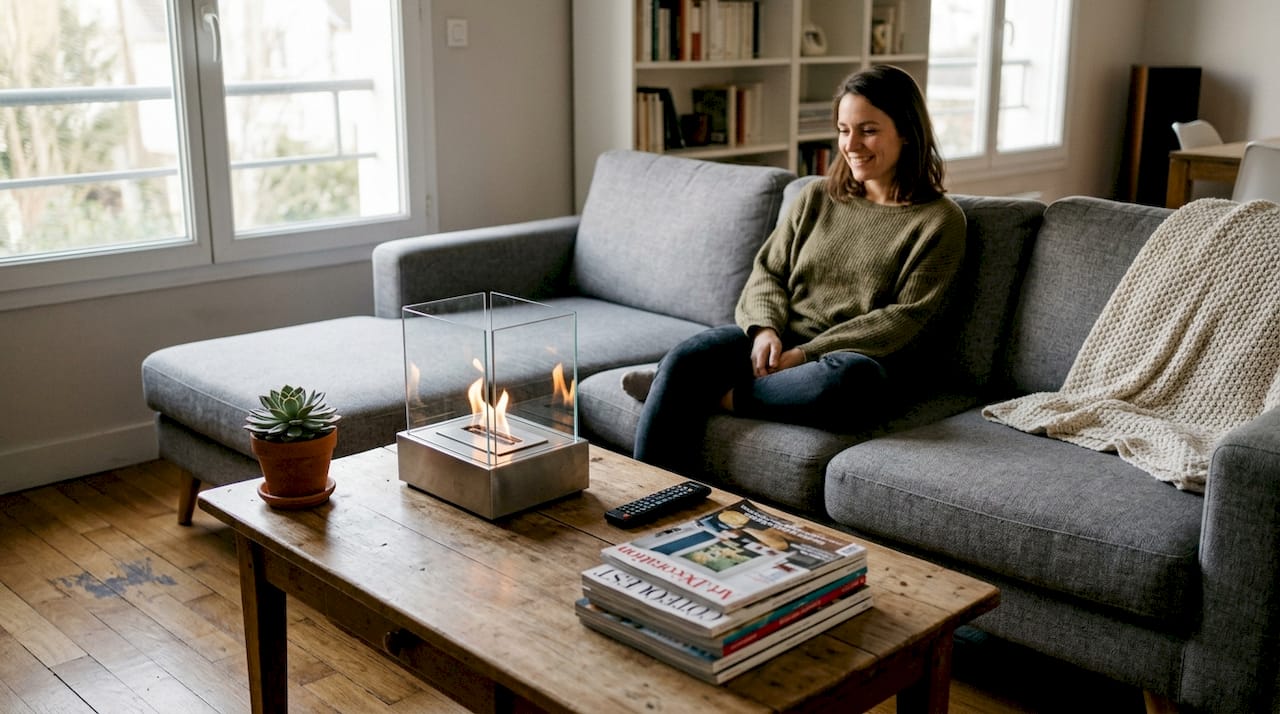
Bioethanol is derived from plant sugars and burns cleanly, producing mainly water vapor and a small amount of CO2. It leaves no soot or ash, which makes it ideal for indoor tabletop models. Many bioethanol fire pit examples show how effortlessly these units fit into modern living rooms and compact balconies.
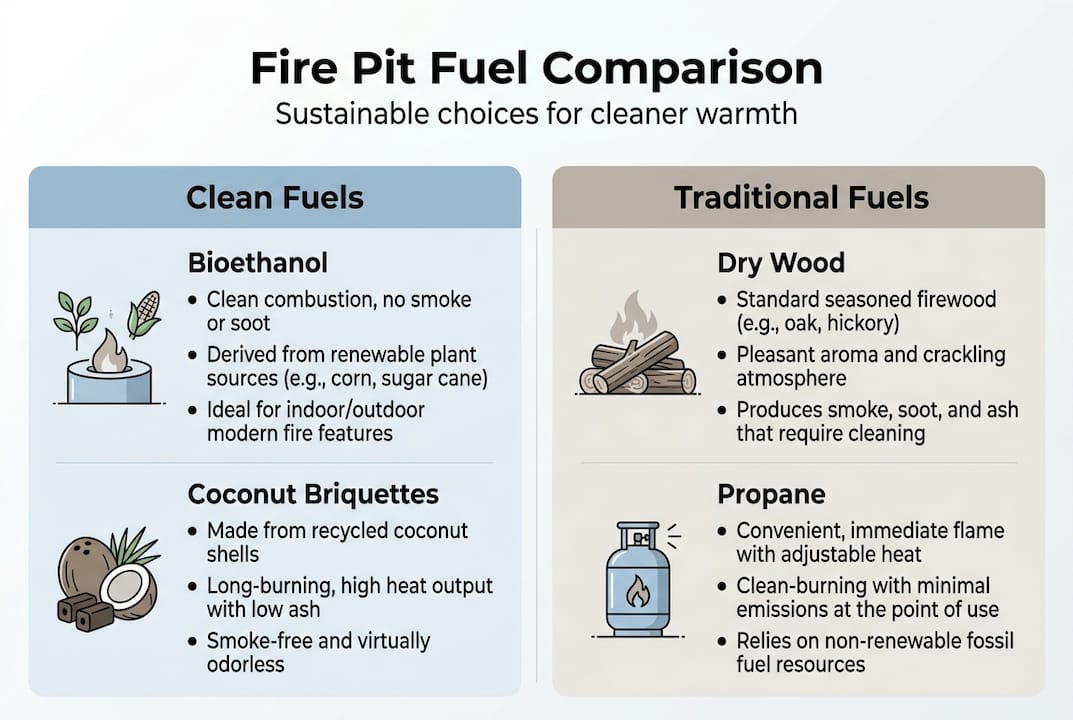
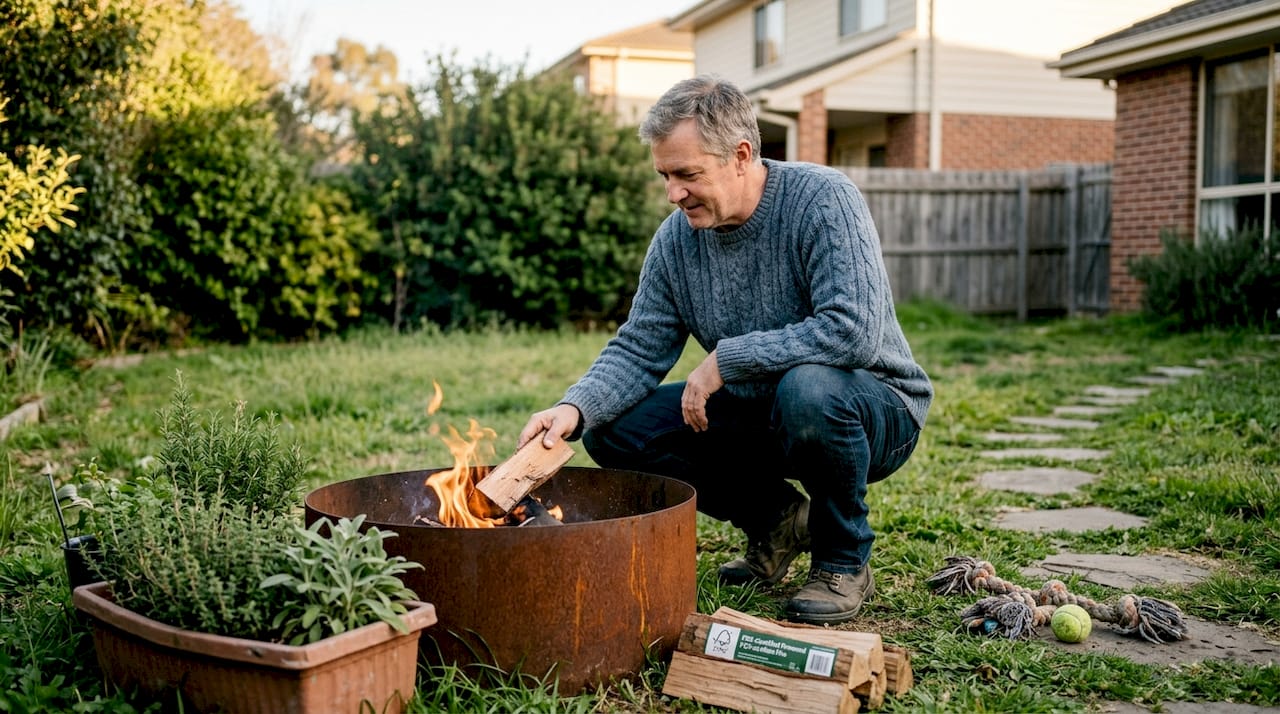
FSC-certified dry wood gives you that traditional crackling fire experience. The key word is dry: wood with moisture content above 20% produces far more smoke and particulates. Sourcing from FSC wood advice ensures responsible forestry practices.
Propane is a cleaner fossil fuel option. It’s convenient for outdoor patios and widely available across the DACH region, though it still produces CO2 and isn’t suitable for indoor use.
Coconut husk briquettes are a creative waste-based fuel. They burn longer and cleaner than standard charcoal, though they work best in outdoor settings.
Pro Tip: Always check your city’s smoke and CO2 regulations before choosing a fuel. Many German and Austrian municipalities have seasonal burning restrictions, especially in urban areas. A quick call to your local Umweltamt (environmental office) can save you a fine and a headache.
Sustainable fire pit designs for indoor and outdoor spaces
Once you know which fuels align with your values, it’s time to see how sustainable fire pit designs can mesh with your personal style and space. Corten steel and indoor-safe bioethanol options balance aesthetics, emissions, and longevity for DACH homes particularly well.
Here are some of the most popular sustainable designs among DACH buyers:
- Corten steel bowls (outdoor): Uncoated and chemical-free, these develop a rich rust-colored patina over time. They’re heavy, built to last decades, and need no paint or sealant. Perfect for garden terraces.
- Cast iron fire bowls (outdoor): Dense and durable, cast iron retains heat well and ages beautifully without toxic coatings.
- Bioethanol tabletop models (indoor/outdoor): Compact, portable, and smokeless. Ideal for apartments, small balconies, and dining tables. No installation needed.
- Concrete and natural stone fire pits (outdoor): Extremely long-lasting, with zero chemical finishes. A bold design statement for larger garden spaces.
“When placing a corten steel fire bowl on a terrace or patio, expect some rust-colored runoff during the first few rain cycles. This is completely normal and stabilizes once the protective patina fully forms. Place a mat or stone base underneath to protect surfaces.” For design inspiration for sustainable fire pits, this weathered look is actually part of the appeal.
For those exploring eco-friendly tabletop fire pits, the bioethanol category offers the most flexibility. You can move them from the living room to the balcony without any setup. See more examples of sustainable fire pit design to get a feel for what works in different spaces.
Pro Tip: For tight indoor spaces or apartment balconies, choose compact, smokeless tabletop models. They deliver the enchanting warmth of a real flame with zero ventilation concerns.
How smokeless technology redefines sustainability
Many modern fire pits go beyond materials and fuels. Let’s see what’s possible with innovative smokeless combustion systems. These designs use physics to dramatically reduce pollution, making them a strong fit for urban DACH cities with strict air quality rules.
Here’s how a double-wall smokeless fire pit works, step by step:
- Primary combustion: Wood or fuel ignites in the central burn chamber, releasing heat, gases, and particulates.
- Air intake at the base: Cool air enters through vents at the bottom of the double-wall structure.
- Secondary air injection: That air travels up between the walls, heats up, and re-enters the burn chamber near the top as preheated oxygen.
- Secondary combustion: The hot, oxygen-rich air re-ignites unburned gases and particles before they can escape as smoke.
- Clean exhaust: The result is a much cleaner, hotter burn with significantly less visible smoke.
The numbers back this up. Smokeless technology cuts PM emissions to approximately 2.2 g of particulate matter per kg of firewood, compared to 11.3 g/kg for traditional fire pits. That’s an 80% reduction in fine particle pollution.
For reference, fine particulate matter (PM2.5) is the type most associated with respiratory health issues. Reducing it matters not just for the environment but for the health of everyone around your fire. You can explore specific smokeless fire pit features to find models that combine this technology with stylish design. The smokeless combustion benefits extend beyond air quality too. A more efficient burn means you use less fuel to generate the same warmth.
The real key to fire pit sustainability: It’s not just about low emissions
Having explored the technology and options, it’s time to step back and ask what true fire pit sustainability really means. Here’s a perspective that doesn’t always make it into the product brochures: obsessing over the “perfect” eco fuel while ignoring everything else misses the bigger picture.
Consider this. A cheap steel fire pit that rusts out after two seasons requires manufacturing, shipping, and disposal twice as often as a quality corten steel bowl that lasts 20 years. Even if the cheap version burns slightly cleaner fuel, its total environmental cost is higher. Prioritize FSC-certified wood, avoid lighter fluid, and choose a patina finish over chemical coatings. That’s expert advice worth taking seriously.
Mindful use matters just as much as product specs. Burning infrequently, using well-sourced fuel, and maintaining your fire pit properly all reduce your impact more than any eco label can guarantee. When choosing sustainable fire pits wisely, think about the full life cycle, not just the moment of purchase. Buy once, buy well, and use thoughtfully.
Bring sustainable warmth home
If you’re ready to transform your space with a sustainable fire pit, here’s where to start your journey.
At Flaemme, we’ve curated a range of modern bio ethanol tabletop fire pits designed for exactly this kind of mindful living. Our models are smokeless, portable, and built for both indoor and outdoor use, with no installation or chimney required. Whether you’re outfitting a cozy apartment in Munich or a garden terrace in Zurich, you’ll find stylish options that fit your space and your values. Discover sustainable fire pits and explore our full collection, or go straight to our eco-friendly fire pit guide to find the right match. Free delivery across Europe and 30-day returns included. ➜
Frequently asked questions
What makes a fire pit sustainable?
A sustainable fire pit uses efficient, low-emission fuels and designs, durable or recycled materials, and produces less waste than conventional options. Longevity and mindful use are just as important as fuel choice.
Which fire pit fuel is the most eco-friendly?
Bioethanol offers minimal CO2 and zero soot or ash, making it one of the cleanest options available. FSC-certified dry wood is a strong natural alternative for outdoor use.
How do smokeless fire pits reduce pollution?
They use secondary combustion technology that re-burns particulates and gases before they escape, lowering PM emissions by 80% compared to traditional fire pits.
Is corten steel safe and sustainable for fire pits?
Corten steel is chemical-free and extremely durable, with no coatings that off-gas when heated. Initial rainfall may cause surface staining, but the patina stabilizes quickly.
Can I use a sustainable fire pit indoors?
Yes, certain bioethanol models are designed for safe, smokeless indoor use. Always follow the manufacturer’s safety instructions and ensure adequate ventilation as a precaution.