Bioethanol Explained: A Sustainable Fuel for Tabletop Fireplaces
Many people confuse bioethanol with ordinary methylated spirits or industrial alcohol, and that makes them hesitate before buying a modern tabletop fireplace. In fact, bioethanol is a renewable alcohol made for use with an open flame, and it is quite different from other types of ethanol. This guide explains what bioethanol really is, how it is made from renewable crops and why it suits anyone who wants real flames at home without a chimney or a gas connection. You will learn where it comes from, how to handle it safely and how to use it in everyday life.
Contents
- Key takeaways
- Where bioethanol comes from and how it is made
- Benefits of bioethanol in tabletop fireplaces
- Handling bioethanol safely
- Bioethanol vs industrial ethanol: what is the difference?
- Discover modern bioethanol tabletop fireplaces at Flaemme
- Frequently asked questions about bioethanol and tabletop fireplaces
Key takeaways
| Point | Details |
|---|---|
| Made from plants | Bioethanol is made from crops such as maize, wheat, sugar cane or sugar beet, which absorb CO2 while they grow. |
| Clean burn | Bioethanol burns without smoke or soot and is almost odourless, with a clear flame. A litre holds roughly 6 kilowatt hours of energy. |
| Mind the safety basics | Keep your distance, ventilate the room and always use a stable, heat-resistant surface. |
| No chimney needed | Tabletop fireplaces need neither a chimney nor a gas connection, which makes them ideal for rented homes. |
Where bioethanol comes from and how it is made
Chemically speaking, bioethanol is ethyl alcohol (C2H5OH) made entirely from plant material. The main sources are crops rich in starch or sugar, such as maize, wheat, sugar cane and sugar beet. Unlike fossil fuels, these raw materials grow back every year and take CO2 out of the atmosphere as they grow.
The production process involves milling, hydrolysis, fermentation and distillation to reach a purity above 96.6%. It starts with grinding the plants to release the starch or sugar. For starchy crops such as maize, enzymatic hydrolysis then breaks complex carbohydrates down into simple sugars. This step matters, because yeast can only work with simple sugars.
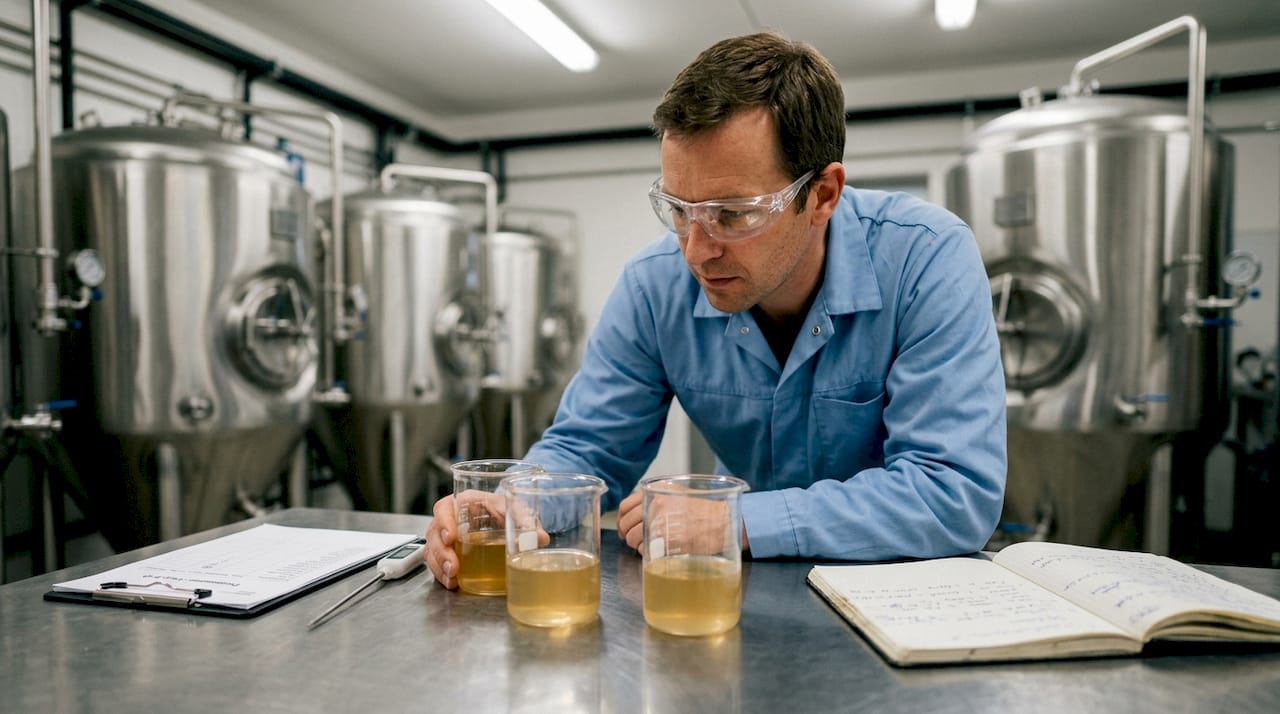
Fermentation then turns those sugars into ethanol and carbon dioxide with the help of special yeast cultures. This biological process takes several days and happens in large tanks at controlled temperatures. The resulting mixture contains roughly 8 to 12 per cent ethanol and needs further processing.
Distillation concentrates the alcohol:
- A first distillation raises the ethanol content to around 50 per cent
- Further distillation stages bring it above 95 per cent
- Special drying processes remove the remaining water to reach fuel quality
- For tabletop fireplaces, a purity of 96.6 to 99 per cent is enough
The quality of the end product depends heavily on its purity. A higher ethanol content means a cleaner burn, less odour and a more attractive flame. Impurities or leftover water lead to incomplete combustion and can cause unpleasant smells. So when you buy bioethanol, choose a reputable supplier that clearly states the ethanol content.
The whole process has several stages and combines biological and chemical steps. What starts as a crop in the field is turned into a high-quality fuel by modern technology. Its energy balance compares well with fossil fuels, even though production itself uses energy.
Benefits of bioethanol in tabletop fireplaces
The biggest advantage of bioethanol is its clean burn. Bioethanol burns without smoke or soot and is almost odourless. You need no chimney and no complicated installation. That makes bioethanol tabletop fireplaces perfect for rented flats, modern apartments or anywhere a traditional fireplace is not an option.
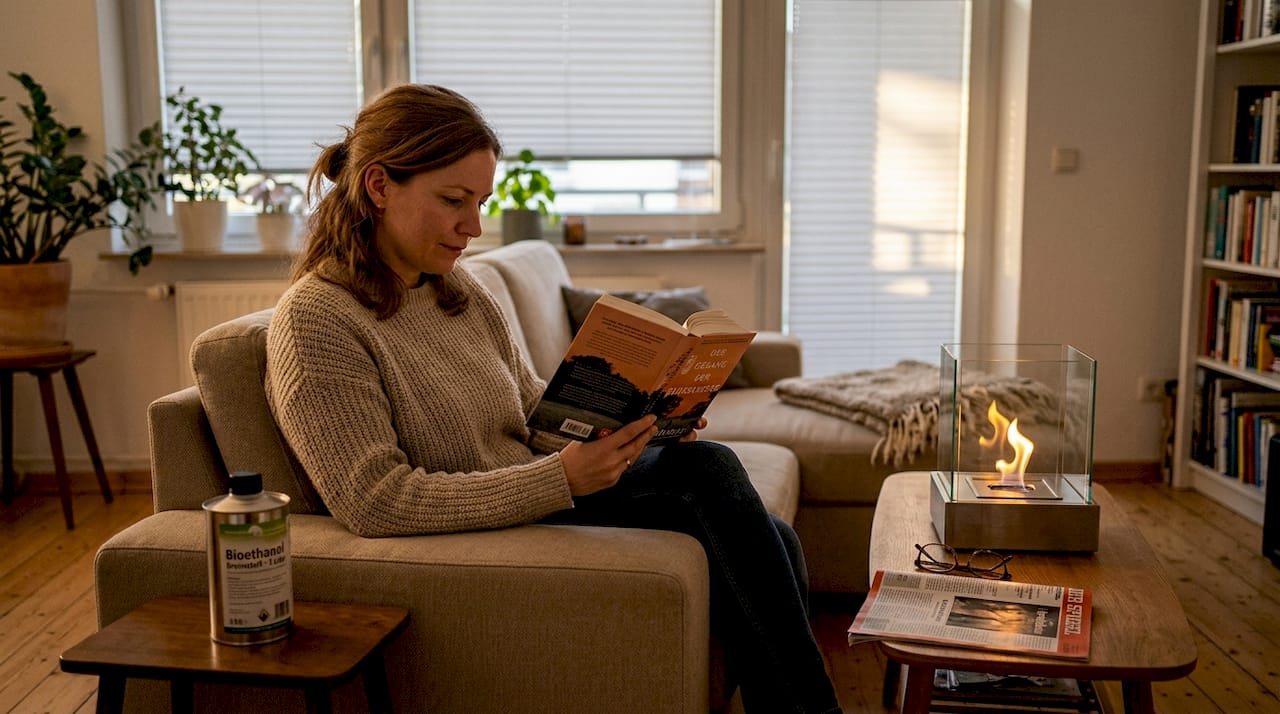
A litre of bioethanol holds roughly 6 kilowatt hours of energy. How long a filling lasts depends on the model. Our Ardente, for example, burns for 60 to 90 minutes on a filling of up to 150 ml. A tabletop fireplace will not heat a whole room, but it gives noticeable warmth close by and a unique atmosphere.
Key benefits for design-conscious homes:
- No building work needed, ready to use straight out of the box
- Easy to place on tables, shelves or stands indoors
- Real flames without smoke or ash to clear away
- Modern designs that suit any interior, from minimalist to luxurious
- Portable and light, for use indoors or in a sheltered spot on a terrace or balcony
The environmental picture of bioethanol is nuanced. Over its life cycle it is close to carbon neutral, but the resources used in production deserve a critical look. The plants absorb roughly as much carbon dioxide while growing as is released when the fuel burns. Growing them does, however, take farmland, water and fertiliser. Monocultures can harm biodiversity and put pressure on the soil.
Even so, bioethanol remains considerably more sustainable than fossil fuels. It reduces dependence on oil and gas and uses renewable resources. Many producers now use by-products from food production or crops grown on marginal land that is unsuitable for food.
Pro tip: Bioethanol tabletop fireplaces give you complete freedom in where you place them. Move yours to suit the mood, in the living room in winter and on a sheltered terrace in summer. That flexibility makes them a perfect fit for modern living.
Handling bioethanol safely
Bioethanol is highly flammable and needs to be handled with respect. Bioethanol is highly flammable and absorbs moisture, and incomplete combustion produces pollutants such as formaldehyde and fine particles. Even at normal room temperature it gives off flammable vapour that can ignite on contact with an open flame. That is why strict safety rules apply.
The most important rule is this: never refill bioethanol while the fireplace is burning or still warm. Wait at least 15 minutes after putting out the flame, until every surface has cooled down completely. Wipe up any spilt bioethanol straight away, because the vapour collects close to the floor and can reach a source of ignition.
Basic everyday safety measures:
- Keep at least one metre away from flammable materials such as curtains, furniture or paper
- Never leave the fireplace burning unattended, not even briefly
- Store bioethanol in closed containers out of the reach of children
- Only use the amount of fuel per filling that the manufacturer recommends
- Make sure the room is well ventilated while the fire is lit
Incomplete combustion happens when there is not enough oxygen. Harmful substances such as carbon monoxide, formaldehyde and fine particles can then form. These emissions are odourless and invisible, but they can cause headaches and dizziness and, over time, serious harm to health. Regular ventilation is therefore essential.
A well-made bioethanol tabletop fireplace with sensible safety features reduces the risks considerably. Look for a stable build, heat-resistant materials and a burner you can close. Models with a snuffer or flame control give you extra control. Avoid cheap products that do not tell you clearly how they are made and which materials they use.
Pro tip: open a window for a few minutes at regular intervals while the fire is lit. This simple step prevents pollutants from building up and keeps fresh air flowing. In small rooms under 20 square metres, ventilating more often is especially important.
Always store bioethanol somewhere cool and dry, away from heat sources. Keep the bottles tightly closed, because ethanol draws moisture from the air and that affects how well it burns. A cool cellar or a storeroom out of direct sunlight is a safe place. With these precautions you can enjoy your tabletop fireplace without worry.
Bioethanol vs industrial ethanol: what is the difference?
Bioethanol is made sustainably from renewable raw materials, while industrial ethanol often contains impurities. This difference is crucial for the quality and safety of your tabletop fireplace. Many people do not realise that there are different types of ethanol that differ fundamentally in purity, origin and purpose.
Bioethanol for fireplaces has a purity of at least 96.6 per cent and is designed for open flames. It burns with a clear, even flame and gives off very little odour. Industrial ethanol, on the other hand, is often made from petroleum or contains additives that can release problematic fumes when burnt. These impurities lead to soot, unpleasant smells and potentially harmful emissions.

Origin makes all the difference. Bioethanol comes from plants and is part of a renewable cycle, whereas industrial ethanol is produced for entirely different purposes. It is used as a solvent, a disinfectant or a chemical raw material and is not meant to be burnt in living spaces.
| Feature | Bioethanol | Industrial ethanol |
|---|---|---|
| Production | Fermentation of plant material | Industrial synthesis, often from petroleum |
| Purity | 96.6 to 99 per cent for fireplaces | Varies, often with additives |
| Environmental impact | Close to carbon neutral over the cycle | Fossil, not renewable |
| Typical use | Tabletop fireplaces, bioethanol burners | Industry, cleaning, laboratories |
| Cost | Higher, because of quality requirements | Cheaper, but unsuitable for fireplaces |
Purity has a direct effect on the flame. Good bioethanol produces an even, yellow to orange flame without smoke. Low-grade or industrial ethanol makes the flame restless, creates soot and can even damage the burner. Whatever you save on cheap fuel, you pay back several times over in a poorer experience and possible repairs.
For design-conscious homes the choice is clear: only proper bioethanol for fireplaces gives you a safe and beautiful flame. When buying, check what the supplier says about the composition. Reputable suppliers state the ethanol content and origin openly.
The price gap between bioethanol and industrial ethanol tempts some people to save in the wrong place. The risks far outweigh the savings: pollutants that harm your health and a fire risk from unpredictable burning. Invest in quality to keep your home safe and stylish.
Discover modern bioethanol tabletop fireplaces at Flaemme
Now that you know what bioethanol is and how it works, here is how to turn that knowledge into a stylish atmosphere at home. Flaemme offers bioethanol tabletop fireplaces that bring design and safety together. They are made for indoor use and for sheltered spots outdoors, and every order comes with 30 days of free returns and a 2-year warranty.

Every tabletop fireplace comes with instructions covering safety and care. Besides finding the right model for your interior, you can also count on our advice on getting the most out of it. Our journal has plenty of articles to help you choose the perfect bioethanol fireplace and use it safely. Discover how easy it is to bring real fire into your home without compromising on safety or design.
Frequently asked questions about bioethanol and tabletop fireplaces
What exactly is bioethanol?
Bioethanol is a highly pure alcohol with an ethanol content of at least 96.6 per cent, made entirely from renewable crops such as maize, wheat or sugar cane. Fermentation and distillation produce a clean fuel designed for open flames in tabletop fireplaces. It burns without smoke or soot and is part of a renewable carbon cycle.
How safe are bioethanol tabletop fireplaces in everyday use?
Handled correctly, bioethanol tabletop fireplaces are very safe. Never refill while the fire is lit, keep at least one metre away from flammable materials and ventilate the room regularly. A well-made model and proper bioethanol for fireplaces reduce the risks considerably. Never leave the fireplace burning unattended.
Can bioethanol really heat a room?
A bioethanol tabletop fireplace gives noticeable warmth close by, but it is not meant as a main source of heat. It is perfect for warming a seating area or making a cool evening on a sheltered terrace more pleasant. The focus is on ambience, and the warmth is a welcome bonus.
How does bioethanol differ from industrial ethanol?
Bioethanol is made from plants and has a purity above 96.6 per cent for a clean burn in fireplaces. Industrial ethanol often comes from industrial production, contains impurities and is not suitable for open flames. Using industrial ethanol leads to soot, odour and emissions that can harm your health.
What care does a bioethanol fireplace need?
Bioethanol tabletop fireplaces need very little care. Once the burner has cooled down completely, wipe it out with a dry cloth to remove any residue. Check seals and closures regularly for damage. Store bioethanol somewhere cool and tightly closed to keep its quality. With the right care, you will enjoy your fireplace for years.