Artikel: Evaluating Tabletop Fire Pit Quality: 2026 Guide
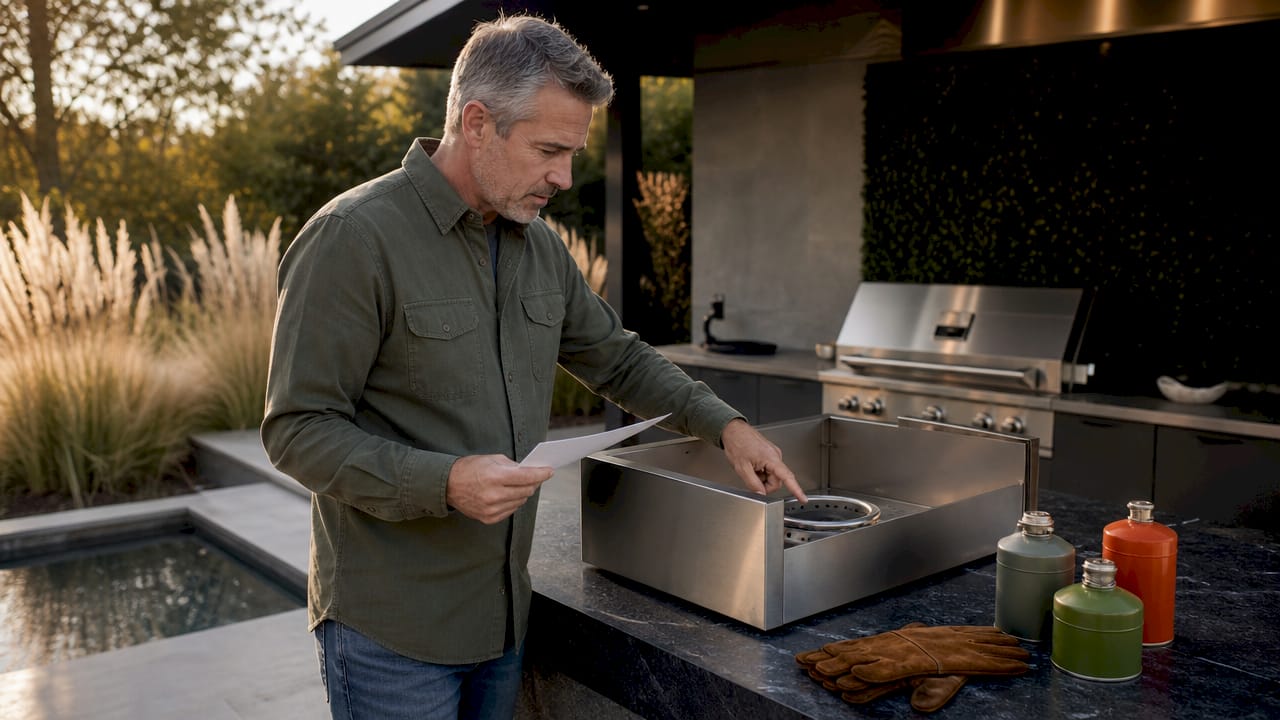
Evaluating Tabletop Fire Pit Quality: 2026 Guide
TL;DR:
- Choosing a quality tabletop fire pit depends on fuel type, construction, safety certifications, and performance. Bioethanol is best for indoor use, propane offers better heat control for outdoors, and wood provides ambiance but requires higher maintenance. Stainless steel, double-wall design, stability, insulation, and proper safety features ensure durability and safety.
Evaluating tabletop fire pit quality means assessing fuel type, construction materials, safety certifications, and real-world performance before you buy. The market in 2026 offers everything from bioethanol tabletop fireplaces to propane-fueled patio models, and the differences in quality are significant. A poorly built unit can damage your furniture, produce unwanted smoke, or simply stop working after one season. This guide gives you a clear, practical framework to assess any tabletop fire pit with confidence, whether you are shopping for a cozy indoor centerpiece or a durable outdoor accent.
What fuel types determine tabletop fire pit quality?
The fuel a tabletop fire pit uses shapes everything: heat output, maintenance demands, indoor suitability, and long-term cost. Quality tabletop fire pits primarily use bioethanol, propane, or wood and pellet fuels, each with distinct performance profiles.
Bioethanol burns cleanly with no smoke, no ash, and no chimney required. That makes it the best choice for indoor use and small patios. The heat footprint is modest, which suits ambiance-focused settings rather than serious outdoor warming. Flaemme specializes in bioethanol tabletop fireplaces for exactly this reason: clean combustion, zero installation, and genuine visual charm.
Propane delivers the strongest heat control of the three fuel types. A controlled propane flame provides more consistent warmth than a tall wood flame focused on ambiance, making it well suited for outdoor entertaining on cool evenings. The trade-off is combustion byproducts and the need for a gas canister, which limits indoor use.
Wood and pellets produce the most heat and the most atmospheric crackling flame. They also demand the most maintenance. Dry, small-cut wood or pellets dramatically reduce smoke output compared to wet or poorly prepared fuel. If smoke-free performance matters to you, fuel preparation is not optional.
| Fuel Type | Heat Output | Indoor Use | Maintenance |
|---|---|---|---|
| Bioethanol | Low to moderate | Yes | Very low |
| Propane | High | No | Low |
| Wood/Pellet | High | No | High |
- Bioethanol: cleanest burn, best for indoor and small spaces
- Propane: best heat control, outdoor only
- Wood/pellet: highest heat and ambiance, requires fuel preparation
How to assess construction materials and build quality
The material a fire pit is made from determines how long it lasts and how safe it is to use near furniture. 304-grade stainless steel is the preferred industry standard for tabletop fire pit construction because of its rust resistance, heat tolerance, and ability to retain its appearance over time.
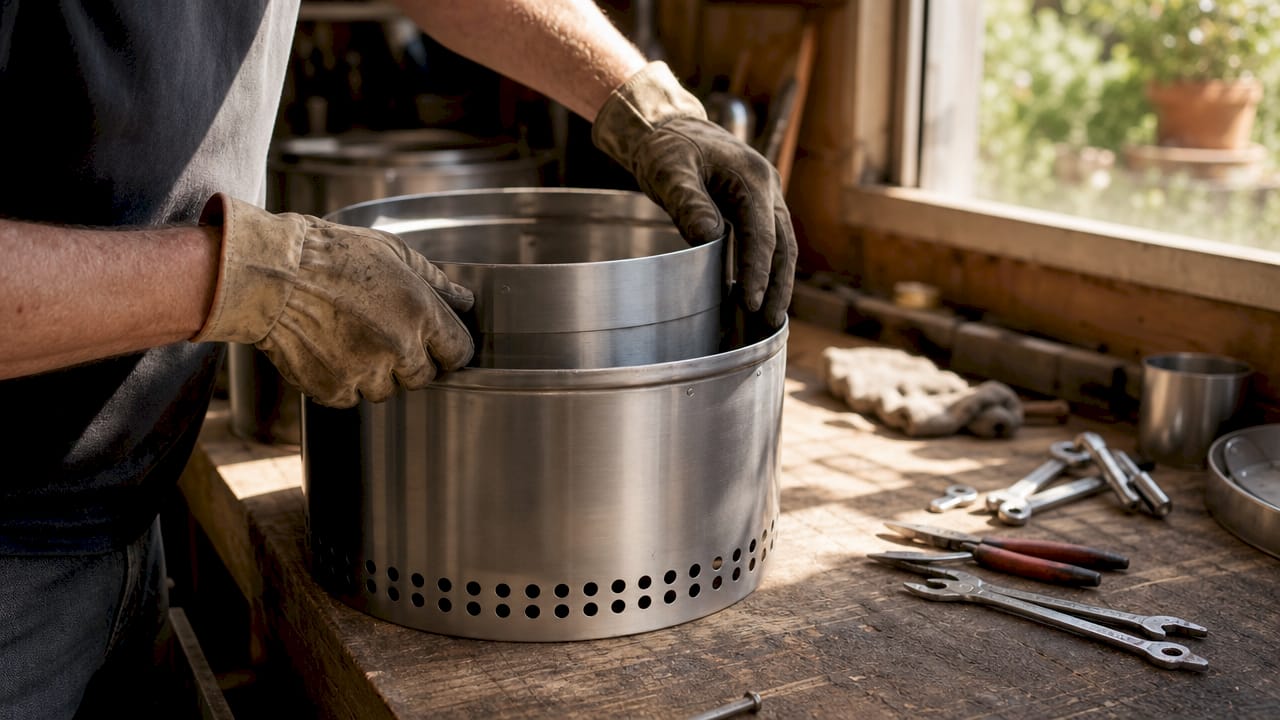
Double-wall construction is the other hallmark of a well-built unit. The space between the inner and outer walls allows for secondary combustion, which reduces smoke and improves burn efficiency. It also keeps the outer surface cooler, protecting your table and reducing burn risk.
Weight is a reliable quality signal. A unit that feels substantial in your hands typically uses thicker gauge steel and more durable welds. Lightweight units often cut corners on wall thickness, which shortens their lifespan and reduces heat management performance.
Finish quality matters for outdoor models. Look for powder-coated or brushed finishes that resist UV fading and surface oxidation. A fire pit that looks worn after one summer was not built for outdoor use, regardless of what the product listing claims.
Pro Tip: Tap the side of a tabletop fire pit before buying. A hollow, thin sound suggests single-wall construction. A dull, solid sound indicates thicker steel and better heat management.
- 304-grade stainless steel: rust-resistant and heat-tolerant
- Double-wall construction: reduces smoke and protects surfaces
- Heavier units: typically indicate better gauge steel
- UV-resistant finishes: extend outdoor lifespan
Which safety features and certifications matter most?
Safety certifications are the clearest way to verify that a tabletop fire pit has been tested for real-world use. Certifications like ASTM for indoor bioethanol and ANSI Z21.97 for gas-fueled fire pits confirm that units have been evaluated for combustion safety, surface heat transfer, and structural integrity.
A wide, stable base is a non-negotiable safety feature. Tabletop fire pits sit on surfaces where a bump or gust of wind can cause a tip-over. A base that is at least as wide as the unit’s tallest point provides meaningful stability.
Heat shielding is not a bonus feature. Insufficient insulation can cause wood or glass surfaces to discolor, crack, or burn even with a small flame. Always verify that the unit’s base is insulated before placing it on any furniture.
Integrated heat shielding and insulated bottoms protect your table from radiant heat. Double-wall design contributes here too, keeping the outer shell at a safe temperature during use. For indoor use specifically, you can find detailed indoor safety guidelines that cover ventilation, surface clearance, and fuel handling.
A matching lid rounds out the safety picture. A proper lid matched to the unit’s material protects the fire pit from moisture and debris, prolonging burner life and maintaining quality between uses.
- ASTM certification: required for indoor bioethanol models
- ANSI Z21.97: standard for gas-fueled tabletop fire pits
- Wide base: prevents tipping on uneven or outdoor surfaces
- Insulated bottom: protects furniture from heat damage
- Matching lid: prevents moisture buildup and extends burner life
How to evaluate heat output, flame quality, and usability
Performance assessment starts with BTU ratings, but the number alone does not tell the full story. BTU ratings between 40,000 and 55,000 are generally ideal for residential patio tabletop fire pits. Higher output is often unnecessary and may lead to overspending without meaningful warmth benefits.
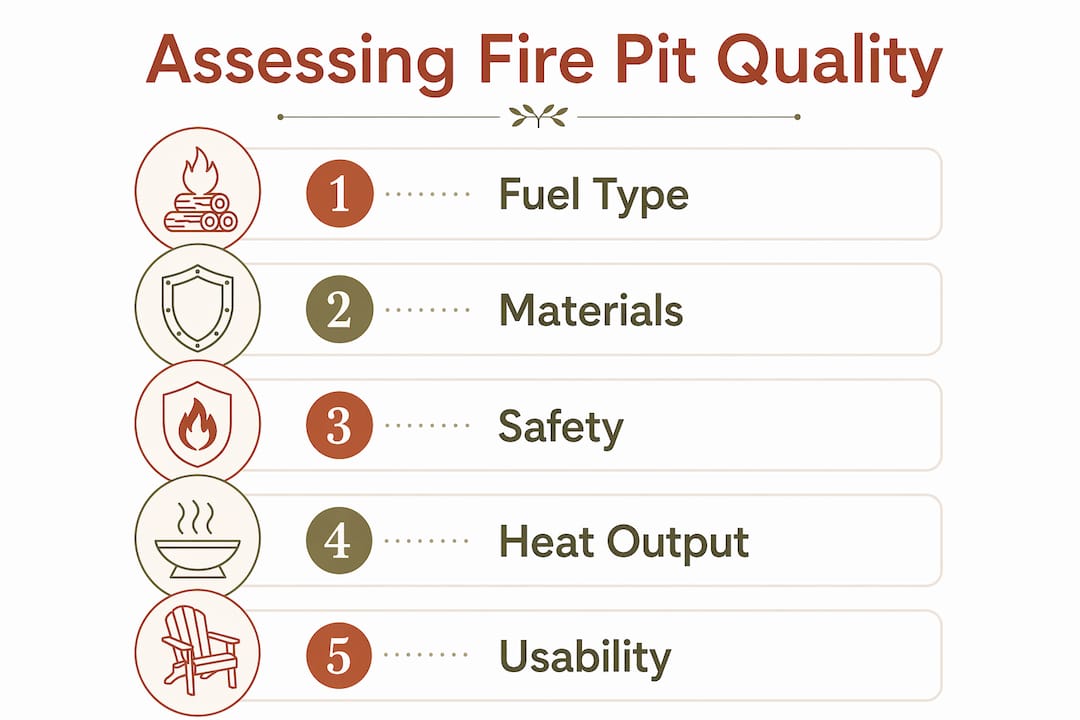
Flame size is one of the most misunderstood quality signals. A large, dramatic flame does not equal better heat. Flame size and visual appeal do not necessarily correlate with effective heat output. A compact, controlled flame from a well-designed bioethanol or propane burner often delivers more usable warmth than a tall, showy flame.
| Performance Factor | What to Look For | Red Flag |
|---|---|---|
| BTU rating | 40,000–55,000 for patios | Unlisted or exaggerated claims |
| Flame control | Adjustable output | Fixed, single-height flame only |
| Burn time | 4+ hours per fill | Under 2 hours per fuel load |
| Ignition | Push-button or electronic | Manual-only with no safety cutoff |
Fuel capacity and burn time directly affect how enjoyable the fire pit is to use. A unit that needs refueling every 90 minutes interrupts the atmosphere you are trying to create. Look for a fuel reservoir that supports at least four hours of continuous burn.
Auto-ignition features enhance ease of use and encourage more frequent enjoyment. Push-button or electronic ignition reduces friction compared to manual lighting, making setup quicker and simpler. For small spaces and indoor settings, this also reduces the risk of fuel spills during lighting.
Pro Tip: Ask the retailer for the fuel consumption rate per hour, not just the total burn time. A unit that burns 0.4 liters per hour gives you a much clearer picture of ongoing fuel costs than a vague “up to 8 hours” claim.
Common mistakes when evaluating tabletop fire pits
Avoiding these mistakes separates a confident purchase from a frustrating one.
-
Overvaluing complex features. Electronic controls and app connectivity sound appealing, but simple stainless steel models with quick setup encourage more frequent use than complex models with fragile electronics. Durability and ease of use outweigh feature count.
-
Ignoring heat shielding. Many buyers focus on flame aesthetics and overlook the unit’s base insulation. Placing an unshielded fire pit on a wood or glass table is a genuine risk, not a minor concern.
-
Skipping the lid. Uncovered units accumulate moisture and rust faster, degrading both functionality and appearance. A matching lid is a small investment that protects the entire unit.
-
Misreading “smokeless” claims. Smokeless performance depends on both design and fuel quality. A well-designed unit burning wet wood will still produce smoke. True smokeless performance requires the right fuel preparation alongside the right construction.
-
Setting unrealistic heat expectations. Smokeless tabletop fire pits are designed more for ambiance than serious heat output. If you need to heat a large patio, a tabletop model is not the right tool. Matching the fire pit to your actual use case prevents disappointment.
For buyers considering small indoor or balcony spaces, a guide to indoor fire pits covers how to match model size and fuel type to confined areas safely.
Key takeaways
A tabletop fire pit’s quality is defined by its fuel type, construction material, safety certifications, and how well its performance matches your intended use.
| Point | Details |
|---|---|
| Fuel type sets the baseline | Bioethanol suits indoor use; propane delivers heat control; wood offers ambiance with higher maintenance. |
| 304-grade stainless steel is the standard | Double-wall construction in this material reduces smoke and protects surfaces from heat damage. |
| Certifications confirm real safety | ASTM and ANSI Z21.97 certifications verify that a unit has been tested for combustion and surface safety. |
| BTU ratings need context | Residential patios perform well with 40,000–55,000 BTU; higher output rarely adds meaningful warmth. |
| Simplicity drives long-term value | Durable, easy-to-use models get used more often than overengineered units with fragile features. |
What I have learned from years of watching people buy fire pits
Most buyers walk into this purchase focused on the wrong thing. They want a dramatic flame. They want a feature list. They want something that photographs well on a patio table. What they actually need is a unit that works reliably, sits safely on their furniture, and gets used more than twice before being stored away.
The single biggest quality mistake I see is ignoring heat shielding. A fire pit that scorches your dining table is not a quality product, regardless of how beautiful the flame looks. Verify the insulated base before anything else.
My second observation: certified bioethanol models consistently outperform expectations for indoor and small-space use. The absence of smoke, ash, and gas connections makes them genuinely practical. Flaemme’s approach of focusing entirely on clean-burning bioethanol designs reflects this reality. You do not need a complicated product. You need one that works every time you light it.
Maintenance is the factor most buyers underestimate. A fire pit with a matching lid, a simple burner design, and 304-grade stainless steel construction will outlast a flashier unit by years. Buy for durability and simplicity. The enchanting warmth will follow.
— V&M
Flaemme’s smokeless tabletop fire pits: quality you can verify
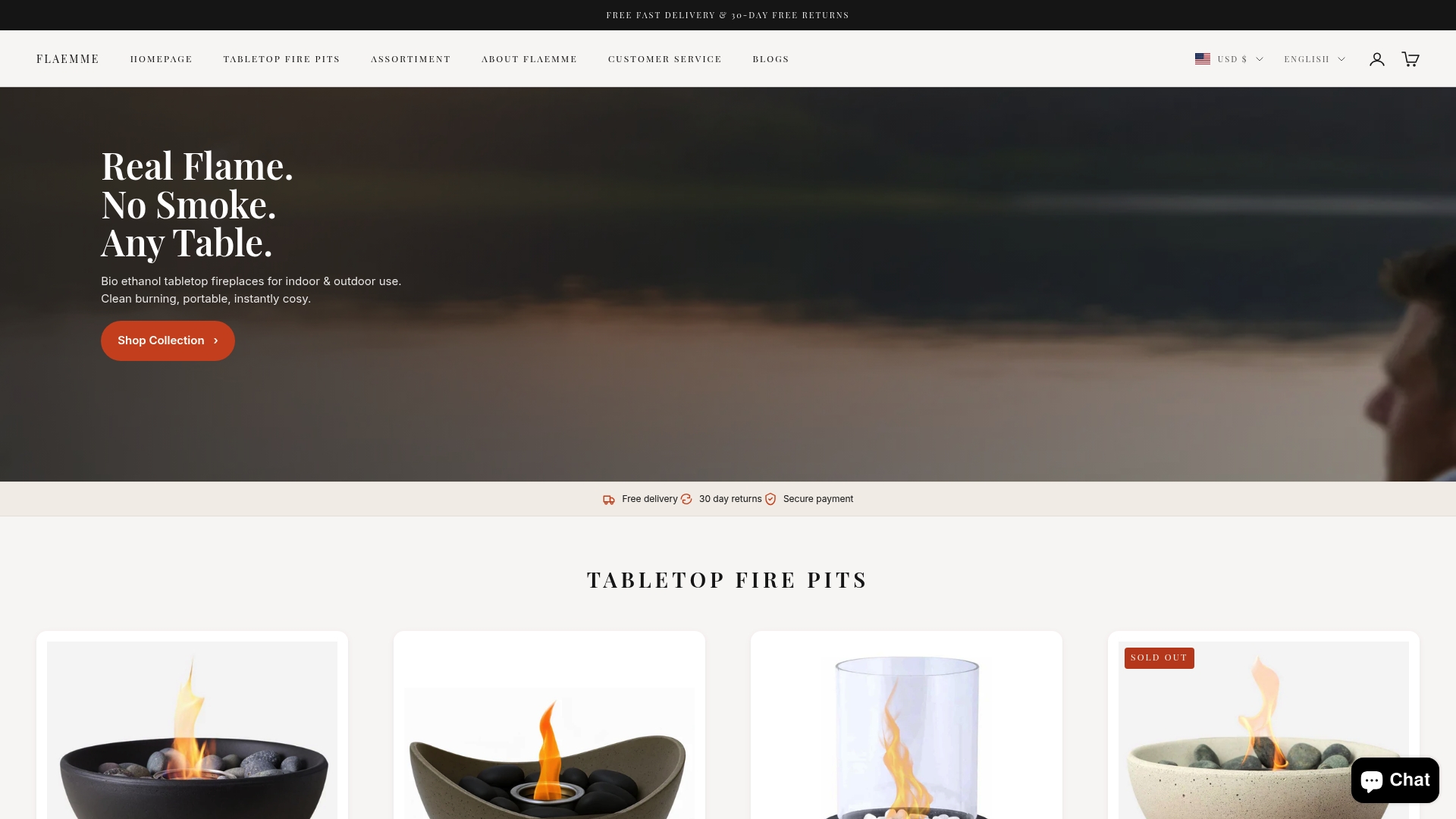
Flaemme designs bioethanol tabletop fireplaces that meet the quality criteria covered in this guide. Each model uses clean-burning bio ethanol fuel, requires no installation or chimney, and is built for both indoor and outdoor use. The materials, safety features, and smokeless performance are built in, not bolted on. If you want to apply what you have learned here to a real purchase, the Flaemme smokeless fire pit collection is a strong place to start. Free delivery across Europe and 30-day returns mean you can evaluate quality in your own space, with no pressure. →
FAQ
What is the best material for a tabletop fire pit?
304-grade stainless steel is the industry standard for tabletop fire pits. It resists rust, tolerates high heat, and retains its appearance over time.
Are tabletop fire pits safe to use indoors?
Bioethanol tabletop fire pits are safe for indoor use when used in ventilated spaces and placed on heat-shielded surfaces. Gas and wood-burning models are not suitable indoors.
What BTU rating do I need for a patio fire pit?
BTU ratings between 40,000 and 55,000 are ideal for residential patio use. Higher output rarely adds meaningful warmth for tabletop-scale models.
Do smokeless fire pits actually produce no smoke?
Smokeless performance depends on both design and fuel quality. A well-built unit burning properly prepared fuel produces minimal smoke, but wet or low-quality fuel will still cause smoke regardless of the unit’s design.
What certifications should I look for when buying a tabletop fire pit?
Look for ASTM certification on indoor bioethanol models and ANSI Z21.97 on gas-fueled units. These confirm the fire pit has been tested for combustion safety and surface heat transfer.