Artikel: Fireplaces in New Homes: A 2026 Guide for DACH Buyers
Fireplaces in New Homes: A 2026 Guide for DACH Buyers
TL;DR:
- Fireplaces in new DACH region homes must comply with strict safety and emission standards, requiring early planning and certification. Bio ethanol fireplaces offer a chimneys-free, low-impact option suitable for modern designs and regulations. Proper coordination with architects and chimney sweeps is essential to ensure safe, compliant, and aesthetically pleasing installations.
Fireplaces in new homes are carefully chosen heating and design features that blend style with stringent regional safety and emissions standards in Germany, Austria, and Switzerland. Whether you want the enchanting warmth of a wood-burning stove, the clean lines of a built-in gas insert, or the effortless ambiance of a bio ethanol fireplace, your choice affects aesthetics, comfort, and legal compliance in equal measure. The DACH region enforces some of Europe’s strictest building and fire safety codes, so knowing your options before you break ground saves time, money, and stress.
1. Freestanding wood and pellet stoves
Freestanding stoves remain the most popular fireplace type in German and Austrian new builds. Models from brands like Leda, Haas+Sohn, and Austroflamm combine traditional warmth with modern, minimalist silhouettes that suit contemporary interiors. Wood is classified as a renewable fuel under Germany’s GEG (Gebäudeenergiegesetz), so it can count toward your home’s energy balance calculations. Pellet stoves add the convenience of automated fuel feeding and precise temperature control, making them a practical choice for airtight, well-insulated new builds.
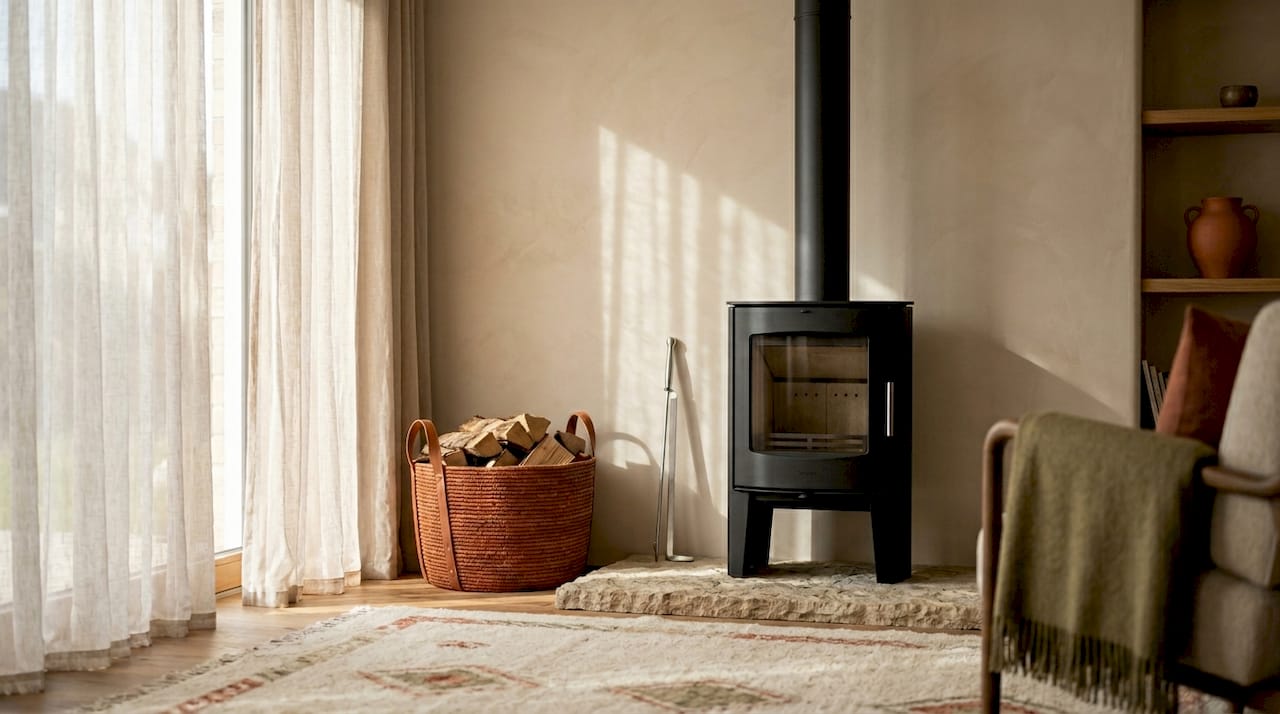
The trade-off is installation complexity. Both types require a certified chimney flue, and new solid-fuel appliances introduced after November 9, 2025 must comply with EN 16510 in addition to older EN 13240 approvals. That means stricter CE documentation and performance declarations, so always verify your chosen model carries current certification before purchasing.
2. Built-in and inset fireplaces
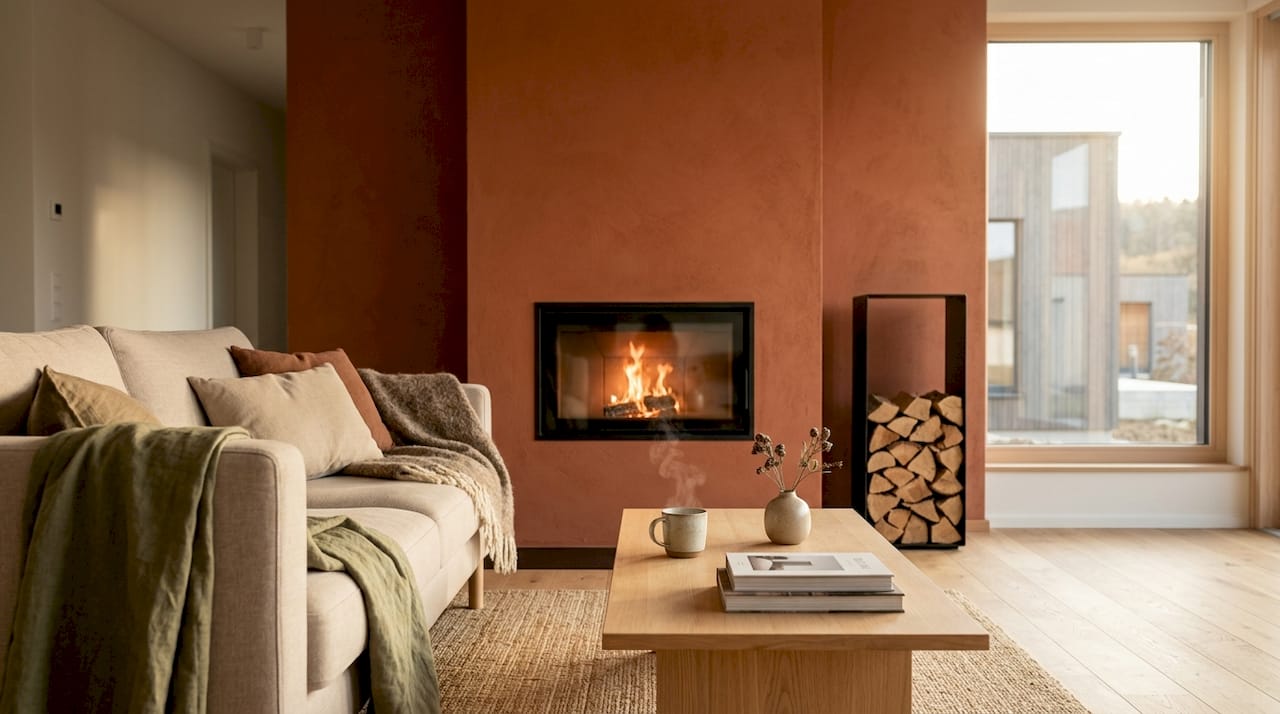
Built-in fireplaces sit flush with the wall, creating a sleek focal point that suits open-plan living spaces. Brands like Spartherm and Brunner offer cassette inserts designed for new construction, with glass fronts that maximize the visual flame effect. These units deliver high heat output while maintaining a minimalist profile that architects and interior designers favor for modern homes.
Installation requires early coordination with your builder. The firebox, flue liner, and surrounding masonry must be planned before interior walls are finished. Minimalist fireplace designs still require fire-resistance envelopes and clearance details that influence wall reveals and skirting, so your architect needs to factor these in from the start.
3. Ethanol fireplaces: stylish and installation-free
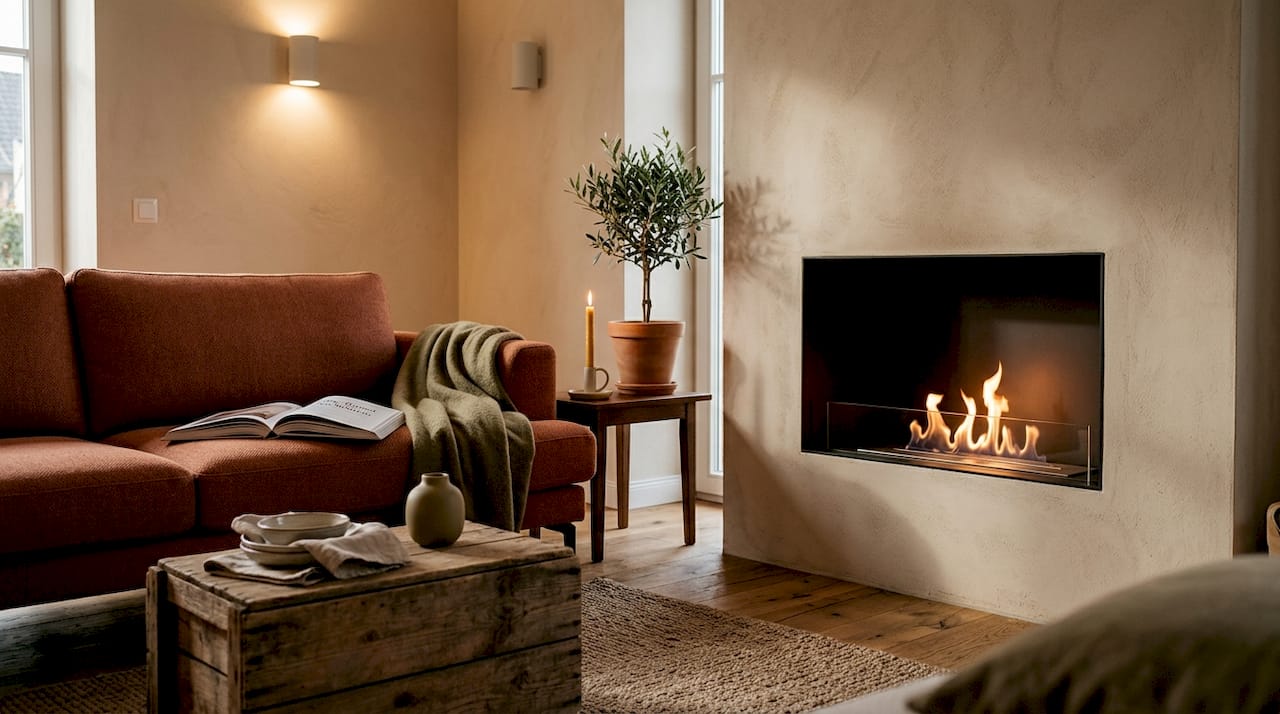
Bio ethanol fireplaces burn liquid ethanol fuel and produce no smoke, soot, or ash. They require no chimney, no gas line, and no electrical connection, which makes them the simplest fireplace option for new builds. You can place them in a living room, bedroom, or even on a covered outdoor patio without any structural modification. This flexibility is a genuine advantage in airtight modern homes where adding a flue system is expensive or architecturally inconvenient.
Ethanol fireplaces are also low-emission by nature, producing primarily water vapor and carbon dioxide in small quantities. They do not fall under the EN 16510 solid-fuel appliance standard, which removes a significant regulatory burden. Flaemme’s range of tabletop and freestanding ethanol fireplaces is designed specifically for this use case: stylish, smokeless, and ready to use the moment they arrive.
Pro Tip: If you want the visual charm of real flames without any installation work, a bio ethanol fireplace from Flaemme is the most practical choice for a new build. You can position it anywhere and move it as your interior evolves.
4. Electric fireplaces and Swiss restrictions
Electric fireplaces use LED technology to simulate a real-flame effect and can include a heating element for supplemental warmth. They are easy to install, require only a standard power outlet, and suit spaces where open flames are not practical. However, Swiss energy regulations largely prohibit direct-electric heating in new builds, and installing an electric heating system without the required permit can trigger costly removal and rebuild orders. This makes electric fireplaces a less straightforward choice for homebuyers in Switzerland.
In Germany and Austria, electric fireplaces face no such blanket restriction, though they are typically used as decorative accents rather than primary heat sources. If you are building in Switzerland, confirm with your cantonal authority whether your intended electric fireplace qualifies as a heating appliance before purchasing.
5. Key regulatory requirements for new builds
Compliance in the DACH region goes well beyond selecting a certified appliance. The installation and venting system must also be safe and certified to prevent hazards. Here is what you need to anticipate:
- EN 16510 and EN 13240 certification: All solid-fuel fireplaces installed after November 2025 must carry both approvals. Check the CE declaration of performance before purchase.
- Bezirksschornsteinfeger inspection: German building law requires chimney sweep authority certification of the fireplace and flue before first use. Schedule this inspection before your finishing trades begin.
- Clearance distances: Standard clearance rules require 20 cm to non-combustible walls, 40 cm to combustible walls, and a floor protector extending 50 cm forward and 30 cm to each side. These distances directly affect your room layout.
- Swiss VKF/BSV guidelines: Switzerland’s VKF fire-safety guidelines apply to heating appliance selection and renovation planning. Review them with your architect during the design phase.
- Permit and inspection process: Most German states and Austrian Länder require a building permit for any fixed fireplace installation. Your builder or chimney sweep can confirm the local process.
| Requirement | What it means for you |
|---|---|
| EN 16510 certification | Verify CE documentation before buying any solid-fuel stove post-November 2025 |
| Bezirksschornsteinfeger sign-off | Book chimney sweep inspection before interior finishes are applied |
| Clearance distances | Plan room layout around 20–40 cm wall clearances and floor protector dimensions |
| VKF/BSV (Switzerland) | Consult cantonal authority on electric and heating appliance restrictions |
Pro Tip: Ask your chimney sweep to review your fireplace placement during the rough-in stage, not after walls are plastered. Fixing clearance issues at that point costs a fraction of what it costs post-finish.
6. Installation process and planning tips
Fireplace installation time varies by type, spanning hours for a freestanding ethanol unit to several days for a built-in wood stove with a new flue system. The most time-consuming work is almost always the venting and gas or electrical rough-in, not the unit placement itself. Planning for this early prevents the most common and costly delays.
Here is what a smooth installation process looks like for a new build:
- Design phase: Confirm fireplace type, fuel source, and placement with your architect. Factor in clearance distances, flue routing, and external air supply for airtight homes.
- Rough-in stage: Install the chimney liner or flue system, gas lines, or electrical conduit before interior walls are closed. Schedule chimney sweep coordination at this stage to confirm flue suitability.
- Unit installation: Secure the firebox or stove, connect fuel supply, and fit the surround or trim to the finished wall.
- Final inspection: The Bezirksschornsteinfeger conducts a draft and safety test. Only after certification can you light the fireplace for the first time.
Modern airtight homes present a specific challenge: they need an external air supply for combustion appliances. Your installer must account for this with a dedicated fresh-air duct, or the stove will draw air from the living space and create negative pressure.
Pro Tip: Include your fireplace in the architect’s plans from day one. Adding it as an afterthought once walls are up can double the installation cost and delay your move-in date.
7. Eco-friendly fireplace options compared
Choosing an eco-friendly fireplace for a new build means balancing emissions, fuel source, and regional energy law. The table below compares the main options on the factors that matter most to DACH homeowners.
| Fireplace type | Emissions | Installation complexity | Swiss compliance |
|---|---|---|---|
| Modern pellet stove | Low (EN 16510 certified) | High (flue required) | Yes, with permit |
| Wood stove (EN 16510) | Low to moderate | High (flue required) | Yes, with permit |
| Bio ethanol fireplace | Very low (no combustion byproducts) | None | Yes, no permit needed |
| Electric fireplace | Zero direct emissions | Low (outlet only) | Restricted in new builds |
Modern pellet stoves and certified wood stoves meet Germany’s strict particulate emission limits and qualify under GEG renewable energy calculations. Bio ethanol fireplaces produce no particulates and no carbon monoxide at meaningful levels, making them the cleanest burning option available. Electric fireplaces produce zero direct emissions but draw from the grid, and their carbon footprint depends on your electricity source. In Switzerland, their use as heating appliances in new builds is restricted by cantonal energy law, so confirm local rules before specifying one.
For homeowners who want to combine low emissions with zero installation complexity, a bio ethanol fireplace is the most straightforward path. You get real flames, genuine warmth, and no regulatory paperwork beyond standard room ventilation.
8. Design trends and fireplace placement ideas
The most popular fireplace placements in new DACH homes right now are the central living area feature wall, the open-plan kitchen-dining divide, and the covered outdoor patio. Each location creates a distinct atmosphere and serves a different social function. Outdoor placements are growing particularly fast as homeowners extend their living space into gardens and terraces year-round.
Current material trends favor natural stone surrounds, large-format tile, and raw concrete finishes that complement Scandinavian and minimalist interiors. Wood surrounds are returning in warmer, more textured interior styles. When coordinating your fireplace with your home’s architecture, consider these practical points:
- TV integration: Mounting a screen above a fireplace is popular but requires careful heat management. Built-in units with top-deflecting heat shields are the safer choice.
- Built-in shelving: Flanking a fireplace with recessed shelves creates a cohesive focal wall without additional furniture.
- Minimalist fronts: Frameless glass fronts on built-in cassettes suit contemporary homes and make the fire itself the visual centerpiece.
- Outdoor patios: A freestanding ethanol fireplace on a covered terrace adds warmth and atmosphere with no permanent installation. You can find patio placement guidance to help you position it safely and stylishly.
Always confirm that your chosen design respects the required clearance distances. A beautiful stone surround that sits 15 cm from a combustible wall is a fire hazard regardless of how good it looks.
Key takeaways
The best fireplaces in new homes combine certified appliances, early architectural planning, and fuel choices that meet DACH emissions and energy law.
| Point | Details |
|---|---|
| Certification is non-negotiable | All solid-fuel stoves installed after November 2025 must carry EN 16510 and EN 13240 approval. |
| Plan early with your chimney sweep | Book the Bezirksschornsteinfeger during rough-in to avoid costly post-finish corrections. |
| Ethanol fireplaces skip the paperwork | Bio ethanol units need no flue, no permit, and no inspection in most DACH jurisdictions. |
| Swiss electric restrictions matter | Confirm cantonal rules before specifying an electric fireplace as a heating appliance in Switzerland. |
| Design and compliance must align | Clearance distances affect wall reveals and room layout, so coordinate with your architect from day one. |
What I’ve learned from watching homeowners get this wrong
The single most common mistake I see in new-build fireplace projects is treating the fireplace as a finishing touch rather than a structural decision. Homeowners fall in love with a particular stove or built-in design, then discover mid-construction that the flue route conflicts with a load-bearing wall or that the clearance distances eat into a planned built-in wardrobe. Fixing those problems after the fact is expensive and demoralizing.
The second pattern I notice is underestimating the chimney sweep’s role. In Germany, the Bezirksschornsteinfeger is not just an inspector. They are a legal gatekeeper. You cannot legally operate a solid-fuel or gas fireplace without their sign-off, and they have real authority to require modifications. Homeowners who treat this as a box-ticking exercise at the end of the project often face delays and rework. The ones who invite the chimney sweep to review plans at the rough-in stage almost never do.
My honest recommendation for homeowners who want warmth and atmosphere without the regulatory complexity: start with a bio ethanol fireplace. You get real flames, genuine heat, and zero installation burden. As your home evolves and your budget allows, you can always add a certified wood stove later. The ethanol fireplace does not lock you into anything. It just works, from day one, in any room you choose.
— V&M
Add instant warmth to your new home with Flaemme
If you want the atmosphere of a real fire without chimneys, permits, or installation delays, Flaemme’s modern ethanol fireplaces are designed exactly for that. Each piece combines clean, contemporary design with smokeless bio ethanol combustion, so you get enchanting warmth the moment your new home is ready to live in.
Flaemme ships across Europe with free delivery and a 30-day return policy, making it easy to find the right fireplace for your space. Browse the full collection at Flaemme.com and discover how effortlessly a real-flame fireplace fits into a modern new build. For more on safe setup practices, the Flaemme Journal has you covered. →
FAQ
What fireplace types require no chimney in a new build?
Bio ethanol fireplaces require no chimney, flue, or gas connection, making them the simplest option for new construction. Electric fireplaces also need only a power outlet, though Swiss regulations restrict their use as heating appliances in new builds.
When must I involve the Bezirksschornsteinfeger?
German building law requires chimney sweep certification before you operate any solid-fuel or gas fireplace for the first time. Scheduling this review during the rough-in stage, before interior walls are finished, prevents costly corrections later.
Does EN 16510 apply to all fireplaces installed in 2026?
EN 16510 applies to new solid-fuel fireplaces introduced after November 9, 2025, and requires updated CE performance declarations alongside the older EN 13240 standard. Gas and ethanol fireplaces fall under separate product standards.
Are bio ethanol fireplaces eco-friendly enough for DACH homes?
Bio ethanol fireplaces produce no particulates, no carbon monoxide at meaningful levels, and no smoke, making them the lowest-emission real-flame option available. They do not require a permit in most DACH jurisdictions and align well with modern energy-conscious home design.
How early should I plan my fireplace during new home construction?
Include your fireplace in the architect’s plans from the design phase, before any structural work begins. Early planning allows proper flue routing, clearance compliance, and coordination with your chimney sweep, all of which prevent expensive changes during construction.