Heat Output of Tabletop Fireplaces: What You Need to Know
TL;DR:
- Bioethanol tabletop fireplaces give off gentle warmth that you notice close by, which makes them an atmospheric extra in smaller rooms. How much heat you actually feel depends on room size, ventilation and fuel quality, and a tabletop fireplace should not be mistaken for permanent heating. Safe use comes down to careful handling, above all refilling only once the burner has cooled down.
The heat output of a tabletop fireplace describes how much thermal energy it releases into a room per hour, measured in kilowatts. Bioethanol tabletop fireplaces, also called ethanol fireplaces, produce this warmth by burning bioethanol cleanly, without smoke, soot or a chimney. Their warmth is not enough to heat a room on its own, but it is a pleasant, noticeable extra. If you are buying a tabletop fireplace, it helps to understand the difference between decorative effect and real heating power from the start.
You can find all current models in our overview of bioethanol tabletop fireplaces.
How is the heat output of tabletop fireplaces measured?
Heat output is given in kilowatts (kW) and describes the amount of heat a device releases into its surroundings per hour. For ethanol fireplaces, safety standards also set an upper limit on output. That limit is no accident: it is a compromise between usable warmth and an acceptable level of risk in the home, as consumer testers point out.
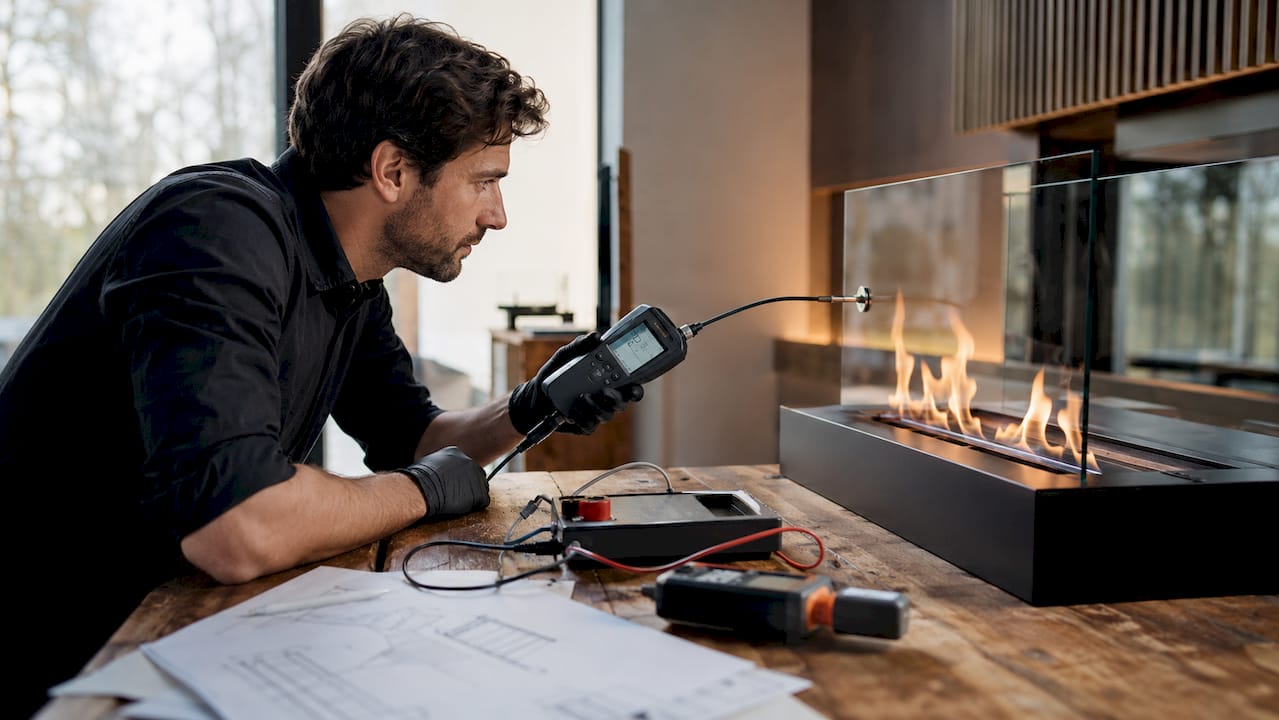
In practice, manufacturers distinguish between gross and net heat output. Gross output is the total energy released during combustion, while net output is only the share that actually reaches the room as warmth. With bioethanol tabletop fireplaces, net output is clearly lower than the gross figure, because some of the energy is lost through ventilation and heat loss.
Heat output is directly linked to fuel consumption: the more fuel burns per hour, the more heat is released. A compact model burns modest amounts. The Ardente, for example, burns for 60 to 90 minutes on a filling of up to 150 ml. Electric fireplaces such as the Klarstein Lausanne state their output as clearly defined 1,000 or 2,000 watts, which makes direct comparison easier than with ethanol models. It shows how differently manufacturers communicate output figures.
| Fireplace type | Typical output | Control | Emissions |
|---|---|---|---|
| Bioethanol tabletop fireplace | Gentle, noticeable close by | Limited (burner opening) | CO₂ and water vapour |
| Electric fireplace | 1 to 2 kW | Continuously adjustable | None |
| Traditional wood-burning stove | 4 to 12 kW | Via air supply | Smoke, CO₂ |
Pro tip: When buying, look at net heat output rather than the maximum figure alone. A model with a high gross figure can deliver noticeably less warmth to the room if ventilation and design are inefficient.
What affects heat efficiency in the room?
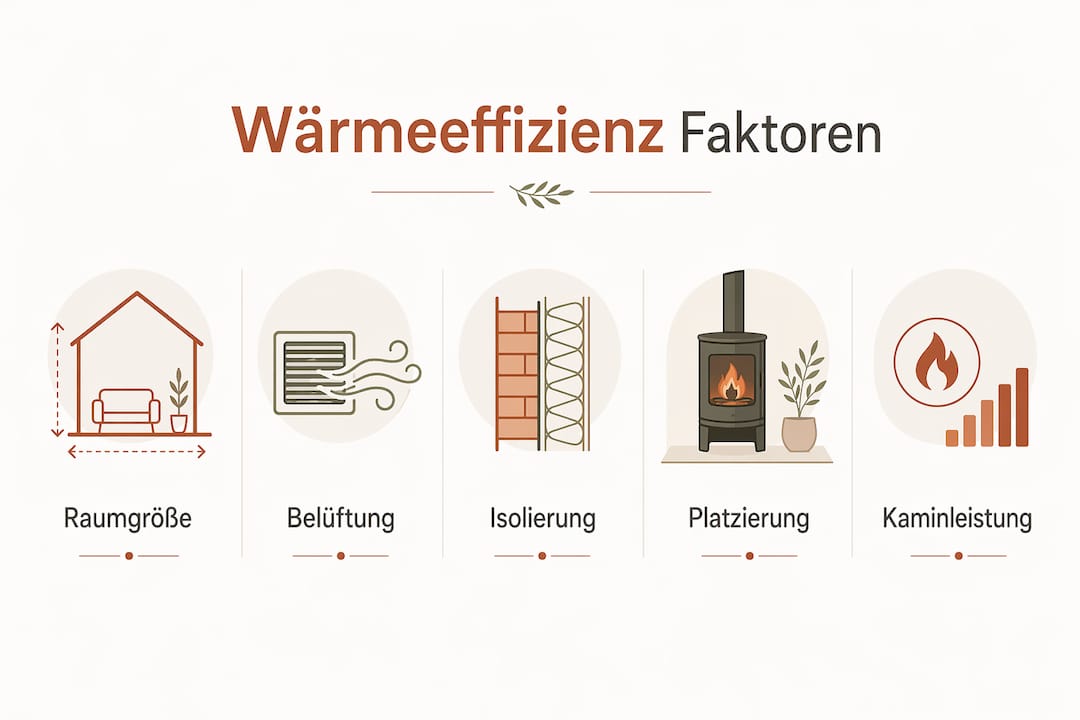
How efficiently a tabletop fireplace warms a room depends on far more than its kW rating. Room size, ventilation and how you use it together determine how much warmth you really feel. These factors matter at least as much as the stated output.
As a rule, a tabletop fireplace works best as extra warmth in a smaller living room, not as the only source of heat.
The main factors at a glance:
- Room size: In rooms that are too large, the warmth dissipates quickly. Tabletop fireplaces work best in rooms of up to 25 square metres.
- Ventilation: Bioethanol consumes oxygen as it burns and releases CO₂ and water vapour. Regular airing is essential, but it also lowers the room temperature.
- Burn time and consumption: The Ardente burns for 60 to 90 minutes per filling of up to 150 ml. After that it needs refilling, which interrupts the warmth.
- Fuel quality: High-quality bioethanol produces cleaner flames and more efficient combustion, which noticeably improves heat output.
- Heat loss through windows: Draughts and poorly insulated windows can cancel out the warmth of a tabletop fireplace entirely.
Pro tip: Place your tabletop fireplace in a smaller, well-insulated room and air it briefly before lighting rather than during use. That way the warmth stays in the room longer and the rise in CO₂ is kept down.
How safe are tabletop fireplaces in use?
With tabletop fireplaces, safety and heat output go hand in hand, because higher output also means a higher risk if they are handled incorrectly. Safety standards require protection against tipping over and fuel spills, but they cannot prevent every accident. Safety depends to a large extent on how you use the fireplace.
The most common mistake is refilling bioethanol while the burner is still warm. Bioethanol gives off flammable vapour even at room temperature, and an ignitable mixture can form before you notice. The result can be a sudden flare-up that causes serious burns.
How to use your tabletop fireplace safely:
- Let the burner cool down completely before refilling. Wait at least 15 minutes after the flame has gone out.
- Use only quality bioethanol made for fireplaces, with a purity of at least 96 per cent. Poor-quality fuel increases soot and fire risk.
- Never overfill. Fill the burner no further than the marked maximum, which is 150 ml for the Ardente, to prevent spills.
- Ventilate well. In rooms under 20 square metres, air the room briefly every 30 to 45 minutes to keep CO₂ from building up.
- Keep children and pets away. The open flame is real and hot. A safety distance of at least one metre is recommended.
- Choose a suitable surface. Tabletop fireplaces belong on a stable, heat-resistant surface, never on plastic or easily flammable materials.
Ethanol fireplaces have no conventional automatic shut-off. The flame only goes out when the fuel is used up or the air supply is cut off. That sets them fundamentally apart from gas heaters or electric devices with a thermostat.
How to make sensible use of the warmth at home
Tabletop fireplaces are above all decorative fireplaces that create a sense of warmth and comfort without heating a room permanently. That is not a criticism but a strength: used properly, a tabletop fireplace is an atmospheric accessory with a real bonus of warmth. The glow of the flame noticeably changes how a room feels, even if the measurable rise in temperature stays small.
As a guide when choosing a tabletop fireplace, by room size:
| Room size | What to expect | Best use |
|---|---|---|
| Up to 15 m² | Atmosphere and gentle extra warmth | Ideal size for a tabletop fireplace |
| 15 to 25 m² | Warmth noticeable close by, good effect in the room | Alongside your main heating |
| 25 to 40 m² | Mainly atmosphere | Main heating needed |
| Over 40 m² | Little noticeable warmth | Decorative use only |
Combining a tabletop fireplace with a well-thought-out approach to ventilation is the key to enjoying it. If you want to enjoy stylish warmth with bioethanol, think of the fireplace as an addition to your existing heating, not a replacement. Tabletop fireplaces show their best side in living rooms, in sheltered outdoor spots or in the office, as an atmospheric highlight with pleasant radiant warmth.
A conventional central heating system heats a 30-square-metre room with 6 to 10 kW of output. A tabletop fireplace cannot keep such a room warm, but it can make a cool evening feel a great deal cosier. That is its real purpose.
Bioethanol tabletop fireplaces versus electric fireplaces: a comparison
Bioethanol tabletop fireplaces and electric fireplaces differ fundamentally in technology, appearance and use. Bioethanol models give real warmth from a living, real flame. Electric fireplaces such as the Klarstein Lausanne offer 1,000 to 2,000 watts with a simulated LED flame and continuous control.
The main differences at a glance:
- Flame: Bioethanol produces a real, living flame that flickers naturally. Electric fireplaces simulate fire with LED technology, which looks less authentic.
- Warmth: A bioethanol tabletop fireplace gives radiant warmth from a real flame. An electric fireplace gives a steady, adjustable output.
- Operation: Electric fireplaces are easier to use, have thermostats and can be controlled by remote. Bioethanol fireplaces need more attention when filling and lighting.
- Safety: Electric fireplaces have no open flame and no emissions, which makes them safer in certain situations. Bioethanol fireplaces need ventilation and careful handling.
- Cost: Depending on quality, bioethanol costs between €2 and €5 per litre. The Ardente burns for 60 to 90 minutes on up to 150 ml. Electric fireplaces have running costs that depend on your electricity tariff.
- Environment: Bioethanol made from renewable crops is close to carbon neutral. Electric fireplaces are only as green as the electricity they use.
For homes with children or offices without the option to ventilate, an electric fireplace is the safer choice. If you are looking for real flames, natural warmth and an authentic fireside feel, a bioethanol tabletop fireplace is the right fit. Both types complement your existing heating, but neither replaces it.
Key takeaways
Tabletop fireplaces give gentle warmth that works as an atmospheric extra in smaller rooms, not as a replacement for regular heating.
| Point | Details |
|---|---|
| Technical limit | Safety standards cap the output of ethanol fireplaces. |
| Right room size | A tabletop fireplace works best as extra warmth in rooms of up to 25 square metres. |
| Ventilation is essential | Oxygen consumption and CO₂ production call for regular airing, which lowers the room temperature. |
| Safety through behaviour | Refilling a warm burner is the most common source of danger with bioethanol fireplaces. |
| Decorative first | The sense of warmth from the glow of the flame is often stronger than the measurable rise in temperature. |
My view on the heat output of tabletop fireplaces
If you buy a tabletop fireplace expecting it to keep your living space warm all the time, you will be disappointed. That is not a weakness of the product but the wrong expectation. Some buyers are frustrated after their first winter because their tabletop fireplace could not replace the heating. That was never its promise.
What really convinces me about bioethanol tabletop fireplaces is the combination of a real flame and instant atmosphere without installation. You put it on the table, light it, and within minutes the room feels warmer and cosier. Whether the temperature has actually risen by a degree or two hardly matters. The glow of the flame has a stronger effect on how you feel than any number on the thermometer.
What I would not underestimate, though, are the safety rules. Pouring bioethanol into a burner that is still warm is not a theoretical risk. Safety standards protect you to a degree, but your own behaviour protects you most. If you consistently follow the six safety rules in this article, you can enjoy a tabletop fireplace safely for years.
My advice: buy a tabletop fireplace for what it is. A stylish, atmospheric accessory with real fire and pleasant radiant warmth. Combine it with your existing heating, choose the right room size, and you will love it.
— V&M
Stylish warmth with Flaemme: tabletop fireplaces for every room
You now know what tabletop fireplaces can do and where their limits lie. If you are looking for a model that combines design with a real flame, the Flaemme collection is worth a look.
Flaemme offers modern ethanol tabletop fireplaces for indoor use and sheltered outdoor spots, with no installation, chimney or gas needed. All models are smoke-free and portable. The Ardente burns for 60 to 90 minutes per filling of up to 150 ml. With 30 days free returns and a 2-year warranty, you can try your chosen fireplace without risk. Find inspiration in our cosy decorating ideas and choose the model that suits your home.
FAQ
How much heat does a tabletop fireplace give off?
Bioethanol tabletop fireplaces give off gentle warmth that you notice close by. That is enough for a pleasant extra in smaller rooms, but it does not replace regular heating.
What room size is a tabletop fireplace suitable for?
As a rule of thumb, a tabletop fireplace works best as extra warmth in rooms of up to around 20 to 25 square metres. In larger rooms it mainly adds atmosphere.
Do I need to ventilate when using a tabletop fireplace?
Yes, regular airing is essential when using a bioethanol fireplace. Combustion consumes oxygen and produces CO₂, which quickly affects air quality in small rooms.
How safe are bioethanol tabletop fireplaces?
Bioethanol tabletop fireplaces are safe when handled correctly, but mistakes such as refilling a warm burner can cause flare-ups. Safety standards require protective features, but they are no substitute for careful use.
What is the difference between bioethanol and electric fireplaces?
Bioethanol tabletop fireplaces produce a real flame and radiant warmth, while electric fireplaces such as the Klarstein Lausanne work with 1,000 to 2,000 watts and a simulated LED flame. Electric models are easier to use and need no ventilation, but offer a less authentic flame.