Bioethanol Indoors: How to Enjoy Stylish Warmth Safely
In short:
- Bioethanol fireplaces are above all decorative design pieces with a real flame. They are portable, smoke-free and ideal for rented homes. Following the safety rules is essential for safe use.
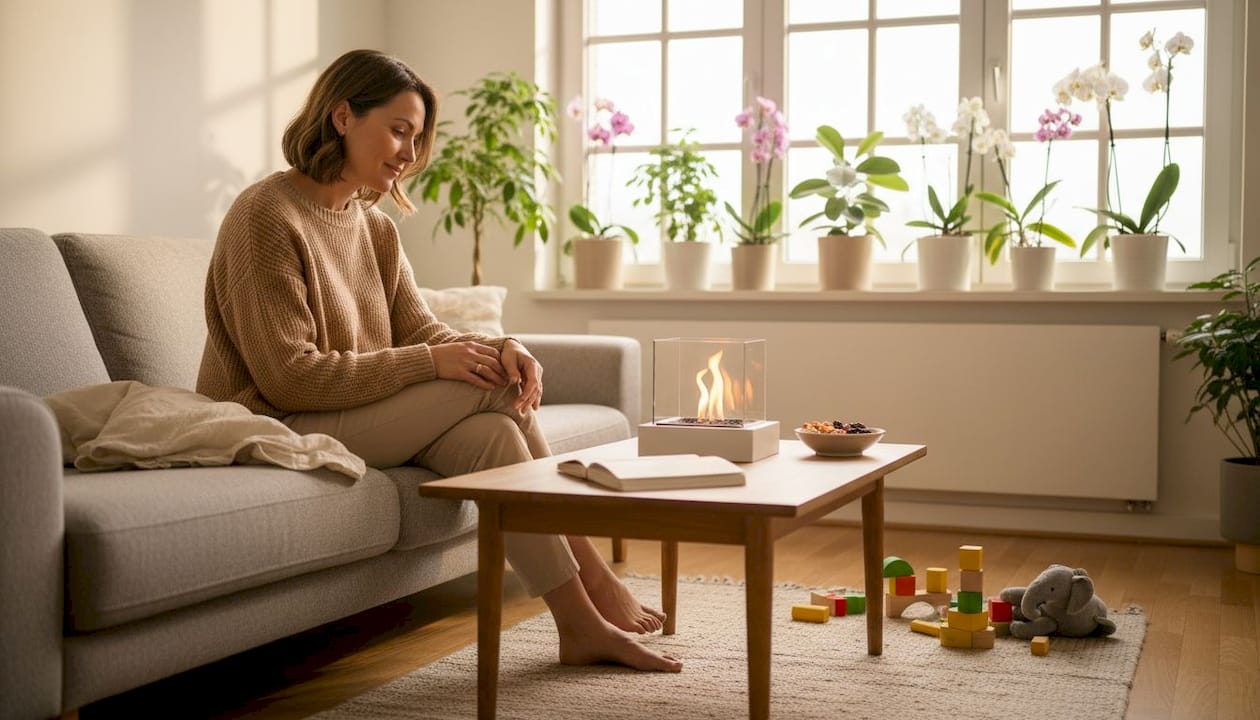
Many people think a bioethanol fireplace is mainly a way to heat a room. That misconception is persistent, even though the reality is far more interesting. Bioethanol fireplaces are first and foremost design pieces that bring real flames, a welcoming atmosphere and a modern feel to your home. Whether you live in a rented flat, a city apartment or a period home, these fireplaces work without a chimney, without installation and without smoke. In this article you will learn how bioethanol really works, what research says about air quality and which safety rules you should know.
Contents
- What is bioethanol and why is it used indoors?
- How does an indoor bioethanol fireplace work?
- Safety and rules for using bioethanol indoors
- Pros and cons of indoor bioethanol fireplaces
- Our view: a bioethanol fireplace is a style statement, not a heating solution
- More inspiration and safe solutions for your home
- Frequently asked questions
Key takeaways
| Point | Details |
|---|---|
| Decorative value | Bioethanol fireplaces bring a stylish, smoke-free atmosphere, ideal for rented homes without a chimney. |
| Safety comes first | A stable, well-made fireplace and regular ventilation are essential for safe and healthy use indoors. |
| Limited heat output | Bioethanol is only suitable as extra warmth, not as a replacement for a proper heating system. |
| Mind the air quality | Regular ventilation and a well-designed burner reduce emissions and keep the room comfortable. |
| Check local rules | Fire safety and storage rules apply, so check what applies where you live. |
What is bioethanol and why is it used indoors?
Bioethanol is a plant-based alcohol made by fermenting sugar or starch. Typical raw materials are sugar cane, cereals or maize. The result is a clear, flammable alcohol with a high energy content that burns cleanly. Unlike wood or coal, it produces no soot and no ash.
That is exactly what makes bioethanol so attractive for indoor use. Liquid bioethanol burns efficiently and cleanly, which makes it ideal for decorative use. You get a real, lively flame without the usual drawbacks of a wood-burning fireplace.
There are many ways to use it at home:
- Tabletop fireplaces as a centrepiece on the dining table or coffee table
- Wall-mounted fireplaces as an elegant alternative to picture frames or shelves
- Freestanding fireplaces as a bold statement in large living rooms
- Terrace fireplaces for the space between indoors and out
Bioethanol is a particularly clever solution in rented homes. You need no chimney and no tradesperson. Simply put the fireplace down, fill it and enjoy the flame. That is freedom for anyone who does not own their home but still wants the atmosphere of a real fire.
A bioethanol fireplace is not a radiator with good looks. It is a design piece with a real flame that brings your room to life and creates an atmosphere no LED light or scented candle can match.
If you want to know more about how bioethanol fireplaces work, you will find a detailed overview of fuels, burners and designs there. Stylish alternatives to traditional fireplaces are more popular than ever, and bioethanol fits that perfectly.
Another underrated advantage is that bioethanol fireplaces are portable. You can carry yours from the living room to a sheltered terrace, set it up for a dinner party or simply take it with you when you move. No other type of fireplace offers that much flexibility.
How does an indoor bioethanol fireplace work?
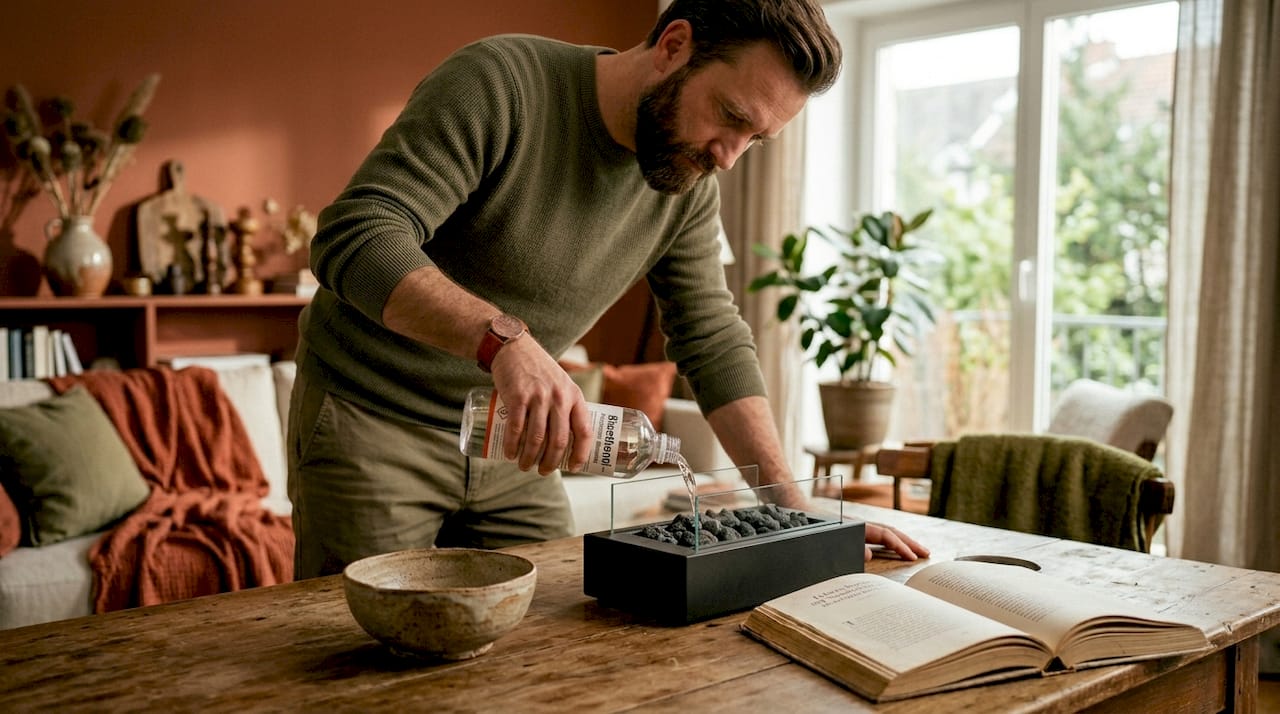
It works more simply than many people think. Bioethanol is poured into a burner, usually made of stainless steel. When lit, the alcohol burns and produces a real, open flame. There are no electrical parts, no gas connection and no moving parts.
When choosing a model, it is worth reading our guide to choosing a bioethanol fireplace, because the type and size of the burner have a big influence on heat and safety.
Liquid or gel: which is more efficient?
Liquid bioethanol burns more evenly and efficiently than gel fuel. Gel is easier to transport, but it gives less heat per litre and sometimes leaves residue. For regular indoor use, we recommend liquid bioethanol with a purity of at least 96%.
Burn time and warmth depend on the size of the burner. Our Ardente, for example, holds up to 150 ml per filling and burns for 60 to 90 minutes. That gives you pleasant warmth close by, but it is not enough to heat a home.

Single-chamber burners: more heat, but also more NOx
Modern single-chamber burners are more efficient than older models. They produce more heat and less carbon monoxide (CO). However, they produce slightly more nitrogen oxides (NOx). That is no reason to panic, but it is a good argument for ventilating regularly.
Pro tip: open a window slightly while your bioethanol fireplace is lit. This improves air circulation, lowers the concentration of pollutants and helps the flame burn evenly. If you often run into problems with bioethanol fireplaces, you will find practical solutions there too.
Safety and rules for using bioethanol indoors
With an open flame, safety naturally comes first. The good news is that if you follow a few clear rules, an indoor bioethanol fireplace is easy to keep under control.
Choose a well-made fireplace
When buying, look for a stable build and heat-resistant materials, and read the advice on what to check before buying. Cheap products can be dangerous, because the burner and housing may not be heat-resistant enough.
The key safety rules at a glance:
- Choose a stable spot: place the fireplace on a level, non-flammable surface. No wooden table without a heat-resistant mat, and nowhere near curtains or shelves.
- Never refill while hot: wait at least 15 minutes until the burner has cooled down completely before adding more bioethanol. Otherwise there is a risk of flare-ups.
- Use the right amount: never fill the burner to the brim and never use more than the maximum the manufacturer states. For the Ardente that is 150 ml per filling.
- Fit a smoke alarm: even though bioethanol produces no smoke, a working smoke alarm is strongly recommended. If something goes wrong, it can save lives.
- Keep children and pets away: place the fireplace so it cannot be knocked over by accident.
- Ventilate regularly: open a window while the fire is lit to let CO2 and NOx out.
Flaemme's bioethanol safety tips give you a practical checklist for safe everyday use. If you want to understand the risks of bioethanol tabletop fireplaces better, you will find an honest assessment there too.
Rules where you live
Which rules apply to using an ethanol fireplace without a chimney depends on where you live. Fire safety rules always apply, and local building regulations can differ. If in doubt, check with your local authority or your landlord.

An important note on storage: always keep bioethanol in its original packaging, somewhere cool and well ventilated and out of the reach of children. We recommend not storing more than 5 litres at home.
Pros and cons of indoor bioethanol fireplaces
No product is perfect. An honest look at the strengths and weaknesses helps you make an informed decision.
The advantages at a glance:
- Flexibility: no fixed installation, no assembly, no tradesperson needed
- Design: a real flame as a living design feature in any room
- No smoke: no soot, no ash and no smell with good-quality bioethanol
- Portability: from the living room to a sheltered terrace in seconds
- Renter-friendly: ideal for rented homes without a chimney
The drawbacks you should know about:
- Emissions: burning produces CO2, small amounts of CO, NOx and volatile organic compounds (VOCs)
- Fire risk: an open flame needs attention and discipline
- Limited heat output: not suitable as your main source of heat
- Running costs: you need to buy bioethanol fuel regularly
Here is a direct comparison with other types of fireplace:
| Feature | Bioethanol fireplace | Wood-burning fireplace | Electric fireplace |
|---|---|---|---|
| Installation | None | Chimney needed | Power socket |
| Real flame | Yes | Yes | No |
| Smoke | None | Yes | None |
| Heat output | Gentle, decorative warmth | High | Low to moderate |
| Portability | High | None | Medium |
| Design choice | Very wide | Limited | Medium |
Bioethanol fireplaces are smoke-free, but they still produce pollutants and carry a fire risk. Research shows that ventilation and a well-designed burner can reduce emissions considerably.
It is best to see a bioethanol fireplace purely as a decorative addition. It does not replace central heating and makes no real contribution to heating your home. If you accept that, you will be rewarded with a beautiful, flexible design piece. You will also find a detailed comparison in choosing a fireplace: bioethanol or gas.
Our view: a bioethanol fireplace is a style statement, not a heating solution
Some people buy a bioethanol fireplace expecting it to heat their home and are then disappointed. That is not down to the product but to the wrong expectations. A bioethanol fireplace is not a radiator with a flame. It sets the mood, starts conversations and makes a design statement.
The idea that bioethanol is carbon neutral also deserves an honest look. Yes, bioethanol burns more cleanly than wood. But bioethanol fireplaces are decorative and no substitute for a modern heating system. If you want to save energy, invest in insulation and efficient heating, not in bioethanol.
What we really value is the way a real flame can give any room a completely different mood in seconds. No piece of furniture, no light and no decoration does that as directly as a real flame. That is where the benefits of a bioethanol tabletop fireplace lie: in emotion, in design and in the experience.
More inspiration and safe solutions for your home
Would you like to lift the atmosphere in your home with a real flame, without compromising on safety or design? Then you have come to the right place.

At Flaemme you will find a carefully curated selection of bioethanol tabletop fireplaces that are real design pieces. They are portable, ready to use straight away and made for indoor use and sheltered spots outdoors. Every order comes with 30 days of free returns and a 2-year warranty. Browse our collection and find the fireplace that suits your home perfectly.
Frequently asked questions
How much heat does a bioethanol fireplace really give?
A bioethanol tabletop fireplace gives pleasant warmth close by, which is nice as extra warmth in a small room, but it does not replace central heating. Burn time depends on the burner. The Ardente burns for 60 to 90 minutes on a filling of up to 150 ml.
What do I need to know about safety?
Choose a stable, well-made fireplace and never refill bioethanol while the burner is still hot. A stable spot and a working smoke alarm are also strongly recommended.
How can I improve air quality while it burns?
Regular ventilation and a well-designed burner noticeably reduce pollutants such as CO and NOx. In most cases, a slightly open window while the fire is lit is enough.
Where can I use bioethanol indoors?
Bioethanol fireplaces work without a chimney. Always follow the fire safety and storage rules that apply where you live, and check with your landlord if you rent.