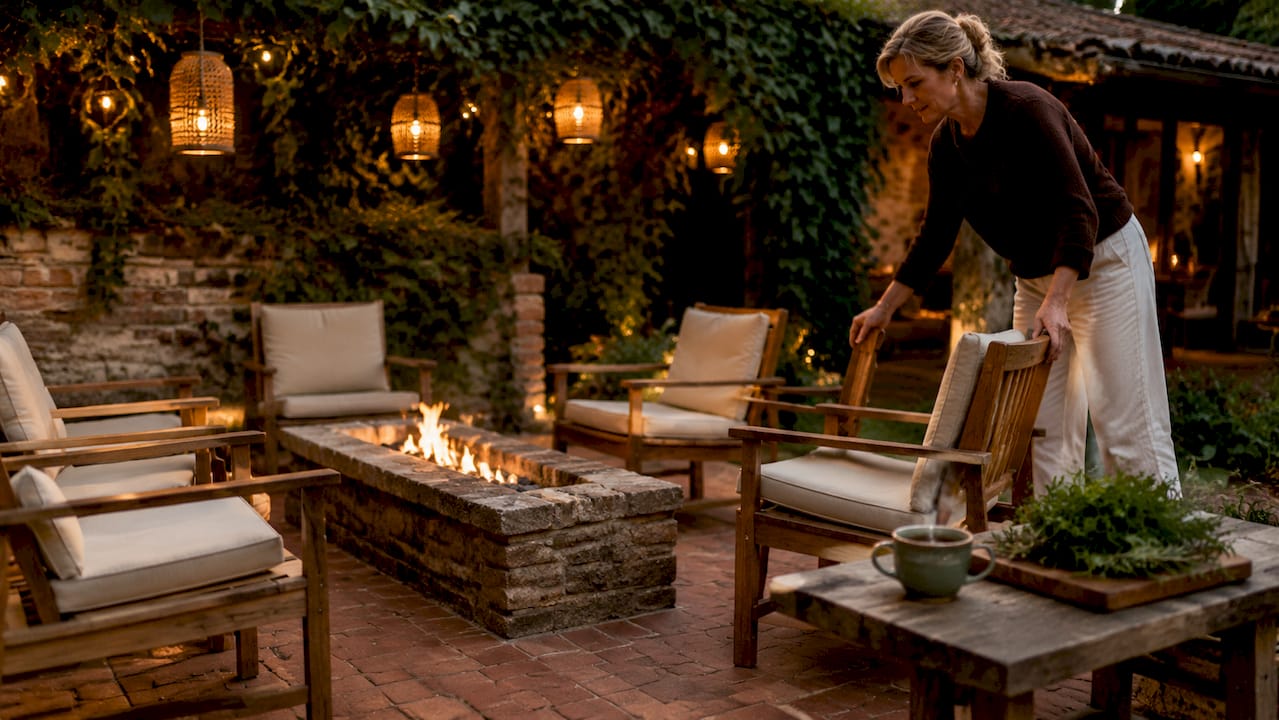
Patio Arrangement with Fire Centerpiece: 2026 Guide
TL;DR:
- A patio arrangement with a fire centerpiece creates a warm, social focal point around a central fire feature. Proper sizing, placement, and seating arrangement are essential for comfort, safety, and aesthetic appeal, tailored to your patio size and wind patterns. Using smokeless bio ethanol fire pits simplifies installation and enhances usability, making your outdoor space more inviting and functional.
A patio arrangement with a fire centerpiece is defined as an outdoor seating layout organized around a central fire feature, whether a fire pit, fire bowl, or fire table, to create a warm, social focal point. The right setup transforms any backyard or balcony into a gathering space that feels as comfortable as your living room. Brands like Flaemme and design guides from American Fire Products have shaped 2026 standards for sizing, clearance, and style. This guide covers everything from choosing the correct fire pit diameter to arranging seating for conversation and comfort.
How to choose the right fire centerpiece size for your patio
Fire pit size is the single most important decision in any firepit patio design. Choose too large, and your seating feels cramped. Choose too small, and the fire looks lost in the space.
Recommended fire pit diameters follow a clear scale based on patio square footage:
| Patio Size | Patio Area | Recommended Fire Pit Diameter |
|---|---|---|
| Small | Under 100 sq ft | 24–36 inches |
| Medium | 200–400 sq ft | 36–48 inches |
| Large | Over 400 sq ft | 48–72 inches |
These numbers matter beyond aesthetics. A 48-inch fire pit requires roughly a 14-foot total diameter once you account for seating and clearance. A 72-inch fire pit needs 18–20 feet of total footprint. If your patio cannot accommodate that full circle, size down.
Fuel type also affects your sizing decisions. Gas fire pits burn cleaner and sit lower, so they work well in tighter spaces. Wood-burning pits produce more heat spread and require more clearance on all sides. Choosing your fuel type before finalizing size and layout leads to better decisions overall. Think about how often you will actually use it. A wood-burning pit that requires hauling logs and cleaning ash may become a seasonal project rather than a weeknight ritual.
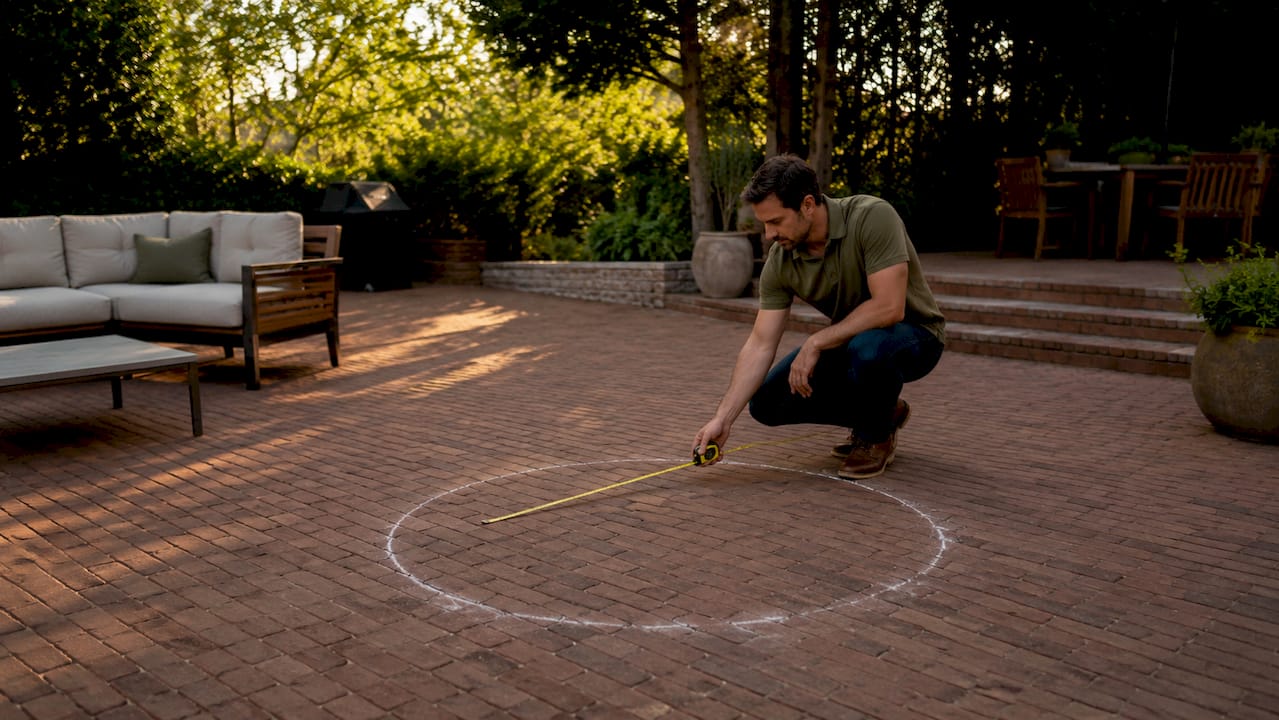
Pro Tip: Measure your “gathering footprint” before buying. Mark out the fire pit diameter on your patio with chalk or tape, then add your seating ring around it. Walk the full circle. If it feels tight, go one size smaller.
What is the best seating arrangement around a fire pit?
The best outdoor seating arrangement around a fire pit places guests at a comfortable distance from the flame while keeping conversation natural and traffic flowing freely.
Clearance distances depend on your fire type:
- Gas fire pits: Keep seat fronts 24–36 inches from the fire edge.
- Wood-burning fire pits: Allow 30–48 inches from the fire edge to seat fronts.
- Walking paths: Maintain 30–36 inch clear paths behind all seating to allow safe movement without crossing the heat zone.
These clearances are not just about safety. They define how warm and intimate the space feels. Guests seated too far back lose the enchanting warmth of the flame. Guests seated too close lean away and feel uncomfortable.
For seating layout shapes, you have three strong options:
- Full circle: Works best when the fire pit sits in an open, central location with no dominant view. Every seat gets equal warmth and sightlines.
- Semi-circle: Ideal when one side of your patio faces a garden, pool, or landscape feature. Guests face both the fire and the view.
- L-shape: Suits corner patios or spaces where one wall provides shelter. It keeps the layout feeling grounded without blocking traffic.
Centering the fire pit within the seating zone gives every guest equal access to warmth and sightlines. An offset placement only works when a strong directional view justifies it.
Built-in benches save space and look clean, but movable chairs give you flexibility. On a small patio, movable chairs let you pull seats closer on cool nights and push them back when the fire runs hot. On larger patios, a mix of built-in seating and loose chairs creates a layered, lived-in feel.
Pro Tip: Keep the fire pit area feeling cozy but uncluttered by limiting seating to 6–8 pieces maximum. More chairs create visual noise and block the natural flow around the fire.
Where should you place a fire pit on your patio?
Fire pit placement determines whether your backyard fire centerpiece gets used every week or sits idle. Location affects smoke comfort, safety, and how well the fire integrates with the rest of your outdoor space.
Prevailing wind patterns are the most overlooked factor in patio layout ideas. Smoke always travels downwind. If you place your fire pit without checking which direction the wind typically blows in your yard, you will spend evenings moving chairs to escape the smoke. Spend a few evenings outside before finalizing placement. Note where the breeze comes from most consistently, then position seating upwind or to the side of the fire.
Beyond wind, consider these placement factors:
- Safety clearances: Keep the fire pit at least 10 feet from your home, fences, and overhanging trees or structures.
- Surface materials: Place fire pits on non-combustible surfaces like concrete, stone, or gravel. Never set them directly on wood decking without a fire-rated pad underneath.
- Pathways: Avoid placing the fire pit where it blocks natural foot traffic routes between the house and yard.
- Views: Align the fire pit with your best landscape or architectural sightline. A fire pit that frames a garden view or faces a water feature feels intentional rather than dropped in.
- Windbreaks: A low garden wall, dense hedge, or partial pergola on the windward side dramatically improves usability on breezy evenings.
The patio fireplace placement guide from Flaemme covers how to balance safety and style when positioning any fire feature outdoors. Getting placement right before you buy furniture saves you from rearranging everything later.
How do you enhance a fire pit area with decor and lighting?
A fire pit alone creates warmth. The right decor around it creates atmosphere. These five design moves turn a basic cozy fire pit setup into a space that feels pulled together.
-
Match materials across the patio. If your fire pit has a concrete or corten steel finish, repeat those tones in your planters, side tables, or edging. Matching fire pit finishes with broader patio materials creates visual cohesion that makes the space feel designed rather than assembled.
-
Layer your lighting. String lights overhead provide ambient glow. Pathway lights handle safety. Candles or lanterns on side tables add intimacy at eye level. Never rely on the fire alone for nighttime lighting. The contrast between bright flame and dark surroundings makes the space feel unfinished.
-
Use plants strategically. Low ornamental grasses, lavender, or boxwood hedges frame the fire area without blocking airflow or sightlines. Avoid placing tall plants directly downwind of the fire pit where they could catch embers or block the breeze you need for smoke management.
-
Add a rug. An outdoor rug in a fire-safe material like polypropylene defines the seating zone and anchors the furniture arrangement. It signals to guests that this is a room, not just a corner of the yard.
-
Include side tables at every seat. Guests need somewhere to set a drink or a plate. Without side tables, people balance items on their laps or leave the seating area entirely. Small side tables keep the group together and the atmosphere relaxed.
For a rustic patio decor feel, combine weathered wood furniture with a stone or cast iron fire bowl arrangement. For a modern look, pair a sleek fire table with powder-coated aluminum chairs and concrete planters.
Common mistakes to avoid in your fire pit patio design
Most fire pit patio designs fail for the same predictable reasons. Knowing these pitfalls before you start saves time, money, and frustration.
- Ignoring wind direction. This is the most common mistake. Smoke blowing toward guests ruins the experience faster than any other factor. Always check prevailing winds first.
- Seating too close or too far. Both extremes kill comfort. Use the clearance guidelines above as your starting point, then adjust based on your specific fire type.
- Floating furniture on a small patio. Placing chairs in the middle of a small space with no anchor point makes the area feel cluttered and purposeless. Pulling furniture toward the perimeter with a central anchor piece keeps small patios feeling open and inviting.
- Blocking walking paths. A fire pit area that forces guests to squeeze past chairs or step over furniture feels unwelcoming. Always plan your 30–36 inch clearance paths before finalizing furniture placement.
- Choosing the wrong fuel type for your lifestyle. A wood-burning pit requires regular maintenance and fuel storage. If you want to light a fire on a Tuesday evening after work without preparation, a gas or bio ethanol option fits your life better.
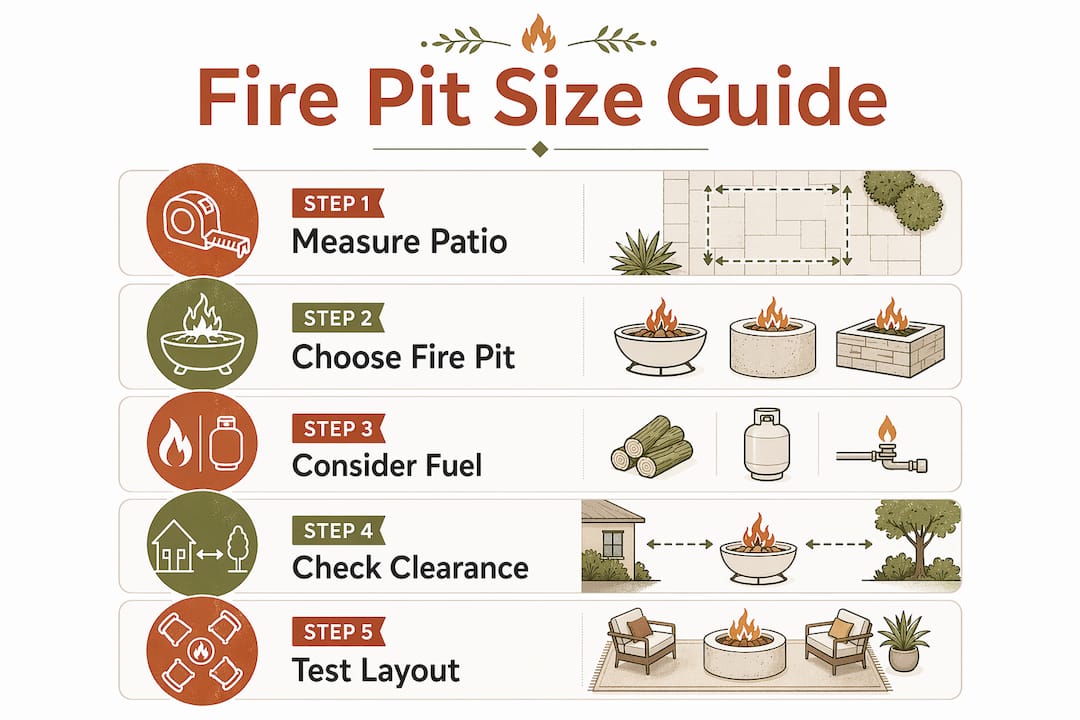
Pro Tip: Before buying any furniture, test your layout with folding chairs and a cardboard box the size of your intended fire pit. Live with it for a weekend. You will spot problems with traffic flow and seating distance that no floor plan reveals.
Key takeaways
A well-planned patio arrangement with a fire centerpiece requires matching fire pit size to your patio’s square footage, placing seating at safe clearance distances, and choosing a location that accounts for wind direction and safety.
| Point | Details |
|---|---|
| Size to your space | Use 24–36 inches for small patios, 36–48 for medium, and 48–72 inches for large outdoor areas. |
| Respect clearance distances | Gas pits need 24–36 inches from seat fronts; wood-burning pits need 30–48 inches for comfort and safety. |
| Check wind before placing | Position seating upwind or sidewind of the fire to keep smoke away from guests. |
| Anchor small patio furniture | Pull chairs toward the perimeter with a central fire anchor to avoid clutter on compact patios. |
| Layer decor intentionally | Match materials, add tiered lighting, and include side tables to make the fire area feel like a complete outdoor room. |
What i’ve learned designing fire-centered patios
Most people treat the fire pit as the last thing they add to a patio. They buy the furniture, lay the rug, hang the lights, and then wonder where the fire pit fits. That sequence almost always produces a layout that feels awkward. The fire should be the first decision, not the last.
The other thing I have noticed is that the best fire pit setups are the ones people actually use on a Wednesday night, not just for parties. That means the fire needs to be easy to light, the seating needs to feel comfortable for two people as much as ten, and the whole arrangement needs to work without a full setup ritual. A dining area with fire that requires 45 minutes of preparation will sit unused most of the year.
Wind is the detail that separates a good layout from a great one. I have seen beautifully designed patios become completely unusable because the fire pit was placed directly upwind of the seating. Spend time in your yard at different times of day before you commit to a location. That single observation will save you more frustration than any design tip.
Finally, intentional focal points matter. A fire pit placed off to the side as an afterthought never becomes the social heart of the space. Center it, frame it, and build the rest of the layout around it. The fire pit centerpiece styling guide from Flaemme captures this principle well. When the fire is clearly the anchor, everything else falls into place naturally.
— V&M
Why Flaemme makes your fire centerpiece easier
Getting the fire centerpiece right is the hardest part of any patio layout. Flaemme removes the most common obstacles: smoke, installation complexity, and fuel logistics.
Flaemme’s smokeless fire pit collection uses bio ethanol fuel to produce a real flame with zero smoke output. That means you can place the fire closer to seating without worrying about wind direction ruining the evening. No gas lines, no chimney, no permanent installation. Flaemme’s tabletop fire pits work on any patio surface, from a small apartment balcony to a large garden terrace. They are portable, so you can test different placements before committing. Free delivery and 30-day returns make it easy to try one in your own space. → Explore the Flaemme smokeless fire pit collection and find the right size for your patio.
FAQ
What is the ideal fire pit size for a small patio?
For patios under 100 square feet, a fire pit with a 24–36 inch diameter is the right fit. This size provides warmth and visual presence without overwhelming the space or blocking traffic flow.
How far should patio chairs be from a fire pit?
Gas fire pits require 24–36 inches of clearance from the seat front to the fire edge. Wood-burning fire pits need 30–48 inches to keep guests comfortable and safe from heat and embers.
Can i put a fire pit on a wood deck?
You can place a fire pit on a wood deck only if you use a fire-rated, non-combustible pad underneath it. Always check local fire codes and the manufacturer’s surface requirements before setting up any fire feature on a deck.
How do i stop smoke from blowing toward my guests?
Check your yard’s prevailing wind direction before placing the fire pit. Position seating upwind or to the side of the fire so smoke travels away from guests rather than toward them.
What is a bio ethanol fire pit?
A bio ethanol fire pit burns liquid bio ethanol fuel to produce a real flame without smoke, ash, or gas connections. Flaemme’s tabletop models use this technology to deliver clean, portable warmth for any patio size.