What Is Contemporary Ambiance? A 2026 Design Guide
TL;DR:
- Contemporary ambiance reflects current design trends characterized by warm neutrals, natural materials, and layered lighting. It emphasizes intentional sensory curation, including scent, sound, and texture, to create inviting and evolving spaces. Maintaining a flexible, curated approach allows mixing influences while prioritizing warmth and cohesion in design.
Contemporary ambiance is defined as the mood and atmosphere of a space shaped by current design trends that balance clean lines, neutral palettes, and warm, natural materials. Unlike fixed historical styles, contemporary ambiance evolves with culture, technology, and shifting ideas about comfort. In 2026, that means spaces that feel both refined and genuinely livable. This guide breaks down what is contemporary ambiance in practical terms, covering its core elements, how lighting shapes mood, the sensory layers that make a room feel complete, and how to blend influences without losing cohesion.
What is contemporary ambiance vs. modern design?
Contemporary design is defined as “of the present moment,” a fluid style that reflects current technologies, cultural values, and trends. That distinction matters because the word “modern” is often misused. Modern design is a fixed historical movement spanning roughly the 1920s–1960s, characterized by Bauhaus geometry, flat surfaces, and a strict rejection of ornament. Contemporary ambiance, by contrast, has no fixed rules. It absorbs what works right now and discards what feels dated.
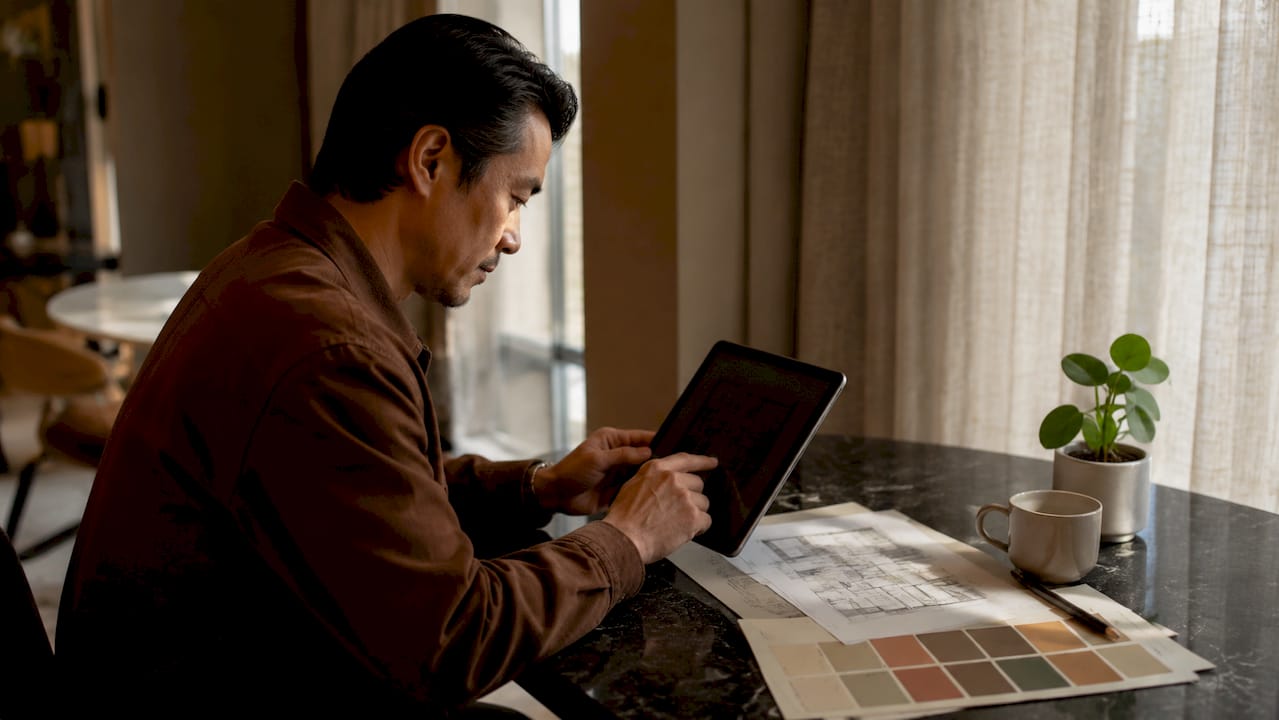
This fluidity is what makes contemporary ambiance so adaptable. A room can reference mid-century silhouettes, Japandi restraint, or industrial textures and still read as contemporary, as long as the overall feeling is current and cohesive. Modern design would reject that mixing outright. Contemporary style welcomes it, provided the foundation stays grounded.
Pro Tip: If you are unsure whether your space reads as contemporary or just eclectic, ask one question: does every element feel intentional and current? If yes, you are on track.
| Feature | Contemporary Style | Modern Design |
|---|---|---|
| Time period | Ongoing, evolving | Fixed: 1920s–1960s |
| Rules | Fluid, adaptive | Strict, codified |
| Materials | Natural, mixed, tactile | Industrial, synthetic |
| Color palette | Warm neutrals, occasional bold | Monochrome, black and white |
| Mixing influences | Encouraged with a neutral base | Generally avoided |
| Emotional tone | Warm, inviting, livable | Cool, intellectual, precise |
Core elements that define contemporary ambiance
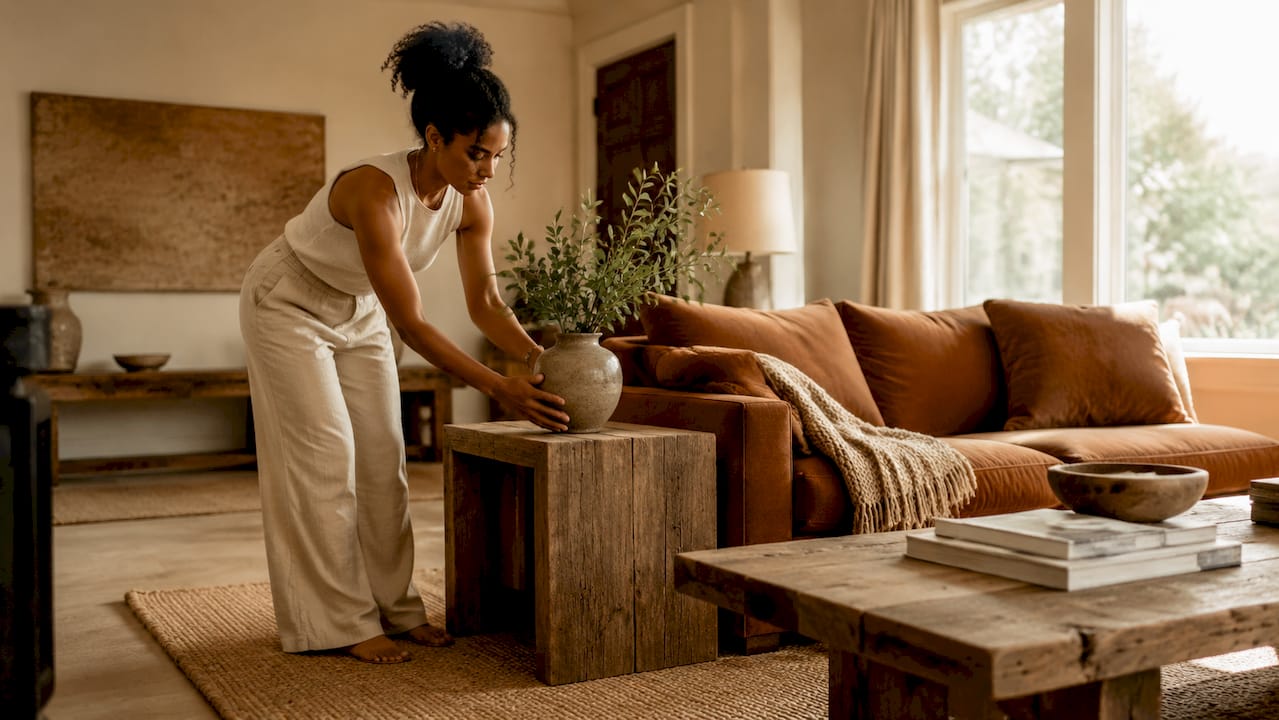
Warm minimalism is the defining trend of contemporary ambiance in 2026, moving away from the cold, sparse interiors of past decades toward spaces that feel tactile and welcoming. The shift is significant. Contemporary rooms are not empty. They are edited. Every object earns its place.
Color palettes anchor this approach. Muted neutrals like warm white, greige, taupe, and soft charcoal form the base. Bold accents appear sparingly, in a single cushion color, a statement artwork, or a sculptural vase. Natural materials carry the tactile weight: raw wood grain, honed stone, brushed metal, and clear or smoked glass. These surfaces create visual interest without noise.
Texture layering is the technique that separates a flat contemporary room from a genuinely inviting one. A linen sofa gains depth when paired with a chunky wool throw and a smooth marble side table. Clean, uncluttered lines keep the composition readable. Furniture sits low and horizontal. Storage is hidden. Surfaces stay clear.
Key features of contemporary interior elements include:
- Muted, warm neutral base colors with selective bold accents
- Natural materials: wood, stone, linen, leather, and glass
- Low-profile, sculptural furniture with simple silhouettes
- Layered textures across soft furnishings, rugs, and window treatments
- Minimal decorative objects, each chosen for visual or functional purpose
- Concealed storage to maintain uncluttered surfaces
For a practical example of how clean lines and tactile materials work together in a focused design context, the approach behind minimalist fireplace design shows how a single warm focal point can anchor an entire room without adding visual clutter.
Pro Tip: Limit your decorative objects to groups of three with varied heights. This creates visual rhythm without crowding surfaces.
How does lighting shape contemporary ambiance?
A layered lighting strategy combining ambient, task, and accent lighting is the single most effective tool for creating contemporary ambiance. Lighting does more than illuminate. It defines the emotional temperature of a room. Get it wrong and even a beautifully furnished space feels flat or clinical.
Keeping fixtures below 3000 Kelvin is the technical standard for warm, inviting contemporary ambiance. Above that threshold, light reads as cool and office-like. Diffused or frosted bulbs soften the output further, removing harsh shadows and creating an even, comfortable glow.
Eye-level lighting from floor lamps, table lamps, and sconces creates intimate pockets of light that feel human-scale. This approach avoids the flat, grid-like effect of relying solely on overhead fixtures. A pendant chandelier over a dining table, a sconce beside a reading chair, and an LED strip under a floating shelf each serve a different purpose and together create depth.
Here is a step-by-step approach to building a layered lighting scheme:
- Start with ambient lighting. Install a central fixture or recessed lights to provide general illumination across the room.
- Add task lighting. Place focused lights where you read, cook, or work. Desk lamps and under-cabinet strips work well.
- Layer in accent lighting. Use spotlights, LED strips, or picture lights to highlight artwork, shelving, or architectural features.
- Install dimmers on every circuit. Dimmers let you shift the room’s mood from bright and functional to warm and intimate in seconds.
- Bring light down to eye level. Add at least one floor lamp and one table lamp per main seating area.
- Test at night. Evaluate the full scheme after dark to catch any harsh spots or dark corners.
| Lighting Type | Fixture Examples | Effect on Ambiance |
|---|---|---|
| Ambient | Pendant, recessed, ceiling fixture | General illumination, sets base mood |
| Task | Desk lamp, under-cabinet strip | Focused function, reduces eye strain |
| Accent | Spotlights, LED strips, picture lights | Highlights features, adds visual depth |
| Decorative | Sconces, table lamps, floor lamps | Creates warmth, defines intimate zones |
Pro Tip: Replace any bulb above 3000 Kelvin in your living spaces immediately. The shift to warmer light is the fastest single change you can make to improve how a room feels.
Does ambiance go beyond what you see?
Ambiance is a multisensory experience that triggers emotional responses through scent, sound, and texture, not just visual design. A room can look perfect in a photograph and still feel wrong when you walk into it. The difference is almost always sensory.
Sound shapes a room’s mood more than most people realize. Hard surfaces like stone floors and glass walls reflect sound, creating an echo that feels cold and unsettled. Soft furnishings like heavy curtains and carpets absorb noise, improving acoustics and making a space feel contained and intimate. A curated background playlist, kept at a volume where conversation still feels easy, completes the auditory layer.
Scent is the fastest sensory trigger for emotional memory. A diffuser with a warm, woody fragrance like cedarwood or sandalwood reinforces the tactile warmth of natural materials. Candles serve double duty, adding both scent and the visual movement of a live flame. The key is restraint. One scent source per room is enough.
Sensory elements that contribute to contemporary ambiance include:
- Scent: Reed diffusers, soy candles, or essential oil diffusers with warm, grounded fragrances
- Sound: Curated playlists, acoustic panels, or soft background music at conversational volume
- Texture: Wool rugs, linen curtains, velvet cushions, and woven throws for tactile warmth
- Spatial flow: Uncluttered pathways and furniture arranged for easy movement and conversation
- Live elements: Plants, water features, or open flames for organic visual movement
Pro Tip: Layer your sensory inputs in sequence: start with scent when guests arrive, then adjust lighting and music as the evening progresses. The transition itself creates a sense of occasion.
How to blend styles within a contemporary space
Contemporary style is a product of curation rather than collection, allowing you to mix design influences as long as a neutral foundation keeps everything grounded. This is the permission slip many homeowners need. You do not have to choose one style and commit to it entirely.
The neutral foundation is non-negotiable. Walls, large furniture pieces, and flooring should stay within a cohesive, muted palette. That base gives you room to introduce a Japandi-inspired low sideboard, an art deco curved mirror, or an industrial pendant light without the room feeling chaotic. Each statement piece reads clearly against a calm background.
Sculptural focal points like lighting or artwork break the monotony of a neutral palette while maintaining order. One large-scale artwork, one distinctive light fixture, or one textural rug can carry the personality of an entire room. The principle is form following function: every piece should earn its visual weight by also serving a purpose.
Follow these steps to blend styles without losing cohesion:
- Commit to a neutral base. Choose your wall color, flooring, and largest furniture pieces in a consistent, muted palette.
- Select one dominant influence. Decide whether your secondary style is Japandi, industrial, art deco, or another direction.
- Introduce that influence through two or three pieces. A lamp, a side table, and a decorative object are enough to signal the style.
- Add one sculptural statement piece. Let it be the room’s focal point and conversation starter.
- Edit ruthlessly. Remove anything that does not serve the neutral base or the chosen secondary influence.
For practical guidance on setting up a modern fireplace as a focal point, Flaemme’s journal covers how to position and style a tabletop fire feature within a contemporary interior without disrupting the room’s visual balance.
Key takeaways
Contemporary ambiance is built on three non-negotiable layers: a warm neutral foundation, intentional sensory curation, and lighting kept below 3000 Kelvin.
| Point | Details |
|---|---|
| Contemporary vs. modern | Contemporary is fluid and current; modern is a fixed 1920s–1960s style with strict rules. |
| Warm minimalism | Layer natural materials like wood, stone, and linen over a muted neutral palette for tactile depth. |
| Lighting temperature | Keep all fixtures below 3000 Kelvin and layer ambient, task, and accent sources for warmth. |
| Multisensory design | Add scent, sound, and texture to complete the atmosphere beyond what the eye alone registers. |
| Curation over collection | Choose a neutral base, one secondary style influence, and one sculptural focal point per room. |
What i have learned about getting contemporary ambiance right
Most people approach contemporary ambiance as a visual checklist. Neutral walls? Check. Natural wood? Check. Pendant light? Check. The room looks right in photos and feels wrong in person. That gap is almost always a sensory problem, not a visual one.
The rooms that genuinely feel good share one quality: every layer was chosen with intention. The scent is not an afterthought. The acoustics were considered before the furniture was placed. The lighting was tested at night, not assumed to work based on a showroom visit.
The other mistake I see constantly is treating contemporary style as a destination. It is not. It is a practice of ongoing editing. A room that felt current and personal two years ago may need one or two changes to feel right today. That is not failure. That is how contemporary ambiance is supposed to work.
My honest advice: start with lighting. It costs less than new furniture, takes an afternoon, and changes how a room feels more dramatically than almost any other single change. Swap bulbs above 3000 Kelvin, add one floor lamp, and install a dimmer. Then reassess everything else from that warmer, more honest baseline.
— V&M
Add warmth and atmosphere with Flaemme
If you want to bring the warmth of a live flame into your contemporary space without installation, chimneys, or gas, Flaemme’s tabletop fire pits are designed exactly for that purpose.
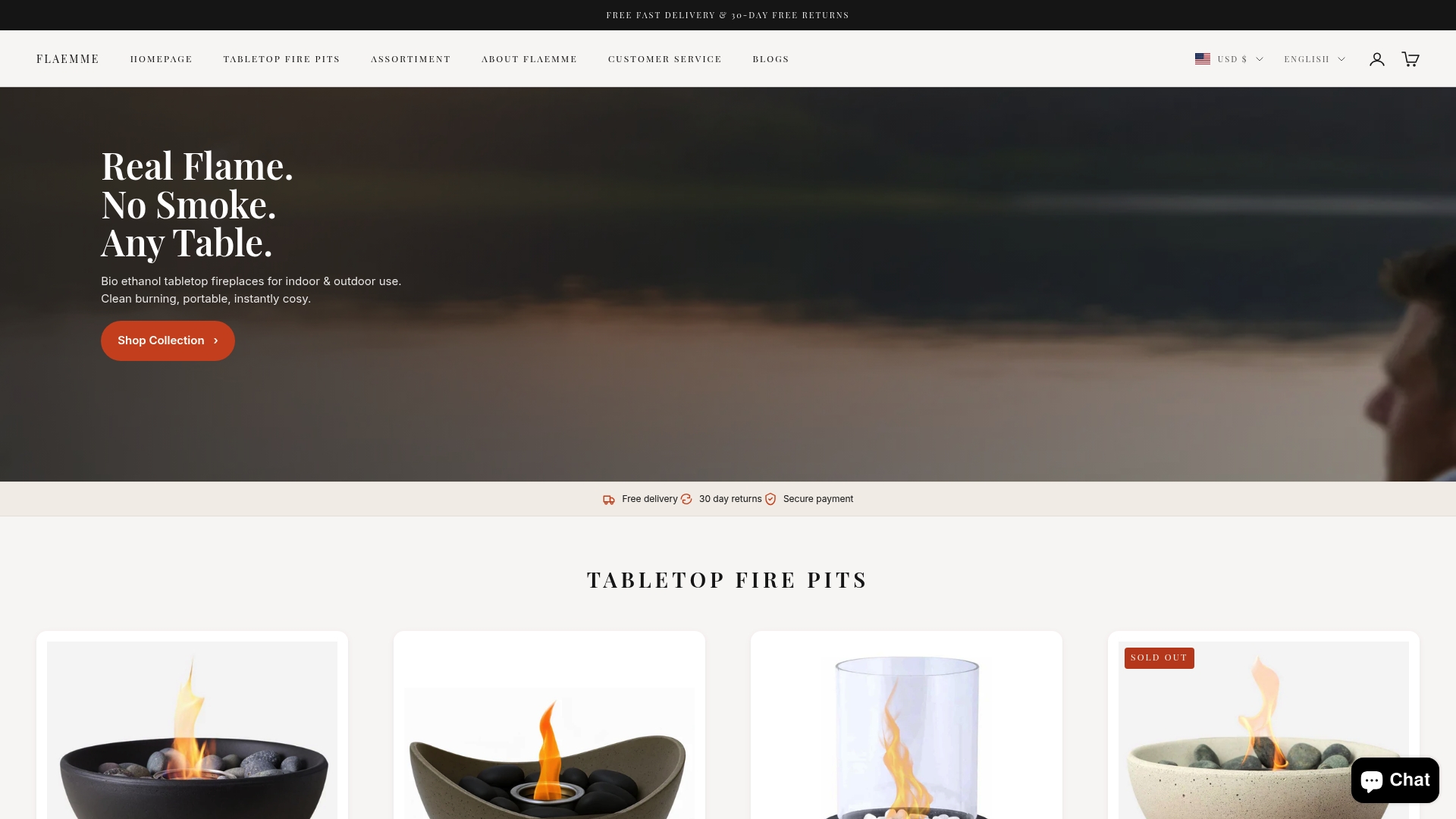
Flaemme’s smokeless tabletop fire pits burn bio ethanol fuel cleanly, producing real flame with no smoke and no odor. They sit on any surface, move from room to room, and complement the natural materials and layered lighting that define contemporary ambiance. For outdoor spaces, Flaemme’s outdoor tabletop fire pits bring the same clean, portable warmth to terraces and garden tables. Free delivery across Europe and a 30-day return policy make it easy to try one in your own space.
FAQ
What is contemporary ambiance in interior design?
Contemporary ambiance is the mood created by current design trends that combine clean lines, warm neutral palettes, natural materials, and layered lighting. It is defined as fluid and evolving, reflecting the present moment rather than a fixed historical style.
How does contemporary style differ from modern design?
Contemporary style is ongoing and adaptive, while modern design refers specifically to a fixed movement from the 1920s–1960s. Contemporary ambiance absorbs current cultural and material trends; modern design follows strict geometric and industrial rules.
What lighting temperature is best for contemporary ambiance?
Fixtures below 3000 Kelvin produce warm, inviting light that suits contemporary interiors. Higher color temperatures read as cool and clinical, which works against the welcoming atmosphere contemporary design aims to create.
Can you mix design styles in a contemporary space?
Yes. Contemporary ambiance supports mixing influences like Japandi, industrial, and art deco, provided a consistent neutral base keeps the room cohesive. The key is curation: two or three pieces from a secondary style, not a full commitment to it.
What sensory elements contribute to contemporary ambiance?
Scent, sound, and texture all shape how a room feels beyond its visual appearance. Warm fragrances, curated background music, sound-absorbing soft furnishings, and live flame elements like candles or bio ethanol fires each add a layer that makes a space feel complete.