
What Is Sustainable Heating? A Homeowner's 2026 Guide
TL;DR:
- Sustainable heating utilizes renewable energy sources, such as heat pumps and solar thermal, to reduce carbon emissions and energy costs. Achieving optimal performance depends on proper insulation, smart controls, and a holistic approach combining equipment, building envelope, and occupant habits. Hybrid systems with solar PV and heat pumps offer the most significant energy savings and long-term affordability for homeowners.
Sustainable heating is the practice of warming your home using methods that significantly reduce carbon emissions and energy consumption compared to traditional fossil fuel systems. In the industry, this is often called low-carbon heating, and the two terms are used interchangeably throughout this guide. The core technologies driving sustainable home heating in 2026 include air-source and ground-source heat pumps, solar thermal collectors, biomass boilers, and hybrid systems that combine several of these sources. Getting results, though, depends on more than just the equipment you choose. Your building envelope, the smart controls you install, and your daily habits all shape how well any eco-friendly heating solution actually performs.
What is sustainable heating and how does it work?
Sustainable heating is defined as any system that delivers thermal comfort while drawing primarily from renewable energy sources or recovering ambient heat from the environment, rather than burning fossil fuels. The goal is to cut both carbon emissions and long-term energy costs without sacrificing warmth or comfort.

The building envelope is the foundation of any low-carbon heating strategy. Walls, floors, roofs, windows, and doors all determine how much heat your home retains. A highly efficient heat pump installed in a poorly insulated house will still underperform, because the system has to work harder to replace heat that leaks out continuously. Neglecting insulation leads to higher system capacity needs and costs, which defeats the purpose of upgrading in the first place.
Smart controls add another layer of performance. Programmable thermostats, zone controls, and weather-compensation systems allow your heating to respond dynamically to outdoor temperatures and occupancy patterns. When you combine a well-sealed home with an efficient heat source and intelligent controls, you get a system that genuinely earns the label “sustainable.”
What are the most common sustainable heating methods for homes?
Several proven technologies are available to homeowners right now, each with distinct strengths depending on your home type, location, and budget.
- Air-source heat pumps (ASHPs): These extract heat from outdoor air and transfer it indoors. They work even in cold climates and are the most widely adopted renewable heat system in Europe and North America. Air-source heat pumps can reduce electricity consumption for heating by up to 75% and carbon emissions by 80% compared to electric resistance heating.
- Ground-source heat pumps (GSHPs): These draw heat from the ground via buried loops. They are more expensive to install but deliver higher efficiency year-round. Geothermal heat pumps use 61% less energy than standard models and manage indoor humidity effectively.
- Biomass heating: Wood pellet boilers and log burners use organic material as fuel. They can be carbon-neutral when managed correctly, but biomass sustainability depends entirely on certified, local feedstock sourcing. Transport long distances or unsustainable harvesting erases the environmental benefit.
- Solar thermal: Roof-mounted collectors heat water directly for space heating or domestic hot water. Solar thermal works well as a supplement to a heat pump rather than a standalone system.
- Ductless minisplit heat pumps: These are ideal for homes without ductwork. Minisplits are common in regions like New England with older radiator systems and deliver effective zone heating with significant energy savings.
- Hybrid systems: Combining a heat pump with solar photovoltaic (PV) panels and thermal storage is the most future-proof configuration available today. Solar-assisted heat pump systems with PV and battery storage show a 70 to 83% reduction in energy consumption compared to conventional setups.
Pro Tip: If you are considering a hybrid setup, size your solar PV array to cover your heat pump’s electricity demand during peak winter hours. A battery storage unit bridges the gap on cloudy days and keeps your grid dependency low.
How do sustainable heating systems reduce carbon emissions and energy costs?
The efficiency advantage of heat pumps over gas boilers and electric resistance heaters is substantial, and the numbers make the case clearly.
| Heating system | Typical efficiency | Carbon emissions vs. gas boiler |
|---|---|---|
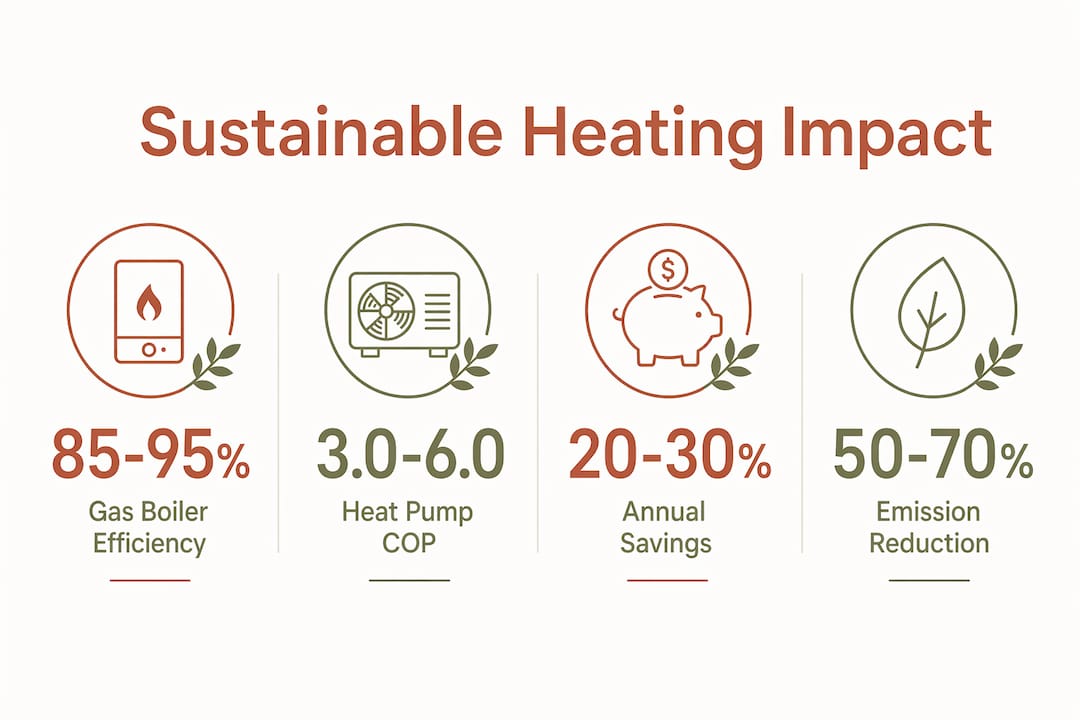
| Gas boiler | 85-95% | Baseline |
| Electric resistance heater | 100% | Higher (grid-dependent) |
| Air-source heat pump | 250-400% (COP 2.5-4.0) | 40-80% lower |
| Ground-source heat pump | 350-600% (COP 3.5-6.0) | 50-85% lower |
| Hybrid solar + heat pump | Up to 800% effective | 70-83% lower |
The coefficient of performance (COP) is the key metric here. A COP of 3.0 means the system delivers three units of heat for every one unit of electricity consumed. High-efficiency heat pumps achieve a COP over 6.0, which no combustion-based system can match. That efficiency directly translates to lower bills.
On the cost side, efficient heat pumps save homeowners around 20 to 30% annually on heating bills in many regions, though exact savings depend on local electricity and fuel prices. Government incentives sharpen the financial case further. Programs like the U.S. Inflation Reduction Act’s heat pump tax credits and the UK’s Boiler Upgrade Scheme reduce upfront costs by thousands of dollars or pounds. Installer support with rebates and maintenance planning improves financial feasibility significantly for households that would otherwise find the upfront price prohibitive.
Lifecycle cost is the right frame for evaluating these systems. A heat pump costs more to install than a gas boiler, but it typically lasts 15 to 20 years with lower annual maintenance costs and no fuel price volatility. When you factor in rebates and energy savings, the total cost of ownership often favors the heat pump within 7 to 10 years.
What practical steps should homeowners take to implement sustainable heating?
Moving from interest to action requires a clear sequence. Skipping steps, particularly the envelope work, is the most common and costly mistake homeowners make.
- Audit your building envelope first. Commission a home energy audit or use a thermal imaging camera to identify where heat escapes. Loft insulation, cavity wall insulation, and draft-proofing around doors and windows are the highest-return investments before any equipment change.
- Right-size your heat pump. An oversized heat pump short-cycles, reducing efficiency and lifespan. A qualified installer will perform a heat loss calculation based on your insulated home’s actual demand, not a rough estimate.
- Check your heat distribution system. Heat pumps operate at lower flow temperatures, which means old radiators may be undersized for effective comfort. You may need to upgrade to larger radiators or switch to underfloor heating, which works naturally at the lower temperatures heat pumps prefer.
- Install smart controls. A weather-compensating controller adjusts your heat pump’s output based on outdoor temperature, preventing the system from overheating your home on mild days. Smart thermostats like Google Nest or Honeywell Home T6 Pro integrate easily with most modern heat pumps.
- Research available incentives before purchasing. Grants and tax credits change annually. Check your national or state energy agency’s website, and ask your installer to confirm which rebates apply to your specific system and home type.
- Plan for maintenance. Heat pumps require annual servicing to maintain peak efficiency. Budget for this from the start rather than treating it as an unexpected cost.
Pro Tip: Prioritize insulation before selecting your heating equipment. A well-sealed home may allow you to install a smaller, less expensive heat pump, saving money on both the unit and the installation.
How do different sustainable heating options compare?
Choosing the right system depends on your home’s characteristics, your location, and how much you want to invest upfront versus over time. Here is a direct comparison of the four main options.
| System | Upfront cost | Running cost | Best suited for | Key limitation |
|---|---|---|---|---|
| Air-source heat pump | Medium | Low | Most home types | Performance drops in extreme cold |
| Ground-source heat pump | High | Very low | Homes with outdoor land | High installation cost |
| Biomass boiler | Medium-high | Low (local fuel) | Rural homes with storage space | Requires certified fuel sourcing |
| Solar thermal | Low-medium | Very low | Supplementary hot water | Limited standalone heating capacity |
| Hybrid solar + heat pump | High | Lowest | New builds or deep retrofits | Complex installation |
A few points worth noting beyond the table. Biomass remains a viable option for rural homeowners who can source certified local wood pellets, but it requires storage space for fuel and regular ash removal. Solar thermal is rarely sufficient as a primary heat source in northern climates but pairs well with any heat pump to reduce electricity demand for hot water. Hybrid systems combining heat pumps, solar PV, and thermal storage increase self-sufficiency and address the intermittency problem that limits solar-only approaches.
For homes without ductwork, a ductless minisplit heat pump is often the most practical and cost-effective entry point into eco-friendly heating solutions. It avoids the cost of retrofitting ducts while delivering zoned comfort and meaningful energy savings.
Key takeaways
Sustainable heating works best when equipment upgrades, building envelope improvements, and smart controls are treated as a single system rather than separate projects.
| Point | Details |
|---|---|
| Define before you invest | Sustainable heating means low-carbon, high-efficiency systems powered by renewable sources, not just newer gas boilers. |
| Envelope first | Insulate and air-seal your home before selecting equipment to avoid oversizing and unnecessary cost. |
| Heat pumps lead the field | Air-source and ground-source heat pumps deliver COP values up to 6.0, cutting emissions by up to 85% versus gas. |
| Hybrid systems go furthest | Solar PV combined with heat pumps and thermal storage reduces energy consumption by 70 to 83% versus conventional heating. |
| Incentives change the math | Government rebates and tax credits can reduce upfront costs significantly, making lifecycle costs competitive within a decade. |
Why the holistic approach is the only one that actually works
After spending years looking at how homeowners approach heating upgrades, the pattern is consistent. People buy the equipment and skip the envelope work. They install a heat pump in a drafty Victorian terrace, watch their bills barely move, and conclude that heat pumps don’t work. They do work. The house just isn’t ready for them.
The sustainable heating system that performs is a package: equipment, insulation, controls, and behavior working together. I’ve seen well-insulated homes with modest air-source heat pumps outperform poorly insulated homes with ground-source systems that cost twice as much to install.
The other thing I’d push back on is the tendency to focus only on upfront price. A gas boiler is cheaper today. But fuel prices are volatile, carbon taxes are rising across Europe and North America, and a heat pump installed now locks in lower running costs for 15 to 20 years. The homeowners I’ve seen make the best decisions are the ones who model the 10-year cost, not just the installation invoice.
Hybrid solar and heat pump systems are where I’d put my attention in 2026. The technology has matured, costs have dropped, and the energy self-sufficiency gains are now measurable and repeatable. If you are building new or doing a deep retrofit, this is the configuration worth planning around. For everyone else, start with insulation, add a heat pump, and layer in solar when the budget allows.
— V&M
Warm up your home the smarter way with Flaemme

At Flaemme, we believe that creating a warm, comfortable home doesn’t have to mean complex installations or high running costs. Our modern bio ethanol tabletop fireplaces deliver real flame warmth and enchanting atmosphere instantly, with no chimney, no gas, and no installation required. They are smokeless, portable, and designed to complement any sustainable home heating setup as a stylish supplementary heat source. Whether you want cozy warmth on a terrace or a living room focal point, Flaemme has a solution that fits. Explore our full range of tabletop fire pits and find the one that suits your space. Free delivery across Europe and 30-day returns included. →
FAQ
What is sustainable heating in simple terms?
Sustainable heating means warming your home using systems that rely on renewable energy or recover ambient heat, rather than burning gas or oil. The goal is lower carbon emissions, lower running costs, and long-term energy independence.
Are heat pumps the best sustainable heating option?
Heat pumps are the most widely recommended option because they deliver a COP of 2.5 to 6.0, meaning they produce two to six times more heat than the electricity they consume. Ground-source models are the most efficient, but air-source heat pumps offer a strong balance of performance and installation cost for most homes.
How much can I save with a sustainable heating system?
Efficient heat pumps save homeowners around 20 to 30% annually on heating bills in many regions, with additional savings available through government rebates and tax credits. Exact figures depend on your current fuel type, local energy prices, and how well your home is insulated.
Do I need to upgrade my radiators when switching to a heat pump?
Possibly. Heat pumps run at lower flow temperatures than gas boilers, so older radiators may be undersized for effective heat output. A qualified installer will assess your existing system and recommend upgrades or a switch to underfloor heating if needed.
Is biomass heating genuinely sustainable?
Biomass heating is sustainable only when the fuel comes from certified, locally sourced feedstocks. If wood pellets are transported long distances or harvested without certification, the carbon savings disappear. For rural homeowners with access to local certified fuel, biomass remains a practical and low-carbon option.