
Bioethanol fireplace standards: safe, stylish choices
TL;DR:
- European safety standards like EN 16647 ensure bioethanol fireplaces are safe and eco-friendly.
- Verified emissions data and safety features are essential for protecting indoor air quality.
- Many products lack proper certification, so always request official testing reports before purchasing.
Not all bioethanol fireplaces are created equal. Many buyers assume these stylish, portable heaters are completely unregulated, but the reality is quite different. European safety standards exist specifically to protect you, your family, and your indoor air quality. Choosing a fireplace without checking for compliance can mean exposing yourself to higher carbon monoxide (CO) levels, poorly designed burners, or materials that simply aren’t built to last. This guide walks you through the key standards, safety requirements, emissions rules, and what to look for when shopping for a bioethanol fireplace that is genuinely safe, eco-friendly, and beautiful.
Table of Contents
- Understanding industry standards for bioethanol fireplaces
- Safety requirements: How regulations keep you protected
- Emissions and eco-friendliness: What real standards require
- Buying guide: How to choose compliant, stylish, and sustainable models
- The truth most people miss about bioethanol fireplace standards
- Find your compliant, safe, and stylish bioethanol fireplace
- Frequently asked questions
Key Takeaways
| Point | Details |
|---|---|
| Verify standard compliance | Only choose fireplaces certified to EN 16647 for assured safety and eco-friendliness. |
| Prioritize emission performance | Low CO and NOx output in optimized burners is essential for healthy indoor use. |
| Demand safety features | Always check for spill protection, flame guards, and emissions test reports before buying. |
| Think beyond style | Stylish models should also meet rigorous safety and sustainability criteria for peace of mind. |
Understanding industry standards for bioethanol fireplaces
When we talk about “industry standards” for bioethanol fireplaces, we mean a set of technical rules and performance benchmarks that manufacturers must meet to sell their products legally and safely in Europe. These standards cover everything from the materials used in construction to how the burner performs under real-world conditions.
The most important standard for buyers in the DACH region (Germany, Austria, and Switzerland) is EN 16647, a European norm developed specifically for non-pressurized bioethanol fireplaces. It sets requirements for design, fuel containment, heat output, and safety mechanisms. Products certified to EN 16647 have been independently tested and verified to meet strict performance criteria.
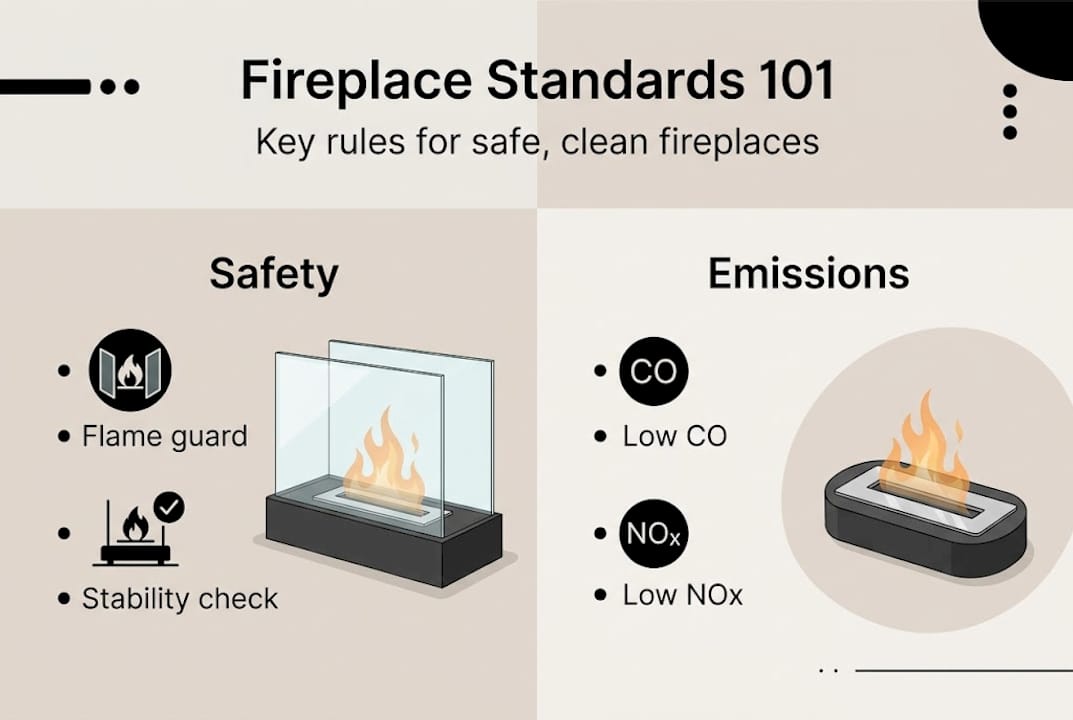
Beyond EN 16647, broader European directives on product safety and indoor air quality also apply. These ensure that a fireplace sold in Germany or Austria meets the same baseline as one sold anywhere in the EU.
Here is what major standards typically require:
- Material quality: Burners and housings must use heat-resistant, non-toxic materials that won’t degrade or release harmful substances when heated.
- Fuel vaporization control: The burner design must regulate how bio ethanol fuel (liquid alcohol burned cleanly for heat and ambiance) vaporizes, preventing dangerous flare-ups.
- Spill and overfill protection: Products must include design features that prevent accidental fuel spills, a common cause of household fires.
- Safety testing under load: Fireplaces are tested during extended burn cycles to confirm stable performance and no dangerous heat buildup.
- Emissions performance: CO and nitrogen oxide (NOx) output must stay within defined limits to protect indoor air quality.
This last point matters more than most people realize. As burner design and emissions research confirms, optimizing burner geometry for low CO and NOx output is essential for indoor use. A poorly designed burner can produce harmful gas levels even when burning the same high-quality fuel as a well-designed one.
“Burner design is not a cosmetic detail. It directly determines the air quality in your home. A burner optimized for low CO and NOx output is the difference between a safe, pleasant fire and one that slowly degrades your indoor environment.”
For a deeper look at how these rules apply to everyday use, the bioethanol fireplace safety guidelines from Flaemme offer practical, clear advice.
Safety requirements: How regulations keep you protected
Now that you understand what standards are, it helps to see how they directly protect you and your family in practice.
The contrast between a standard-compliant fireplace and a non-compliant one is significant. Here is a quick comparison:
| Feature | Compliant model | Non-compliant model |
|---|---|---|
| Flame guard | Required, tested | Often absent |
| Spill tray | Mandatory | Optional or missing |
| Burner emissions | CO/NOx within limits | Unverified |
| Child safety features | Required | Inconsistent |
| Material heat resistance | Tested and certified | Unknown |
| Documentation | Full test reports | Minimal or none |
The difference is not just technical. It is about real peace of mind when you light your fireplace on a cozy evening at home.
Before you purchase or use any bioethanol fireplace, run through these checks:
- Confirm EN 16647 certification. Look for the label on the product or in the documentation. If it is not there, ask the seller directly.
- Inspect the burner design. A quality burner should have a controlled opening and a stable flame, not an open reservoir that can splash or flare.
- Check for spill protection. The fuel tank should be recessed or enclosed, with no easy way for liquid to escape during normal use.
- Look for child safety features. Flame guards and secure lids are especially important if you have young children or pets at home.
- Review the emissions documentation. Ask for CO and NOx test results. A reputable brand will have these readily available.
Pro Tip: Always look for the EN 16647 label before buying. It is the single fastest way to confirm a fireplace has been independently tested for safety and emissions performance.
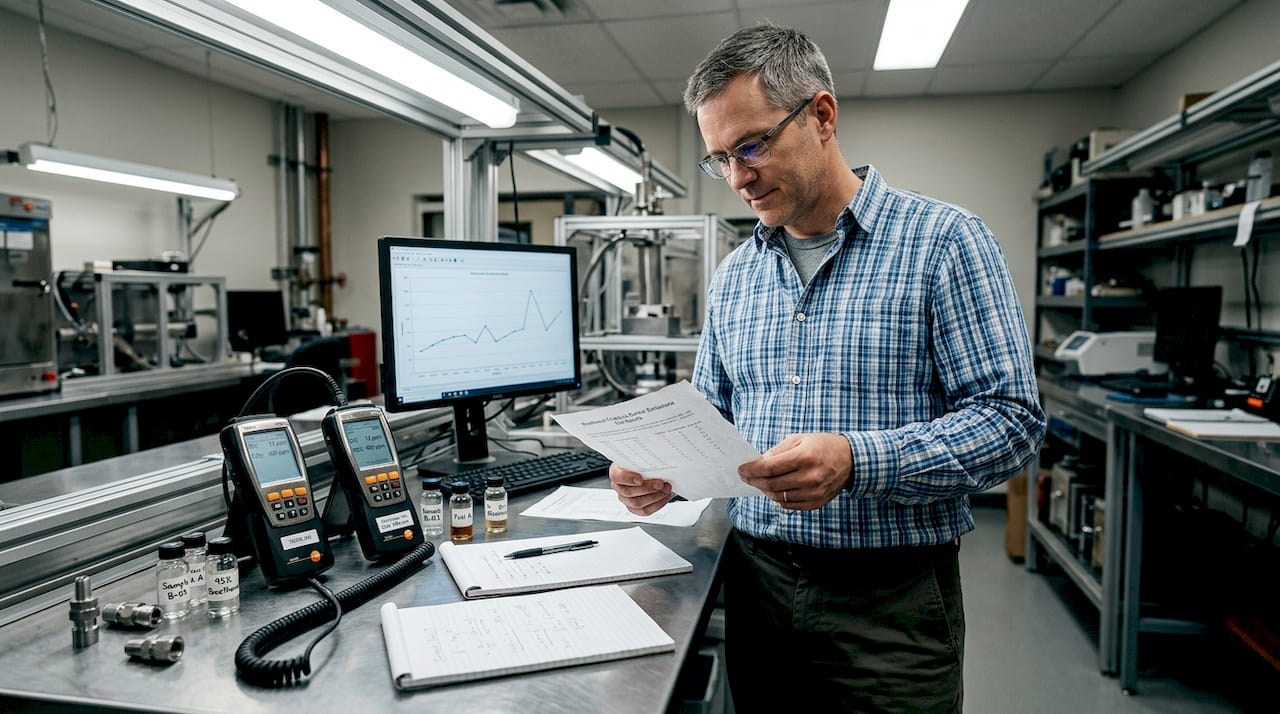
Emissions matter as much as physical safety. Research confirms that low CO/NOx output depends on burner optimization, not just fuel quality. A beautifully styled fireplace with a poorly engineered burner can still compromise your indoor air. For more practical bioethanol fireplace safety tips, we recommend reviewing the full safety checklist before your first use.
Emissions and eco-friendliness: What real standards require
Having covered direct safety, it is time to focus on what matters for your health, your home environment, and the genuine “eco” in eco-friendly.
Bioethanol fireplaces are often marketed as clean and green. And they can be, but only when the burner and fuel meet verified standards. Here is what real emissions limits look like for compliant products:
| Emission type | What it is | Why it matters | Standard limit |
|---|---|---|---|
| Carbon monoxide (CO) | Incomplete combustion byproduct | Toxic at high indoor levels | Must stay within EN 16647 threshold |
| Nitrogen oxides (NOx) | Combustion gases | Irritate airways, harm air quality | Minimized by burner design |
| Particulates | Fine particles from burning | Lung irritant | Minimal in clean ethanol combustion |
The key insight here is that bioethanol fireplace emissions data consistently shows that burner geometry, not just fuel purity, determines how much CO and NOx a fireplace releases. Two fireplaces burning identical fuel can produce very different emission profiles depending on how the burner is engineered.
For eco-conscious buyers, here is what to check before committing to a purchase:
- Certified fuel source: Look for bio ethanol fuel made from sustainably sourced crops, ideally with a certification from the manufacturer.
- Efficient burner design: Ask whether the burner has been tested for low CO and NOx output under EN 16647 conditions.
- Room ventilation guidance: A compliant product will include clear instructions on ventilation requirements for indoor use.
- Full product documentation: Emissions test reports, material safety data, and compliance certificates should all be available on request.
- Fuel efficiency rating: A more efficient burner uses less fuel to produce the same warmth, which is better for your wallet and the environment.
For more on choosing the right fuel, our guide to sustainable bioethanol fuel covers sourcing, quality grades, and what to look for on the label.
Buying guide: How to choose compliant, stylish, and sustainable models
With a solid grasp on standards and safety, you are ready to make smart, stylish, and eco-aware choices when shopping for your next bioethanol fireplace.
Here are the must-have features to look for:
- EN 16647 certification label clearly displayed on the product or in documentation
- Child safety locks or flame guards for households with young children or pets
- Integrated spill tray beneath the fuel reservoir to contain accidental leaks
- Verified low-emission burner with CO and NOx test results available from the manufacturer
- Portable, stable design suited to both indoor living spaces and outdoor terraces common in DACH homes
- Fuel efficiency documentation showing burn time per liter of bio ethanol fuel
- Clear ventilation instructions for safe indoor use in apartments or smaller rooms
Pro Tip: Before finalizing any purchase, ask the seller for the emissions test report and EN 16647 certificate. A trustworthy brand will share these without hesitation. If they cannot provide them, that is a clear signal to look elsewhere.
The good news is that compliance and style are not in conflict. Modern bioethanol tabletop fireplaces are designed to be genuinely beautiful, with clean lines, premium materials, and a real flame that creates enchanting warmth in any setting. The best models combine verified safe fireplace operation with designs that complement contemporary DACH interiors.
When comparing models, prioritize emissions data over aesthetics first, then choose the design that fits your space. Reviewing sustainable ethanol fireplace guidance alongside product specs gives you a well-rounded picture before you buy. Remember: a fireplace that looks stunning but lacks verified performance data is not worth the risk.
The truth most people miss about bioethanol fireplace standards
Here is something most buying guides won’t tell you: the word “eco” on a fireplace box means almost nothing without verified data behind it. Greenwashing is widespread in this category. Brands use natural imagery, vague sustainability claims, and attractive packaging to suggest compliance they have never actually tested for.
The uncomfortable truth is that many fireplaces sold online, especially through large marketplaces, carry no EN 16647 certification and no emissions documentation. Buyers are drawn in by low prices and good-looking photos, never realizing that avoiding common mistakes starts with asking for proof, not just trusting the listing.
Aesthetics and price are powerful distractions. But lab-tested performance and verified emissions are what actually keep your home safe and your air clean. The most stylish fireplace in the world is not a good purchase if it quietly raises CO levels in your living room. Demand the certificates. Trust the data.
Find your compliant, safe, and stylish bioethanol fireplace
Now that you know exactly what to look for, the next step is finding products that genuinely meet these standards. That is where Flaemme comes in.
At Flaemme, we specialize in modern, portable bioethanol tabletop fireplaces designed for both indoor and outdoor living. Our models are built with safety and eco-performance in mind, offering the enchanting warmth of a real flame without chimneys, gas, or complex installation. We offer free delivery across Europe and a 30-day return policy, so you can shop with complete confidence. Discover certified fireplaces and find the perfect model for your home or terrace today. →
Frequently asked questions
What are the key industry standards for bioethanol fireplaces in the DACH region?
Look for products certified to EN 16647, which covers safety, materials, and emissions for non-pressurized bioethanol fireplaces sold across Europe. This certification ensures the product has been independently tested to meet strict requirements.
Are bioethanol fireplaces really eco-friendly?
Only models with optimized burners and certified sustainable fuel deliver genuinely low emissions and real eco-friendliness. Generic “eco” claims without documentation are not reliable indicators of performance.
How can I verify a bioethanol fireplace’s safety before buying?
Check for the EN 16647 label, request emissions test reports from the seller, and confirm the presence of physical safety features like flame guards and spill protection trays before purchasing.
Why do emissions standards matter for indoor fireplaces?
Strict emissions standards minimize indoor air pollution from CO and NOx, protecting your health during regular use. A well-engineered burner, as emissions research confirms, is the most important factor in keeping indoor air safe.


