Fireplace Terminology Explained: Your Bioethanol Guide
TL;DR:
- Bioethanol fireplaces consist of key components like burners, fuel, ignition system, snuffer, and flame regulator.
- Safe operation depends on using certified high-purity bioethanol and adhering to standards like EN16647.
- Understanding technical terms ensures confidence in choosing and maintaining safe, stylish fireplaces.
You’ve fallen in love with the idea of a bioethanol fireplace, the warm glow, the clean lines, the no-chimney freedom. But then come the terms: burner, snuffer, flame regulator, EN16647. Suddenly, a simple style upgrade feels like reading a technical manual. You’re not alone. Many design-conscious homeowners across Germany, Austria, and Switzerland feel exactly this way. The good news? These terms are far simpler than they sound. Once you understand the core vocabulary, choosing the right fireplace becomes a confident, even enjoyable experience. This guide breaks down every essential term, so you can focus on what really matters: creating a cozy, beautiful home.
Table of Contents
- Bioethanol fireplaces 101: Key parts defined
- How a bioethanol fireplace works: From fuel to ambiance
- Cleaner flames, safer homes: Fuel and standards explained
- Glossary: Essential fireplace terms for design-focused homes
- Why terminology matters: The truth no stylish homeowner should miss
- Elevate your home with bioethanol fireplace expertise
- Frequently asked questions
Key Takeaways
| Point | Details |
|---|---|
| Know the parts | Understanding burner, snuffer tool, and fuel ensures the best fireplace experience. |
| Choose quality fuel | Certified bioethanol keeps your flames clean, odor-free, and design-friendly. |
| Prioritize safety standards | Look for EN16647 and UL1370 certification for stylish homes with peace of mind. |
| Apply what you learn | Knowledge of terms means more confident shopping and design integration. |
Bioethanol fireplaces 101: Key parts defined
Now that you know why clarity is vital, let’s break down the core parts that set bioethanol fireplaces apart from traditional options.
A bioethanol fireplace is made up of a small number of key components, each with a specific purpose. Getting familiar with them helps you compare products, ask the right questions, and feel genuinely at ease with your purchase. You can always revisit bioethanol fireplace basics if you want a broader overview first.
Here are the five essential parts you’ll encounter:
- Burner: This is the heart of any bioethanol fireplace. The burner holds and vaporizes liquid bioethanol for controlled combustion. Manual burners use a sliding baffle to adjust flame size. Automatic burners use electronics to manage fuel flow with a touch.
- Bioethanol fuel: A plant-based, renewable alcohol fuel. It burns cleanly, producing only water vapor and a small amount of CO2 when used correctly. No smoke, no soot, no odor when you use a quality product.
- Ignition system: Either a long lighter or matchstick for manual models, or an electronic igniter built into automatic designs. Reliable ignition keeps you safe and in control.
- Snuffer tool: A flat or lidded tool used to extinguish the flame by cutting off oxygen. Never blow out a bioethanol flame. The snuffer makes it safe and effortless.
- Flame regulator: A sliding mechanism (on manual burners) that lets you widen or narrow the flame opening, adjusting both heat output and visual effect.
Here’s a quick comparison of manual versus automatic burner types:
| Feature | Manual burner | Automatic burner |
|---|---|---|
| Flame control | Slider or baffle | Electronic sensor |
| Ease of use | Simple, hands-on | App or button control |
| Price point | More affordable | Premium range |
| Safety features | Basic | Advanced auto-shutoff |
| Best for | Tabletop, casual use | Built-in installations |
Knowing whether a fireplace uses a manual or automatic burner is the single most important question you can ask before buying. It shapes the entire user experience.
These definitions give you a solid foundation. Every other fireplace term you encounter will connect back to one of these five building blocks.
How a bioethanol fireplace works: From fuel to ambiance
With each essential part mapped out, it’s time to see how they all connect in daily use.
The process is more intuitive than you might expect. Here’s exactly what happens each time you light your fireplace:
- Fill the burner with bioethanol fuel using the bottle’s nozzle or a funnel. Never overfill. Most burners have a clear maximum fill line.
- Wait briefly for the fuel to settle. One to two minutes is enough for the bioethanol to distribute evenly across the burner surface.
- Ignite carefully using a long lighter or the built-in electronic igniter. Hold the flame or igniter near the fuel surface and activate.
- Adjust the flame using the regulator slider if your model is manual. Push it wider for a larger, more dramatic flame. Narrow it for a gentle, intimate glow.
- Enjoy the ambiance. Bioethanol vaporizes in the burner and ignites to produce a real, living flame with no smoke and minimal CO2 output when high-grade fuel is used.
- Extinguish with the snuffer tool. Slide or place it over the burner opening. The flame goes out in seconds.
For bioethanol fireplace operation to stay clean and safe, fuel quality is everything. Poor-quality or impure ethanol causes soot, odor, and a yellow-tinted flame instead of the crisp blue-to-orange look that makes these fireplaces so beautiful.
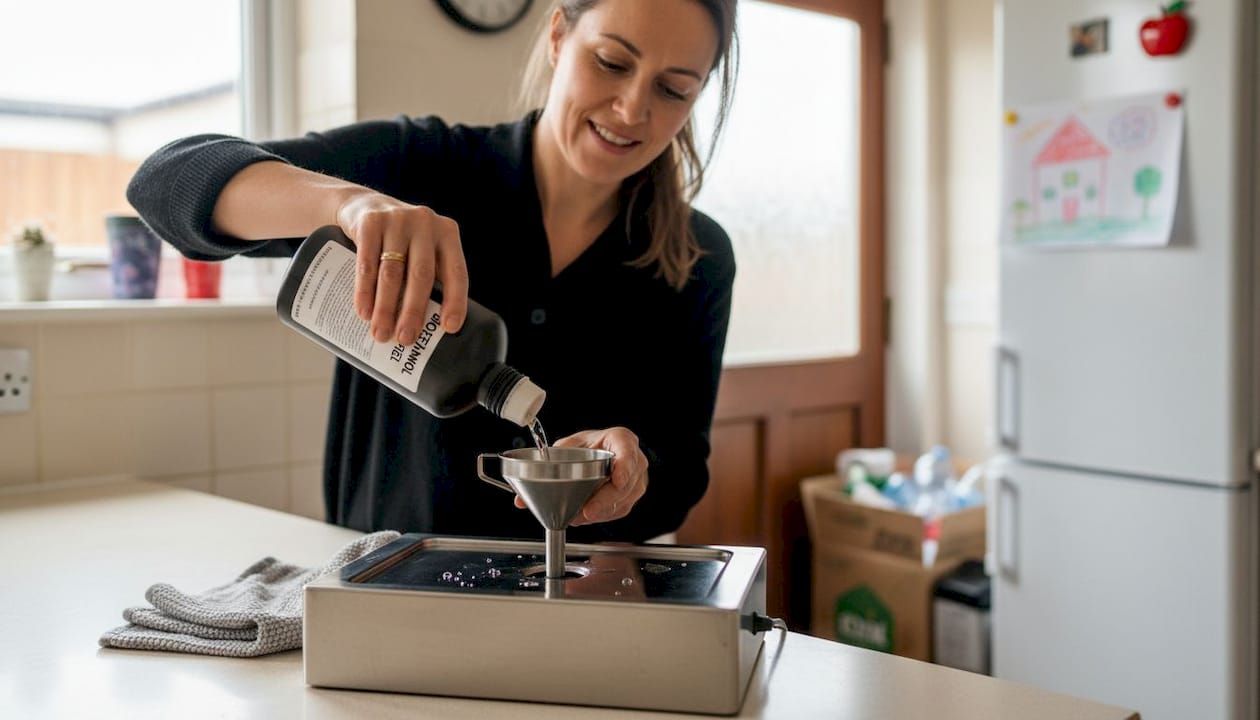
Pro Tip: Always wait at least 30 minutes after extinguishing before refilling the burner. The surface stays hot long after the flame disappears, and adding fuel to a warm burner is a serious safety risk.
Automatic models simplify this entire process. A sensor monitors fuel level, airflow, and temperature, and a button or app handles ignition and shutdown. For design-forward living rooms where ease matters as much as aesthetics, automatic systems are worth the investment.
Cleaner flames, safer homes: Fuel and standards explained
Understanding operation leads naturally to a close look at fuel choices and the standards that keep your experience both beautiful and safe.
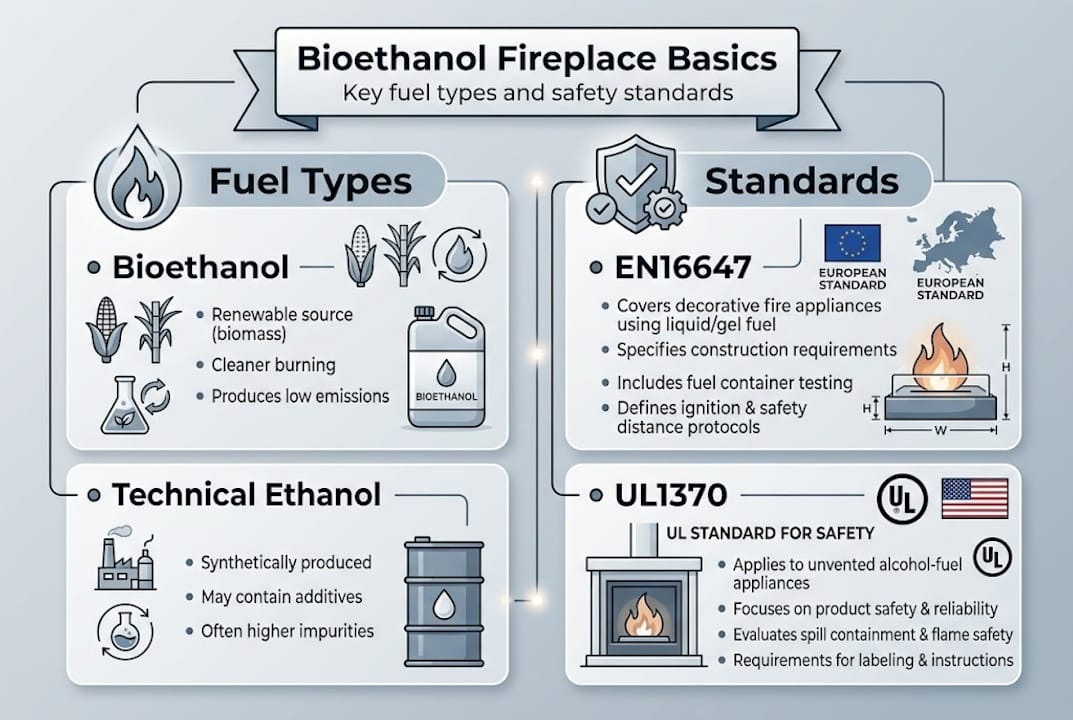
Not all ethanol is created equal. Technical ethanol (sometimes called Brennspiritus in German-speaking markets) is a denatured alcohol meant for cleaning or industrial use. It contains additives that create unpleasant smells and residue when burned indoors. Certified bioethanol fuel, on the other hand, is specifically formulated for fireplaces.
Here’s how fuel purity affects your experience:
| Fuel type | Purity level | Burn quality | Indoor suitability |
|---|---|---|---|
| Certified bioethanol | 96.6% or higher | Clean, odorless, bright flame | Yes, ideal |
| Standard bioethanol | 90 to 95% | Slight odor possible | Acceptable with ventilation |
| Technical ethanol | Variable, often low | Smoky, strong smell | Not recommended |
The 96.6%+ pure bioethanol standard matters because impurities are what cause odor and poor combustion, not the fuel itself.
Two safety standards come up frequently when shopping for bioethanol fireplaces. Knowing what they mean helps you filter products quickly:
- EN16647: A European standard that sets minimum requirements for bio ethanol fireplaces. It covers construction, materials, and performance testing.
- UL1370: An American safety standard, also referenced in some European product lines, covering fuel-burning decorative appliances.
Both standards are explained in detail at bioethanol fireplace standards, and we recommend checking for compliance before any purchase.
For safe indoor use, a few ventilation habits make a real difference:
- Open a window slightly when burning indoors for more than 60 minutes
- Avoid using fireplaces in rooms smaller than 20 square meters without airflow
- Never sleep in a room with an active bioethanol fireplace
- Check for a CO2 buildup by noticing if the flame begins to flicker unusually or dims without cause
Pro Tip: Always verify the fuel purity and EN16647 certification of any fireplace before purchase. A beautiful design means nothing if it affects your indoor air quality.
Glossary: Essential fireplace terms for design-focused homes
Once safety and fuel quality are clear, a practical glossary helps you feel confident whenever fireplace terms arise.
Bookmark this list. These are the terms you’ll see again and again when reading product descriptions, safety guides, or fireplace reviews:
- Burner: The core component where bioethanol is held and vaporized. Available in manual and automatic versions.
- Bioethanol fuel: A plant-based alcohol fuel made from fermented crops. Burns cleanly with no smoke or soot when pure.
- Snuffer tool: A device used to safely extinguish the flame. The snuffer cuts oxygen to the burner without blowing, and you should always allow 30 or more minutes of cooldown before refueling.
- Ignition system: The method used to start the flame, ranging from a simple lighter to a built-in electronic igniter.
- Flame regulator: A slider or baffle on manual burners that controls flame height and heat output.
- Baffle: The physical barrier inside a burner that regulates fuel vaporization and airflow. Directly influences flame appearance.
- Ethanol purity: The percentage of pure ethanol in your fuel. Aim for 96.6% or above for a truly clean, odorless burn.
- EN16647: The European safety standard for bio ethanol fireplaces, covering design, materials, and testing requirements.
- CO2: Carbon dioxide, the primary byproduct of bioethanol combustion. Produced in small quantities with certified fuel and managed through light ventilation.
- Refueling cooldown: The required waiting time after extinguishing a flame before adding fresh fuel. Typically 30 minutes or more.
You can use this list as a quick reference when comparing products at the tabletop fireplace guide. Knowing exactly what each term means puts you in complete control of your buying decision.
Why terminology matters: The truth no stylish homeowner should miss
With your glossary handy, step back and consider why these terms truly matter on a deeper level.
Here’s something most fireplace articles won’t say directly: the gap between a beautiful fireplace experience and a frustrating one almost always traces back to a misunderstood term. A buyer who confuses technical ethanol with certified bioethanol ends up with indoor odors and a discolored burner. Someone who skips the snuffer and blows out the flame risks a flash ignition from residual vapor.
The design community often focuses heavily on aesthetics, the glass casing, the flame height, the table styling. Those things matter. But a fireplace that smells or causes a safety concern ruins the entire ambiance far faster than the wrong cushion color ever could.
Mastering this vocabulary doesn’t just protect you. It frees you. When you understand fireplace safety standards, you can filter out substandard products instantly and shop with genuine confidence. You stop relying on brand claims and start reading specifications. That’s when sustainable, beautiful home design really becomes yours.
Elevate your home with bioethanol fireplace expertise
Ready to feel confident shopping and designing? Turn your clarity into a stylish reality.
At Flaemme, we design bioethanol tabletop fireplaces specifically for homes like yours. Every product we offer is built for the DACH region’s style-forward, eco-minded homeowners who refuse to compromise on aesthetics or air quality. Certified fuel compatibility, clean combustion, and portable elegance come as standard.
Whether you’re furnishing a sleek apartment in Munich, a modern home in Vienna, or a cozy chalet in Zurich, our fireplaces bring enchanting warmth without installation, chimneys, or complexity. Browse our full collection at discover Flaemme fireplaces and find the design that fits your space perfectly. Free delivery and 30-day returns make it easy to choose with confidence. → Explore the collection today.
Frequently asked questions
What does the burner do in a bioethanol fireplace?
The burner holds and vaporizes bioethanol for safe, controlled flames, and may be manual or automatic depending on the model.
Why is certified bioethanol better than technical ethanol?
Certified bioethanol burns cleaner with less odor and residue because it meets 96.6%+ purity standards required by EN16647 and UL1370.
How do I safely extinguish a bioethanol fireplace?
Use a snuffer tool to cover the flame and let the burner cool for at least 30 minutes before refueling to avoid ignition risk.
What do EN16647 and UL1370 mean for fireplaces?
They are safety and quality standards that ensure reliable fireplace performance and protect indoor air quality during use.


